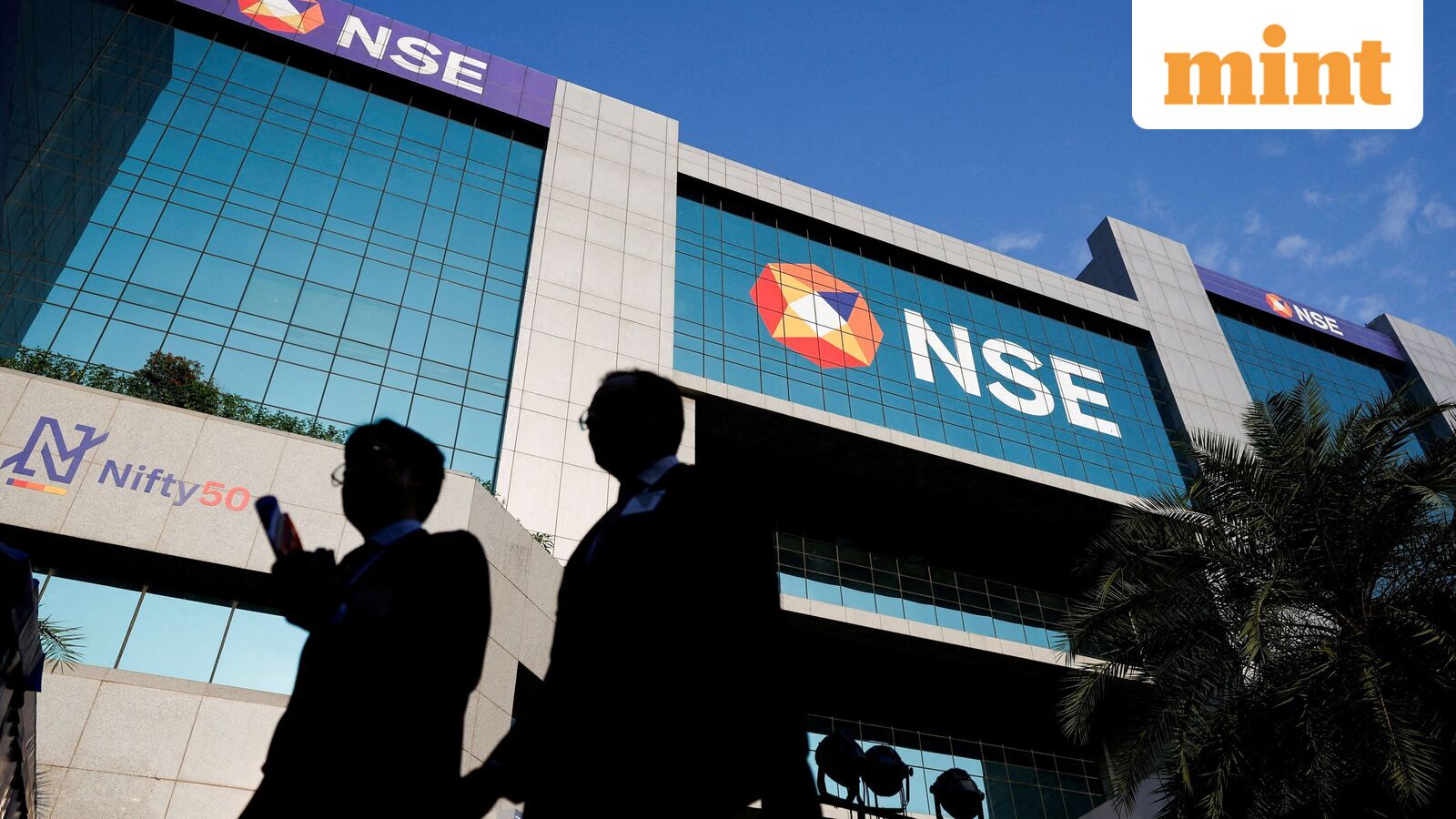
The National Stock Exchange of India Ltd (NSE) has filed its draft red herring prospectus with the market regulator for its much-awaited initial public offering (IPO), according to a public filing submitted to the Securities and Exchange Board of India.
The share sale consists entirely of an offer for sale of up to 149 million equity shares by existing institutional shareholders, the document showed. This means a total 6% of NSE’s paid-up capital is being offered to new investors. No fresh equity capital will be issued as part of the transaction.
Proceeds from the transaction will go entirely to the selling shareholders, which include State Bank of India, Canada Pension Plan Investment Board, affiliates of Morgan Stanley, Temasek, Bank of Baroda, Stock Holding Corp. of India, General Insurance Corp of India, The New India Assurance Co, National Insurance Co and United India Insurance Co.
Meanwhile, LIC, the single largest holder in the bourse with at 10.72%, is sitting tight. So are Premji Invest (2.35%) and Radhakishan Damani (1.58%). The three of the country’s respected guys are not selling a single share! Interesting.
Under current market regulations, an Indian stock exchange cannot list its own shares on its own platform, meaning the National Stock Exchange will list its shares on BSE Ltd.
In the syndicate of its 20 investment bankers, Kotak Mahindra Capital Co. and Morgan Stanley India Co. are among the book-running lead managers for the share sale, which is expected to value the exchange operator’s IPO at approximately ₹29,780 crore (over $3 billion) based on indicative grey market prices for the stock, which currently trades at at least ₹2,000 a share.
At this price point, NSE’s IPO will become the country’s biggest public offering, surpassing the likes of Hyundai Motor India Ltd’s ₹27,859 crore offer, and Life Insurance Corp of India Ltd’s ₹20,557 crore offer.
One must, however, note that grey market share prices are not mathematically calculated, and final price bands are set by merchant banks by taking into count multiple factors.
“The stock exchange business globally is a unique and highly resilient market infrastructure business, and the listing of an institution of NSE’s calibre will allow small investors to own a stake in one of India’s most important financial institutions,” Dinesh Thakkar , chairman & MD of Angel One Ltd told Mint.
The filing marks a full circle for the exchange’s decade-long listing plan. NSE first filed its IPO papers in 2016, after which it was caught up in the co-location scandal and accused of giving select brokers unfair access to its servers. As the case dragged on, the IPO was shelved amid a leadership overhaul.
In January 2026, under a new management, NSE reached a ₹1,300 crore settlement with Sebi and received the go-ahead to refile its papers.
Current regulatory frameworks require the exchange to maintain a diversified shareholding structure. No single foreign or domestic entity is permitted to hold more than 5% of the equity capital of a stock exchange without explicit regulatory approval, while specific institutional categories like commercial banks and insurance companies can hold up to 15%.
The listing will place the NSE in direct comparison with BSE Ltd, which became the first listed stock exchange in India in 2017. BSE shares have risen over 50% over the past 12 months, trading at a price-to-earnings multiple of 70.45, according to exchange data. On Wednesday, shares of BSE fell 3.81% on NSE, while the Nifty index rose 0.4%.
The bourse reported a 3% year-on-year decline in revenue and a 15% drop in profit for FY26. Revenue fell 3% to ₹16,601 crore from ₹17,141 crore a year ago, while profit declined 15% to ₹10,302 crore.
Revenue declined mainly on the back of a declining share of income from transaction charges, clearing and settlement income. Income from transaction charges fell 4% year-on-year to ₹13,057 crore from ₹13,636 crore the previous year, while clearing and settlement income fell 22% to ₹251 crore from ₹321 crore.
The market regulator will now review the draft prospectus before issuing its final observations, a process that typically takes between 30 and 90 days. Following regulatory approval, the exchange will file its final prospectus with the Registrar of Companies to determine the price band and bidding dates for the public issue.
However, NSE’s document review might take longer.
“While SEBI’s formal observation period is 30 days from receipt of satisfactory clarifications and exchange in-principle approvals, NSE’s DRHP is unlikely to be a plain-vanilla review,” Rohit Jain, managing partner at law firm Singhania & Co, told Mint.
“Given its past regulatory overhang, market-infrastructure status, scale and large OFS, approval/observation timelines will certainly be longer,” he explained.
NSE’s IPO is part of a wave of major public offerings expected in this year, with high-profile listings anticipated from Reliance’s Jio Platforms, SBI Funds Management and Zepto. This follows a record-breaking 2025 for the primary market, in which 371 companies raised over ₹1.75 trillion, bolstered by the massive debuts of HDB Financial Services, LG Electronics India, and ICICI Prudential Asset Management.
About The Author