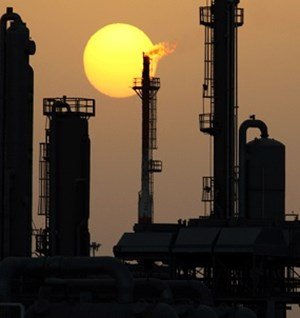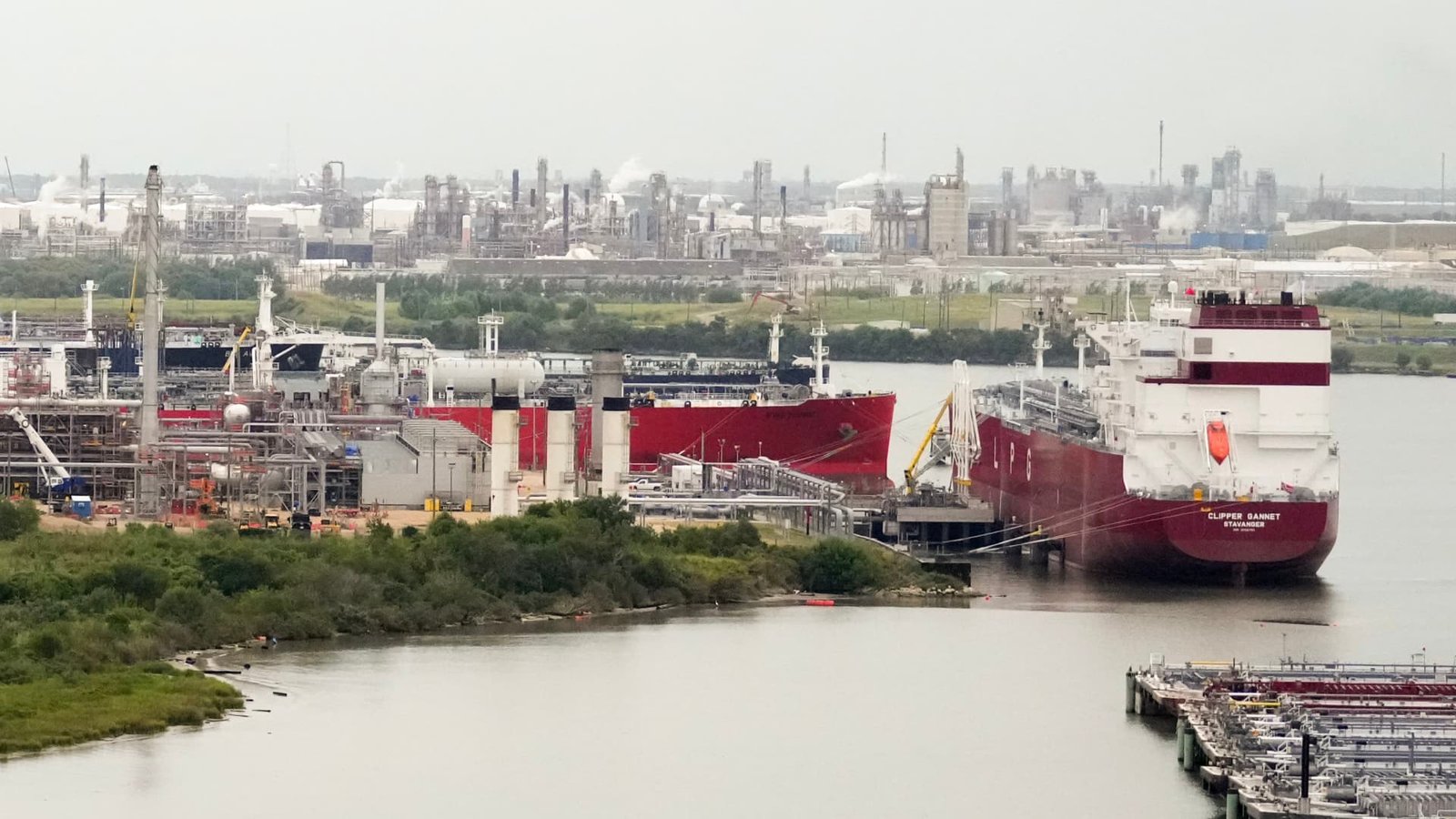
Oil and natural gas facilities are seen along the Houston Ship Channel as Tropical Storm Edouard makes its way through Greater Houston, Tuesday, Sept. 1, 2026. (Photo by Jason Fochtman/Houston Chronicle via Getty Images)
Jason Fochtman | Houston Chronicle | Getty Images
Oil prices fell on Friday as investors weighed fresh strikes between Saudi Arabia and Yemen’s Iran-backed Houthis against signs that additional Saudi crude could reach global markets and help ease supply concerns.
Brentcrude futures, the international benchmark, were down 0.94% to $103.83 per barrel. U.S.West Texas Intermediatefutures were down 0.88% to $101.01 per barrel.
Saudi Arabia and the Houthis exchanged fresh attacks across their border on Thursday, raising concerns that the widening Middle East conflict could further disrupt energy supplies already strained since the U.S. and Israel attacked Iran in February.
Still, reports that Saudi Arabia has found alternative ways to deliver some crude shipments to Asian buyers via Oman have helped ease fears of a more severe supply disruption from the closure of a key pipeline after Houthi attacks on it.
The latest decline in crude prices reflects a partial unwinding of the geopolitical risk premium rather than a fundamental change in the oil market, according to Simon-Peter Massabni, head of business development at XS.com.
Improved logistics for Saudi crude exports have reduced the market’s assessment of how much supply is at risk, Massabni said, adding that oil prices reflect not just available barrels but also the probability of those supplies being disrupted.
Still, the Middle East supply network remains vulnerable, with traders particularly sensitive to developments around the Strait of Hormuz, export routes and oil terminals, he said. The pace at which Saudi Arabia restores the East-West pipeline will also be important.
Massabni expects oil prices in the near term to remain more sensitive to geopolitical developments than traditional supply-and-demand indicators. Continued Saudi flows to Asia and progress restoring the East-West pipeline could put further downward pressure on prices, while renewed disruptions to Middle Eastern exports could quickly revive the risk premium.
About The Author