(Bloomberg) — Oil prices climbed for a third consecutive session Wednesday as the United States launched another round of airstrikes against Iran, raising fresh concerns over crude exports through the Strait of Hormuz and extending a geopolitical rally that has pushed Brent crude above $85/bbl.
Brent gained more than 13% this week to trade above $85/bbl as markets weighed the risk of further disruptions along the world’s most important oil shipping corridor.
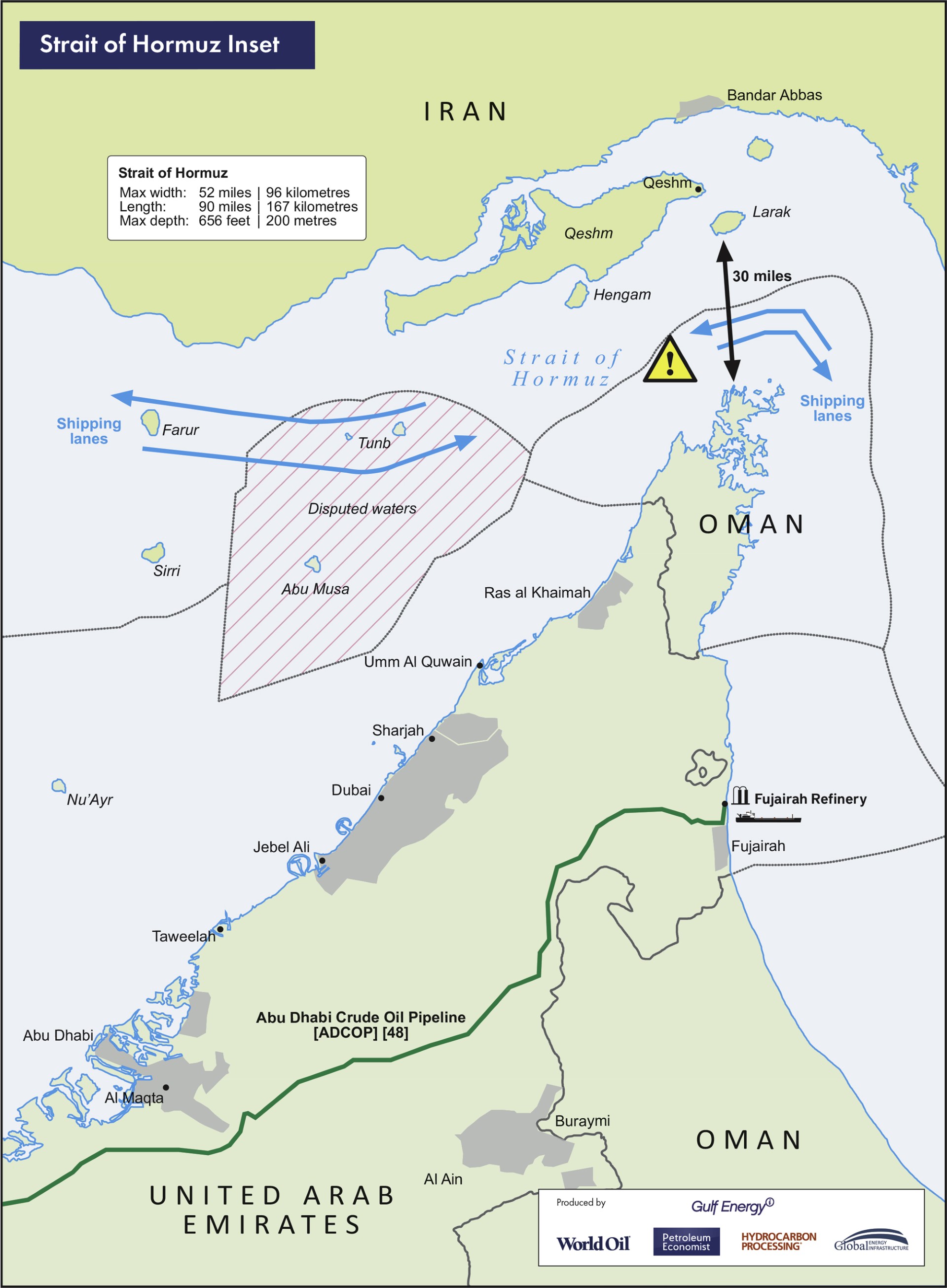
The latest escalation came after U.S. forces carried out new strikes on missile storage and launch sites on Greater Tunb Island near the Strait of Hormuz, marking the fifth consecutive day of American military operations targeting Iranian assets. U.S. Central Command said additional strikes were carried out later in the day.
The renewed campaign follows Tuesday night’s attacks on military targets that prompted Iranian counterstrikes against U.S. bases in Gulf states, including Kuwait and Bahrain.
The conflict has intensified as a month-old interim peace agreement between Washington and Tehran continues to unravel over control of the Strait of Hormuz, the vital waterway through which Saudi Arabia, Qatar, the United Arab Emirates and other Gulf producers export much of their crude oil and liquefied natural gas.
Shipping risks remain elevated. The International Maritime Organization said Wednesday that conditions in the Strait of Hormuz remain too dangerous for normal commercial navigation, reinforcing concerns over the security of global energy supplies.
The U.S. said it assisted multiple commercial vessels transiting the strait overnight while continuing its blockade of Iranian shipping. American forces also turned back two Iranian vessels attempting to transit the waterway, according to U.S. officials.
President Donald Trump said the military campaign would continue until Iran ends attacks on commercial shipping and allows freedom of navigation through the strait. Trump also said Tehran had expressed interest in renewed negotiations, although Iranian officials have not publicly confirmed that claim.
Iran, meanwhile, continued to signal it would not back down. The Islamic Revolutionary Guard Corps said the Strait of Hormuz would remain closed until the United States ends its military strikes and blockade of Iranian ports.
“The region’s oil and gas exports are either available to all or available to none,” the IRGC said, according to Iran’s Press TV.
With both sides maintaining hardline positions and commercial shipping under increasing pressure, energy markets remain focused on the potential for additional disruptions to crude flows through the Strait of Hormuz, which handles roughly one-fifth of global oil shipments.
About The Author