(Bloomberg) – Only two bidders participated in the Trump administration’s auction for drilling leases in Alaska’s Arctic National Wildlife Refuge as major oil companies sat out the sale.
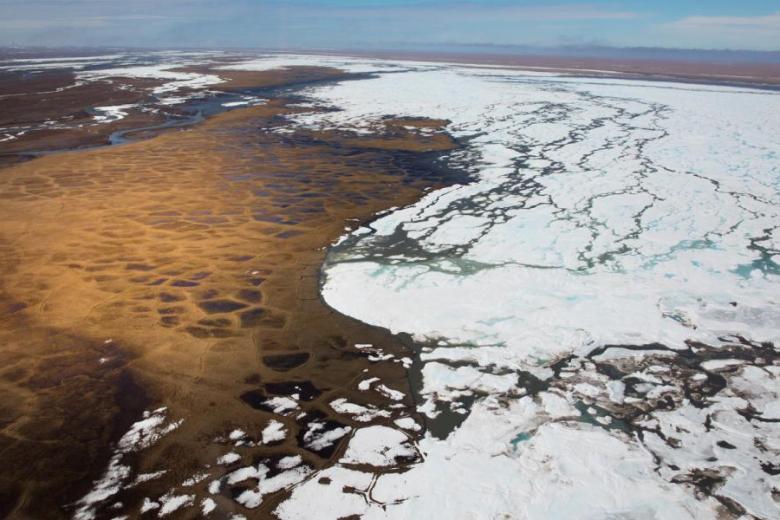
Image: U.S. Bureau of Land Management
The Alaska Industrial Development and Export Authority, a state agency, and Anchorage-based Hex Energy were the sole entrants in the auction for nearly 690,000 acres of oil and gas drilling rights. It was the Interior Department’s first lease sale in the refuge since lifting drilling restrictions imposed by former President Joe Biden.
It was a key test of the oil industry’s appetite to drill in the rugged frozen tundra, long prized for its oil and gas potential but burdened by political uncertainty, environmental opposition and logistical challenges.
The sale was the first of four lease sales required under President Donald Trump’s tax-and-spending law, the One Big Beautiful Bill Act, which mandates at least four auctions in the area by 2035. It comes as Trump seeks to make tapping Alaska’s vast natural resources a key part of his energy agenda.
Combined, the Industrial Development and Export Authority and Hex Energy bought leases for five tracts through the sale.
Trump signed legislation during his first term ending a four-decade ban on energy development in the refuge, which is estimated to contain as much as11.8 billion barrelsof recoverable oil. The protected area occupies a section of northeastern Alaska roughly the size of South Carolina.
Major oil companies largely steered clear of the first two lease sales that followed. Anauctionheld weeks before Trump left office in January 2021 drew bids from two oil developers and Alaska’s state-owned economic development company. A second sale in January 2025 under the Biden administration resulted in zero bids, though oil industry representatives and Alaska officialsarguedrestrictive lease terms artificially discouraged interest.
Some analysts are skeptical about the prospects for drilling in the region.
“Production will be challenging, and the prospect that permits will be canceled as soon as a new administration takes over is likely given that this is an easy way for a new administration to make a show of its environmental commitment,” said Ellen Wald, a senior fellow with the Atlantic Council Global Energy Center and the president of Transversal Consulting.
Still, a Marchlease sale in the National Petroleum Reserve in Alaska drew a record $163 million in bids from established operators like ConocoPhillips, as well as companies such as ExxonMobil, which last drilled an exploratory well in the state in the early 1990s. Shell, which abandoned Arctic exploration after a costly unsuccessful search for crude waters north of Alaska, partnered with Repsol SA to secure over 40 leases.
Environmental groups and some indigenous communities, including Gwich’in, which consider the coastal plain sacred, argue drilling threatens Arctic foxes, polar bears, caribou, musk oxen and migratory birds.
“The diverse and sacred landscape of the Arctic Refuge is unlike any other and should never be sacrificed for oil and gas drilling,” said America Fitzpatrick, a program director with the League of Conservation Voters. “Any companies considering drilling in the Arctic Refuge would be doing so against the majority of people who support protecting this critical landscape.”
Meanwhile, local leaders, including those in Kaktovik, the only village within the refuge, support development, arguing it’s necessary for the region’s economic well-being.
Alaska crude production has steadily declined from a peak of 2 MMbpd in 1988 to roughly 417,000 bpd in March, according to the Energy Information Administration. The agency projects output will rise to 450,000 bpd this year and 500,000 bpd in 2027 as new developments begin producing.
About The Author