PayPal(PYPL) was heading toward an important earnings report on July 28. Then a $60.50-per-share takeover offer from Stripe and Advent International gave investors something much bigger to think about.
The bid sent shares of PYPL sharply higher, and established something investors had been missing: a credible outside valuation for the company. PayPal’s board reportedly believes that price is still too low, leaving investors to consider whether $60.50 is the end of the discussion—or simply the opening offer.
That makes the July 28 report unusually interesting. The buyout offer should provide support if earnings disappoint, while a strong quarter could strengthen PayPal’s case for a higher price.
Today, we’ll look at PayPal’s valuation, how the takeover bid may have changed the downside picture, what the options market is pricing in, and how traders might approach the stock before and after earnings.
The bid that reset the PayPal story
PayPal had spent much of 2026 struggling to convince investors that its latest turnaround could restore meaningful growth. Then Stripe and private-equity firm Advent International changed the conversation.
The consortium offered $60.50 per share for PayPal, valuing the company at more than $53 billion. When the offer became public on July 15, it represented roughly a 28% premium to PayPal’s previous closing price. PYPL quickly jumped from the mid-$40s into the mid-$50s on the news.
PayPal’s board reportedly views the proposal as inadequate, while analysts have suggested Stripe and Advent have the financial capacity to raise their offer. A competing bid currently appears less likely, making the next move from the existing buyout group especially important.
That makes $60.50 an important reference point, even though there is no guarantee a transaction will ultimately occur at that price. That said, the offer should not be treated as a hard floor.
The bidders could walk away, PayPal could refuse to engage, or disappointing results could weaken enthusiasm for the deal. But investors now know that a credible buyer is willing to value the company at $60.50 per share—and that PayPal’s board believes the business is worth more.
That is a very different starting point from the one investors faced when PYPL was trading in the mid-$40s.
PayPal’s earnings could influence what happens next
PayPal’s July 28 report now carries added weight because of the takeover bid.
The first quarter showed a company with plenty of scale, but a mixed profit picture. Revenue rose 7% year over year to $8.35 billion, total payment volume increased 11% to $464 billion, and active accounts reached 439 million. Adjusted free cash flow climbed 25% to $1.72 billion, while PayPal repurchased another $1.5 billion of stock.
Profitability was less encouraging. GAAP operating margin fell to 17.8% from 19.6%, GAAP EPS declined 6%, and non-GAAP EPS increased just 1%. Management also guided for second-quarter non-GAAP EPS to fall roughly 9% from the prior year.
That puts the upcoming report in a different light. Strong results could bolster PayPal’s argument that $60.50 undervalues the company and potentially give the board more leverage to push for a higher offer. A weak quarter could do the opposite, strengthening the bidders’ hand and increasing pressure on PayPal to engage.
So investors will be watching more than the usual earnings beat or miss. The July 28 numbers could help determine how much negotiating power PayPal has—and whether the current $60.50 offer is likely to move higher.
PayPal’s valuation adds support to the takeover anchor
The takeover premium looks substantial relative to where PYPL traded before the bid, but PayPal’s valuation helps explain why the board may believe $60.50 is still insufficient.
PYPL trades at approximately10.5x trailing GAAP earnings, compared with an industry average near 13x. Its price-to-sales ratio of roughly 1.6x is also well below the industry average near 3.4x. Price-to-book is the exception, with PayPal trading around 2.5x book value versus an industry average near 1.4x.
None of that guarantees PayPal deserves a higher bid. Competition is intense, its core checkout business is under pressure, and management needs to show that the latest turnaround can improve both growth and profitability.
Even so, the company’s current valuation helps explain why the board may see $60.50 as too low. The offer looks less like a generous premium and more like a credible benchmark for what the business may be worth.
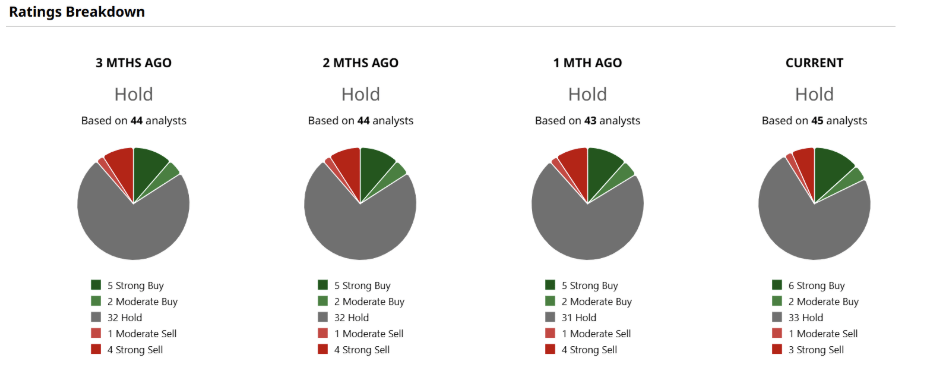
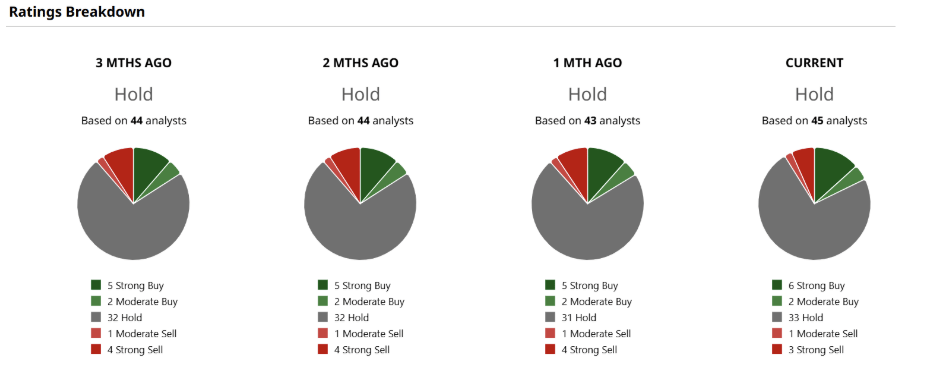
Wall Street’s current targets are probably less useful than usual because many were set before the takeover bid surfaced. Of 45 analystscoveringPYPL, eight rate the stock a buy and 33 rate it a hold, with an average price target near $50.
Sigmanomics adds valuable context to the new setup
The takeover bid did more than lift PayPal’s share price. It also changed the stock’s recent trading pattern and the way options are being priced around the next several weeks.
Sigmanomicsnow classifies PYPL as trending higher across the 7-, 14-, and 28-day windows, with a seven-day path-efficiency score of 0.89. Much of that strength reflects the sharp move following the takeover news rather than a gradual improvement in the stock’s trend.
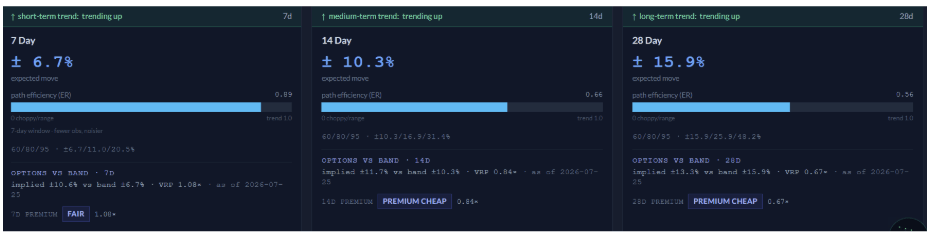
Sigmanomics projects a central move of plus or minus 6.7% over seven days, 10.3% over 14 days, and 15.9% over 28 days. That translates to roughly $52 to $60 over seven days, $50 to $62 over 14 days, and $47 to $65 over 28 days. Those levels line up well with the takeover story.
The lower end of the 28-day range sits near where PayPal traded before the bid surfaced, providing a useful reference for what could happen if the deal weakens or disappears. The upper end reaches into the mid-$60s, which would be consistent with the market beginning to price in a meaningfully higher offer.
Sigmanomics is not predicting either outcome, but the ranges provide a practical map for thinking about how much the stock could move as the earnings report and takeover discussions unfold.
Why a bull put spread may fit the current setup
Some investors and traders may look at the current setup and conclude that PayPal’s downside is somewhat better supported than it was before the takeover bid surfaced. For market participants who share that view, a bull put spread may be one structure to consider.
A bull put spread is a type of vertical spread. It involves selling an out-of-the-money put and buying a lower-strike put with the same expiration, using a one-for-one ratio. The short put brings in premium, while the long put limits the maximum loss if PYPL falls sharply.
The trade does not require PayPal to reach $60.50. It works as long as the stock remains above the short-put strike at expiration, with the maximum profit equal to the net premium collected.
This structure may fit the outlook of some investors because the takeover bid has changed the downside picture heading into earnings. Before the offer, a disappointing earnings report could have forced investors to reassess PayPal’s value with little support beyond the company’s own fundamentals. Now there is a credible $60.50 offer in the background, which may reduce some of that uncertainty as long as the bidding group remains interested.
The exact strikes will depend on the premiums available when the trade is entered. PayPal’s pre-bid trading range in the mid-$40s provides one useful reference. If the takeover premium disappeared, that area offers some indication of where the stock could begin gravitating—and where downside risk would become more meaningful.
Alternatively, investors and traders could simply wait until after PayPal reports before putting on the trade. If the takeover bid remains in place and PYPL continues trading near current levels, a bull put spread could still make sense with earnings out of the way.
The credit from the spread would likely be smaller once the earnings-related volatility comes out of the options, but that may be a fair trade-off for greater clarity. Sigmanomics currently rates the 14-day and 28-day premium as relatively cheap, so this would not be a straightforward volatility trade.
Instead, it would be a more tactical position based on the investor’s outlook for the stock and the takeover process. Before entering the trade, investors may also want to check the updatedSigmanomics forecastto see whether the expected-move ranges, trend characteristics, and premium readings have changed after earnings.
Under the bull put structure, PYPL stock does not need to rally; it simply needs to remain above the short strike through expiration.
The bottom line
PayPal heads into earnings with a very different setup than it had just a few weeks ago. The $60.50 takeover proposal has given investors a clearer reference for what the company may be worth, while the board’s reported view that the offer is too low leaves room for a higher price.
That does not remove the risk around the July 28 earnings report. Weak results could pressure the stock and weaken PayPal’s negotiating position, while a strong quarter could strengthen the case for a higher bid. But investors are no longer looking at earnings in isolation.
For those with a bullish or neutral outlook, a defined-risk bull put spread may be one way to approach the setup. The trade does not require PYPL to rally sharply; it simply benefits if the stock remains above the short strike through expiration.
The broader takeaway is that the bid has changed the balance of risk. PayPal can still move lower, especially if earnings disappoint or the deal loses momentum, but investors now have a much clearer reference for where value may begin to emerge if the stock comes under pressure.
About The Author