
October 22, 2026
(Bloomberg) – The Trump administration is lifting a blockade that had stalled some wind farms in a bid to boost support for a bipartisan plan to speed construction of U.S. energy and infrastructure projects.
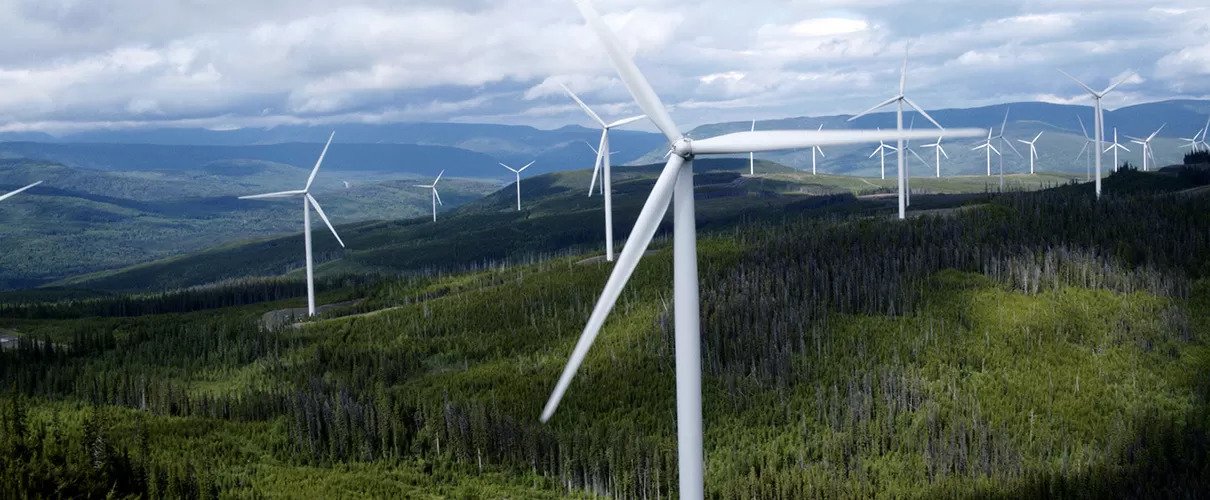
Marking the shift, the Pentagon on Thursday advanced proposed wind projects in Maine and South Dakota, clearing them after a national security review that has bogged down scores of similar ventures nationwide. The action was described by a White House official who asked for anonymity because there hasn’t been a formal announcement.
The move is being cast as a show of good faith — and a partial fulfillment of an administration promise to advance some wind projects. That pledge is seen as critical to advancing a bipartisan permitting overhaul bill on Capitol Hill this year.
At issue are Pentagon reviews of wind farms to ensure they don’t imperil national security by unduly interfering with military operations. Under President Donald Trump, the national security authorizations have become a major obstacle to permitting and constructing onshore wind farms, building a long backlog at the Pentagon. More authorizations are expected in the coming days and weeks, the official said.
Lifting barriers to renewable power projects — as well as oil and gas infrastructure — is a key promise of the bipartisan permitting package that’s been brokered between White House officials and Democratic Sens. Martin Heinrich of New Mexico and Sheldon Whitehouse of Rhode Island as well as Republican Sens. Shelley Moore Capito of West Virginia and Mike Lee of Utah.
The administration’s promise would apply to some 30 wind projects out of roughly 300 currently suspended pending Pentagon approval, according to a person familiar with the matter, who asked not to be identified because the discussions are private. “It’s a start, but we are going to need to see a lot more from the administration on wind and solar,” Whitehouse said in a statement.
The deal between Democratic and Republican lawmakers has the potential to be a significant victory for oil companies as well as renewable energy developers that have long sought to accelerate federal permitting and scale back environmental reviews that can drive years-long delays and hundreds of millions of dollars in extra costs.
The Senate is slated to take up the bill when the chamber returns after November’s midterm elections, though it still faces an uncertain future amid opposition from some environmental groups and certain progressive House Democrats.
About The Author