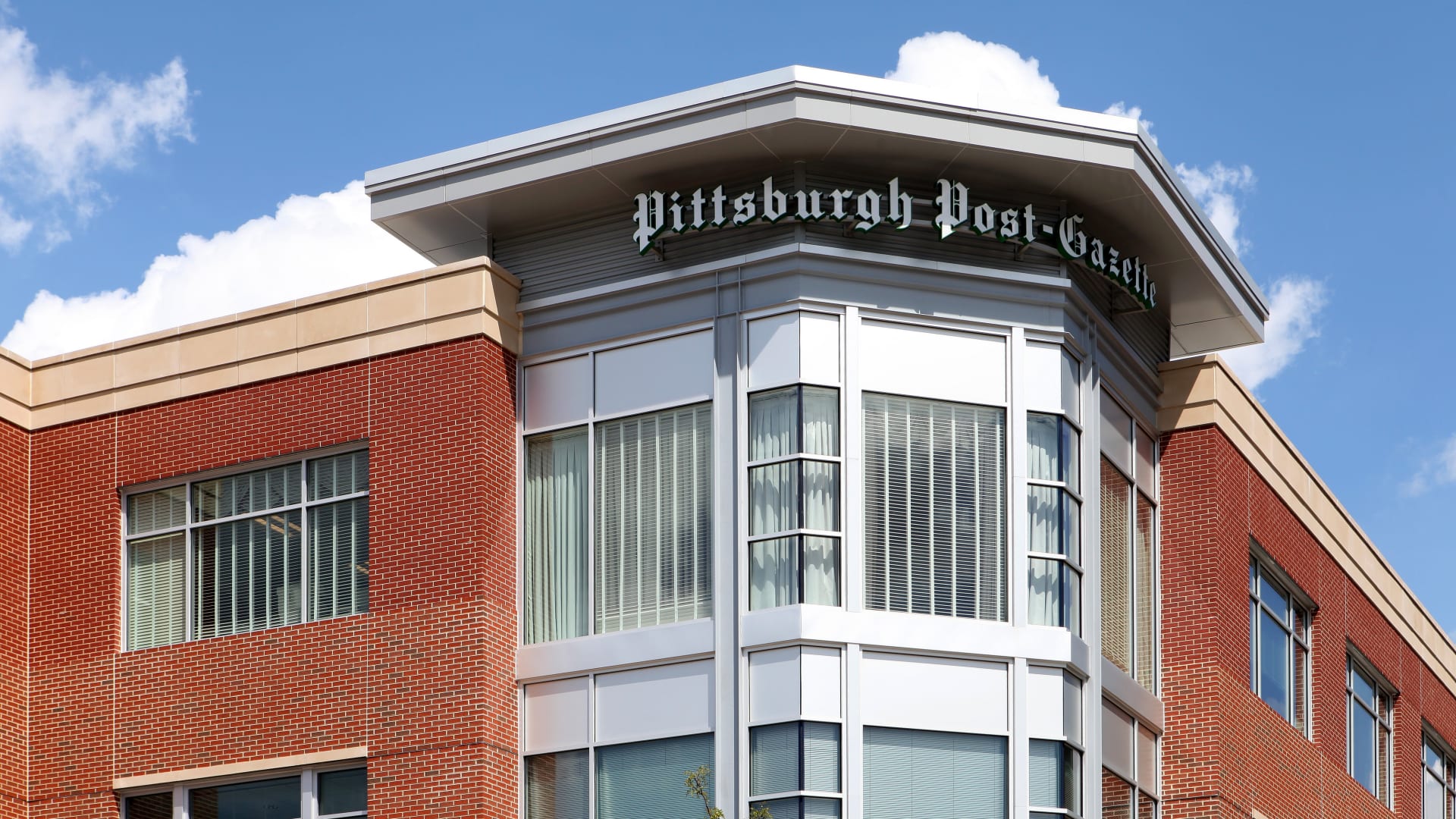
FILE PHOTO: Pittsburgh Post-Gazette in Pittsburgh, Pennsylvania on Aug. 26, 2016.
Raymond Boyd | Michael Ochs Archives | Getty Images
ThePittsburgh Post-Gazette’sowners announced Wednesday the paper will be shutting down in a few months, citing financial losses.
Block Communications Inc.announced it will cease publication onMay 3. The paper is printed on Thursdays and Sundays and says on its website theaverage paid circulationis 83,000.
A couple dozen union members returned to work at thePost-Gazettein November after a three-year strike.
More than five years ago, the newspaper declared it had reached a bargaining impasse with theNewspaper Guild of Pittsburghand unilaterally imposed terms and conditions of employment on those workers. The paper was later found to have bargained in bad faith by making offers that were not intended to help reach a deal and by declaring an impasse prematurely.
The announcement that Block was shutting it down came on the same day theU.S. Supreme CourtdeclinedthePG Publishing Co. Inc.’semergency appeal to halt anNational Labor Relations Boardorder that forced it to abide by health care coverage policies in an expired union contract.
Andrew Goldstein, president of theNewspaper Guild of Pittsburgh, said the paper’s journalists have a long history of award-winning work.
“Instead of simply following the law, the owners chose to punish local journalists and the city of Pittsburgh,” Goldstein said. The union said employees were notified in a video on Zoom in which company officials did not speak live.
The Post-Gazette saidBlock Communicationshas lost hundreds of millions of dollars over two decades in operating the paper, and the company said it deemed “continued cash losses at this scale no longer sustainable.”
The Block family said in a statement it was “proud of the service thePost-Gazettehas provided toPittsburghfor nearly a century.”
A phone message seeking comment was left Wednesday atBlock Communicationsheadquarters inToledo, Ohio.
The paper traces its roots to 1786, when thePittsburgh Gazettebegan as a four-page weekly, and became a leading advocate for the abolition of slavery in the 19th century. It went through a series of mastheads and owners before 1927, whenPaul Blockobtained the paper and named it thePost-Gazette.
About The Author