Ready for takeoff: This stocks next growth runway is securing identity in an AI age
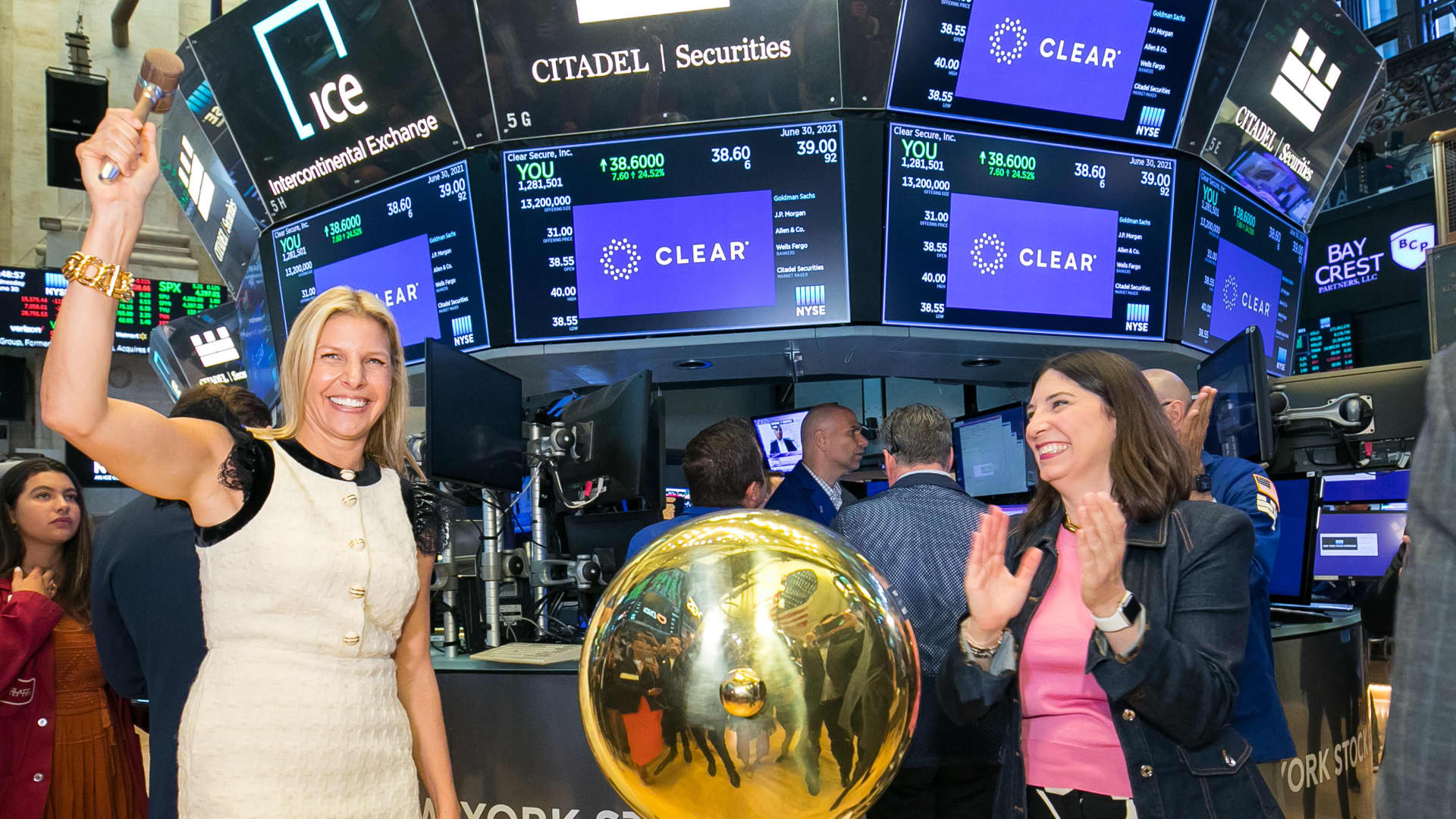
Clear Secure’s resilient airport franchise is more than a travel business. It serves as the customer acquisition engine powering its broader identity platform and is a competitive advantage. The company’s expanding database of verified users creates a powerful network effect, making each reverification more profitable while supporting accelerating revenue, margin expansion and free cash flow. Despite its transformation, the stock trades at a compelling valuation relative to its growth prospects and could eventually attract strategic acquisition interest. Clear Secure has moved beyond biometric airport screening to become one of the preeminent digital identity platforms that is making verification secure and simple. Its accelerating membership growth, expanding free cash flow and high margins have created momentum for its stock that is likely to continue. However, as artificial intelligence becomes pervasive, establishing a trusted identity will be essential during every digital interaction. Current one-time authentication methods are cumbersome and enterprises will want to move to identity systems that are dynamic and secure.This is where Clear Secure could find new opportunities. Clear Secure is aiming to go from verifying an individual “12 times a year to 12 times a day,” CEO Caryn Seidman Becker told CNBC’s Julia Boorstin in July, as the process of reverification has much higher margins than the initial verification as an individual is already in its database. Healthcare, finance and government are using Clear Secure’s Clear1 verification product to streamline access, prevent fraud and give businesses the confidence that the people they are giving access to are who they claim to be. From bankruptcy to new opportunities Clear was founded in 2003 as a fast-pass lane for airport security using biometrics for identification. It went bankrupt in 2009, and its assets were purchased in 2010 by Seidman Becker and co-founder Ken Cornick. In 2015, Clear Secure expanded to provide faster and more secure entry for stadiums, inking initial deals with the Major League Baseball’s Colorado Rockies and New York Yankees . It has been strategic in using deep-seated partnerships to drive its marketing efforts. Delta Air Lines bought a stake in Clear Secure in 2016, United Airlines followed in 2019 . Both airlines helped market the product to their customers at reduced prices. Clear Secure’s ongoing partnership with American Express , which began in 2019, is perhaps its most successful. Some of its cardholders receive a $219 per calendar year annual statement credit to cover the cost of a Clear+ airport membership. It accounts for about 30% of Clear Secure’s 8.2 million active user base, according to JPMorgan. Clear Secure went public in 2021 , raising more than $400 million at an initial offering price of $31.00 per share. Its quarterly revenue has increased 358% since then, but its stock now trades 84% above its offer price despite this strong growth. Following its IPO, Clear Secure began building its enterprise business, which it rebranded as Clear1 in 2025. The unit is flourishing. In the first quarter, its bookings grew fivefold year-over-year, helping boost the company’s revenue by 19.7%. Clear Secure expects its second-quarter revenue growth to accelerate to 22.8% year-over-year. Clear1’s edge Clear1 uses multiple inputs, a government-issued ID, a live selfie with liveness detection, device information, and data from trusted sources, cross checked against each other to confirm an identity. Businesses use it generally for employee login verification, password resets, remote access authentication and to allow privileged access. It also has several sector-specific uses. Healthcare businesses can use it for patient registration, check-in and portal and medical records access. Finance firms can use it for digital account openings, regulatory compliance and verification of high-value transactions like wire transfers. Clear Secure used its inaugural Identity Summit to position identity assurance as a foundation for fraud prevention and enterprise security. “Customer feedback at the event was above even our bullish expectations as the value proposition of a few dollars or less per identity verification can prevent significant costs associated with data breaches or even more mundane tasks such as password resets for internal use cases,” Needham analyst Joshua Reilly said. “The CLEAR1 business model is built on the concept of reverification, where the gross margin is significantly higher once CLEAR has a person in their platform,” Reilly said. At the end of its first quarter , Clear had a database of 41 million members, up 31.3% year-over-year, and each member that it adds makes it more attractive to its potential and existing partners. “The platform economies of scale in our business model have become increasingly evident. We are driving meaningful operating leverage as we scale,” said Chief Financial Officer Jennifer Hsu on the company’s first-quarter earnings call in May. Leveraging Clear+ The Clear+ airport business underpins these network effects. By attracting millions of members, it has enabled Clear Secure to build one of the industry’s largest identity databases while reinforcing its position as a trusted brand in identity verification. Many business decision-makers are already familiar with Clear+ through their airport experience. That existing trust lowers adoption barriers and increases the likelihood that they will select Clear1 for their companies. Clear Secure’s cash flow growth also is helping it innovate. Free cash flow more than doubled year-over-year in the first quarter to $185.5 million helping Clear Secure build a strong balance sheet, “which creates optionality for us to continue to invest in different ways,” said Seidman Becker on the earnings call. Clear+ recently launched eGates , a system that verifies identity in under five seconds using facial recognition without the need for a human operator. For comparison, the existing system uses an employee-assisted kiosk that scans irises and fingerprints. In a note, Dana Telsey of Telsey Advisory Group called eGates “transformative” as it is expected to help drive new signups and renewals and assist in cost management, including labor. Clear Secure has also rolled out a concierge service that starts at $99 per use. Customers are met curbside at the airport, assisted with luggage and breezed through security. Some may balk at the cost but the company argues the peace of mind can be priceless, especially for solo travelers who are minors or elderly. Some travelers who fret over a missed flight are quite price insensitive and more than willing to pay up to reduce their stress. It’s the same idea that has allowed Clear Secure to raise prices for Clear+ four times over the past four years to its $219 annual rate. Competitive threats Its business also isn’t nearly as cyclical as the travel industry, something Stifel analyst Mark Kelley views as a positive, writing in a May research note that “enrollments grew and retention held up reasonably well during COVID.” The government shutdown earlier this year that led to chaos at airports across the country was a tailwind for Clear Secure as more travelers sought out ways to mitigate disruptions. Kelley wrote the shutdown was “a significant acceleration in CLEAR+ Member growth (+700bps sequentially) in-part aided by longer TSA wait times and improving Clear wait times with the rollout of eGates.” Some investors may worry that the government will improve its own screening process and eventually make Clear+ obsolete. For that to happen, the government would need to design, implement and scale a comparable solution efficiently across the country. Given how little the passenger experience has improved over the past three or four decades, that assumption deserves scrutiny. Also, Clear Secure partners with government programs like TSA PreCheck allowing Clear+ members to speed to the front of the line. Having a line pass will always be valuable. While its relationship with the TSA has earned Clear a designation as a qualified anti-terrorism technology, the company hopes to expand its work with the government beyond its existing public-private partnership with the Department of Homeland Security. It announced a contract with the Centers for Medicare and Medicaid Services for Medicare beneficiaries and providers in December and sees more opportunities to work with the government. “So, taking that same concept of what we can do for Medicare to Medicaid and other places in the government, now there’s an executive order to reduce fraud,” said Seidman Becker on the earnings call. Clear Secure has mostly private competitors, notably Id.me, that are also working with the government but there is room for more than one contractor in the space. Some of its partners also could be considered competitors, including Okta . Okta’s platform integrates with Clear IDV, adding an extra layer of protection to help prevent attackers from gaining unauthorized access. In mid-July, Clear Secure was trading at about 18x EBITDA and 27x earnings on a next-twelve-months basis, a reasonable valuation given Needham’s Reilly believes “the company can sustain a 25%+ revenue [compound annual growth rate] for the next several years while maintaining attractive unit economics.” M & A upside? Although there has been no indications of a potential deal, Clear Secure’s combination of growth, profitability, and manageable market capitalization could draw interest from strategic acquirers. Visa or Mastercard could be natural suitors given their focus on digital identity and fraud prevention. Hyperscalers like Microsoft , Alphabet and Amazon could use such an acquisition to integrate identify verification across their technology platforms but antitrust concerns could make such a deal unlikely. Palantir Technologies could be a dark horse acquirer, with Clear Secure providing a trusted identity platform for healthcare, border security, critical infrastructure, and security applications. Such an acquisition would probably need to go beyond such synergies and involve a scenario in which Palantir can leverage Clear Secure’s vast datasets for growth. In June, Clear Secure amended its certificate of incorporation to remove some supermajority vote requirements that could have served as a hurdle to a potential merger. Clear Secure has a dual class share structure and Seidman Becker maintains majority voting control, meaning any offer would almost certainly need her approval. The company has evolved far beyond its roots as an airport convenience service into a rapidly expanding digital identity platform. Clear Secure currently has three buy, two hold and one underperform ratings with an average price target of $58.17. If the company succeeds in embedding trusted identity technology across everyday digital interactions, its current valuation may not fully reflect the size of the opportunity ahead. THIS CONTENT IS PROVIDED FOR INFORMATIONAL PURPOSES ONLY AND DOES NOT CONSTITUTE FINANCIAL, INVESTMENT, TAX OR LEGAL ADVICE OR A RECOMMENDATION TO BUY ANY SECURITY OR OTHER FINANCIAL ASSET. THE CONTENT IS GENERAL IN NATURE AND DOES NOT REFLECT ANY INDIVIDUAL’S UNIQUE PERSONAL CIRCUMSTANCES. THE ABOVE CONTENT MIGHT NOT BE SUITABLE FOR YOUR PARTICULAR CIRCUMSTANCES. BEFORE MAKING ANY FINANCIAL DECISIONS, YOU SHOULD STRONGLY CONSIDER SEEKING ADVICE FROM YOUR OWN FINANCIAL OR INVESTMENT ADVISOR. Click here for the full disclaimer.