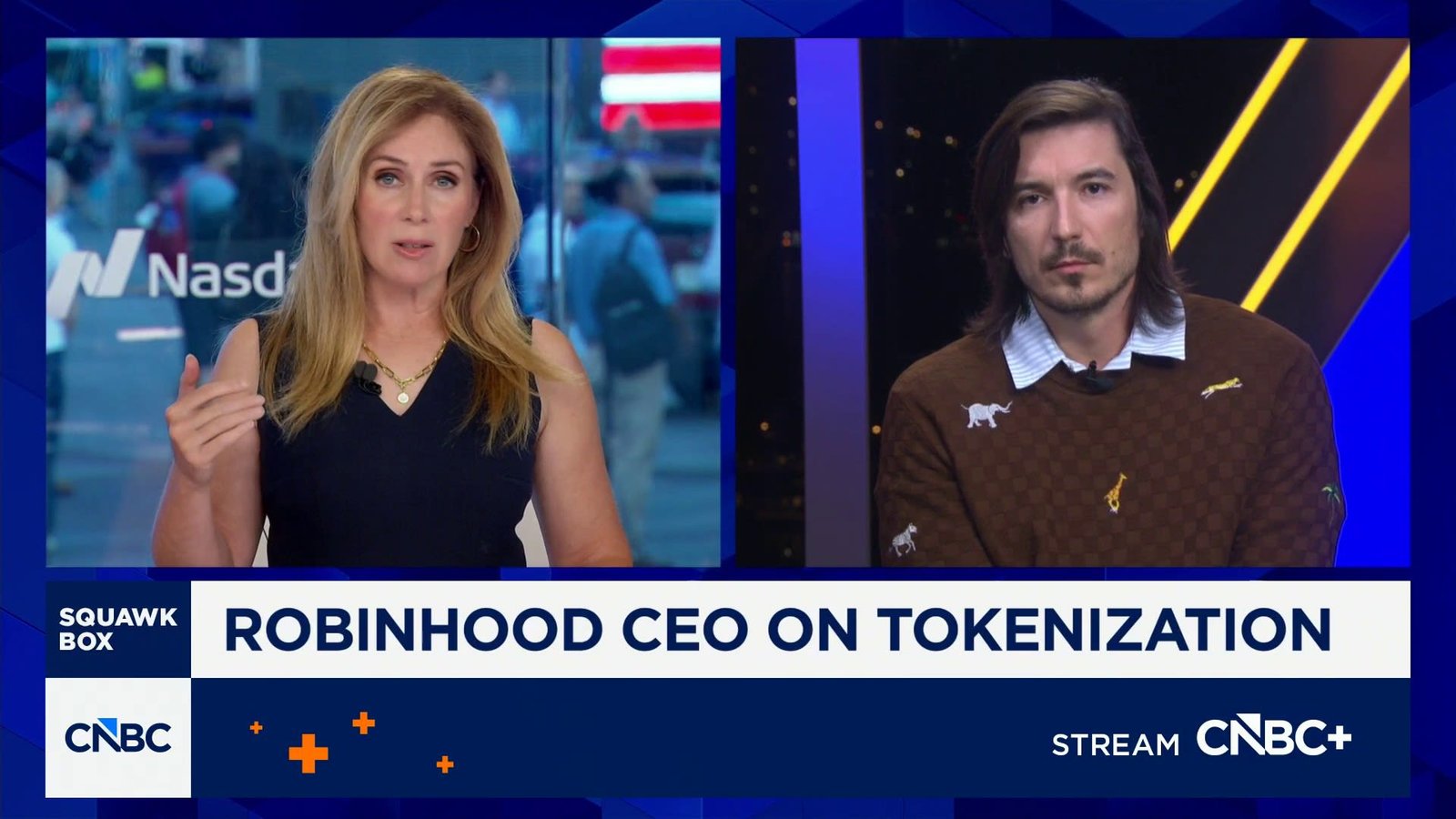

Robinhood CEO Vlad Tenev defended the company’s push into tokenized stocks on Wednesday, saying public companies can’t control the financial products built around their shares once they go public, after AMC recently slammed Robinhood’s tokenization efforts.
Tokenization is the process of issuing digital representations of publicly traded securities, real world assets or any other form of value on a blockchain network. Holders of tokenized assets don’t have outright ownership of the assets themselves.
Tenev spoke about Robinhood’s tokenization effort as a technology-neutral financial wrapperaround publicly tradedstocks. Once a company’s shares arepublicly traded, he told CNBC’s “Squawk Box,” theshareholder owns transferableproperty and otherfinancial institutionsshould be ableto create productsthat reference thoseshares – without askingthe issuer forpermission.
“Issuers should have control and do have control over the rights and obligations of the stock that they issue, but that doesn’t mean they control everything about it,” he said. “In particular, they don’t control other companies issuing their own securities that reference those shares.”
“Issuer consent depends on what exactly you’re doing,” he added, “and in the case of Robinhood stock tokens – which are tokenized securities that are issued by a separate entity that are backed by underlying shares – those should not automatically require issuer consent.”
The comments come on the heels of AMC CEO Adam Aron’s fiery criticism of Robinhood’s tokenized stocks, which include tokenized AMC shares. Aron said that the increasingly popular practice of tokenization allows the brokerage to create exposure to AMC stock without the issuing company’s involvement, undermining thetraditional relationshipbetween companies andtheir shareholders.
Tenev acknowledged that, unlike an ordinary shareholder, holders of stock tokens don’t receive voting rights in the underlying company. The tokens are structured as debt securities backed by the underlying shares, although Tenev also declined to say how Robinhood plans to exercise the voting rights attached to those shares.
When asked whether Robinhood would vote those underlying shares, he said the company “hasn’t really announced plans for the voting aspect of that.”
About The Author