Rotation away from AI trade may continue after Oracle earnings dud, Fed decision
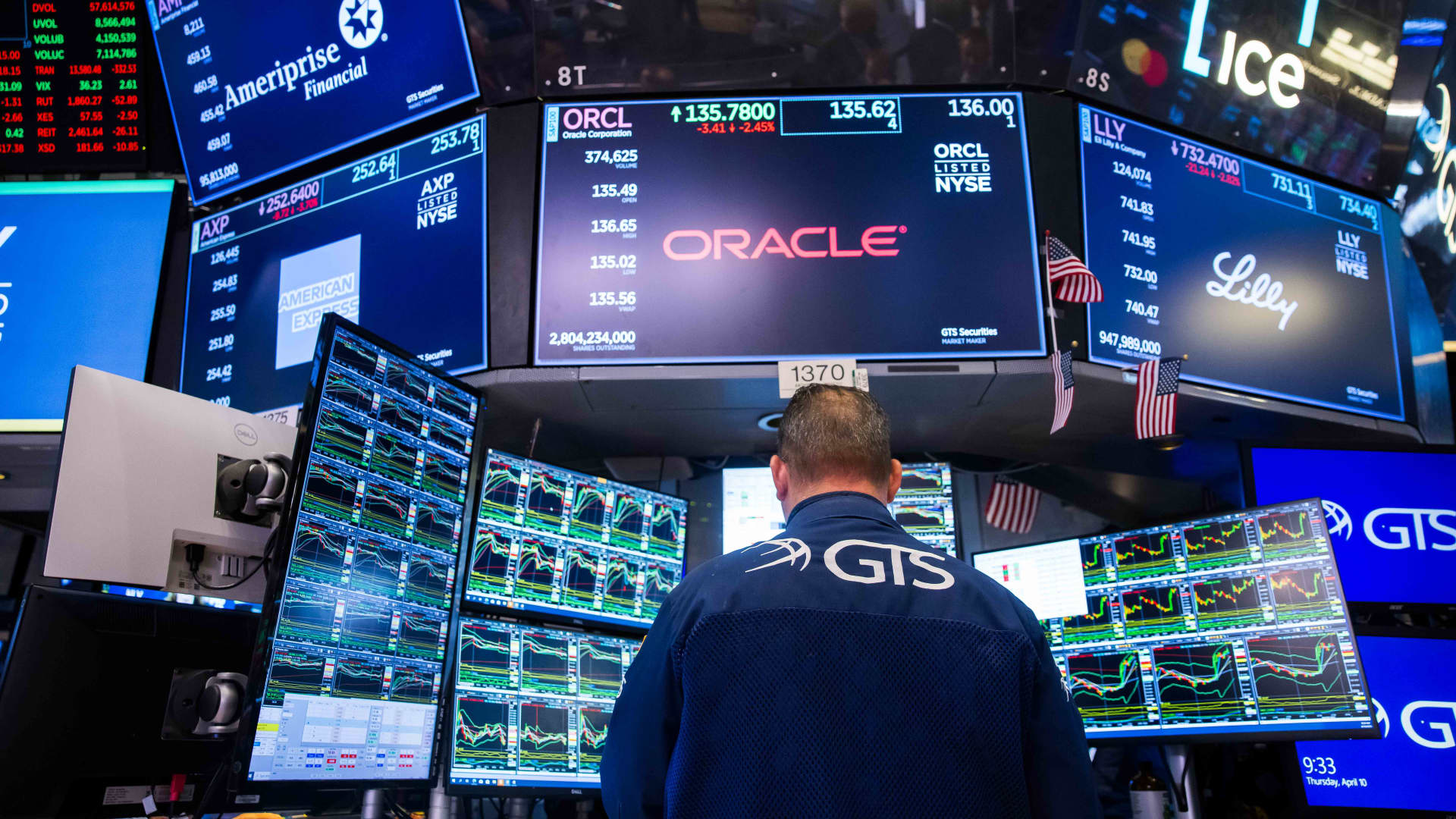
A rotation away from the artificial intelligence trade could continue after Oracle ‘s earnings disappointment and the latest Federal Reserve decision. On Thursday, the tech-heavy Nasdaq Composite and the S & P 500 dropped 0.9% and 0.2%, respectively, as a slide in major AI chipmakers weighed on the major averages. Nvidia and Broadcom dropped more than 3%, each. On the other hand, the Dow Jones Industrial Average outperformed, last jumping more than 550 points, or 1.2%, as investors piled into the benchmark known for its greater exposure to so-called real economy stocks. Two recent developments contributed to that divergence. For one, Oracle’s disappointing quarterly revenue and elevated spending forecast late Wednesday revived fears of unsustainable AI debt, meaning tech companies may not see returns on their investments. That knocked down tech names on Thursday. For another, Fed Chair Jerome Powell ‘s post-meeting comments on Wednesday suggested the economy is headed for faster economic growth, which is a boon for more cyclical companies. At its December meeting, the central bank hiked its gross domestic product forecast for 2026 to 2.3% growth, while estimating inflation will hold above its 2% target until 2028. Conventional wisdom suggests that high economic growth will lead to inflation. However, the likelihood of greater productivity gains point to an economy that could continue to grow without also raising pricing pressures. For the stock market, that could mean the extraordinary gains of the last several years could broaden out to other sectors such as banks and consumer discretionary, according to 22V Research’s Dennis DeBusschere. It could also mean greater differentiation within AI names. “We aren’t the analysts to get into the minutiae of ORCL earnings, but there is a practical implication from ORCL’s earnings for factors going forward. The combination of investor discerning between winners and losers in the AI trade (see the GOOG stack vs Open AI stack … ) along with the Fed supporting stronger economic growth should continue to a rotation away from AI only investments,” DeBusschere wrote. He said the Google stack includes Broadcom, TTM Technologies , Celestica and Lumentum . On the other hand, the OpenAI stack includes Nvidia, SoftBank , Oracle, AMD , among others. “As normal economic expansion has continued, and the Fed started cutting rates, recession fears have eased, clearing the way for a Value rebound,” he also wrote. “The catalyst fueling the rally are growing concerns about AI spend.”