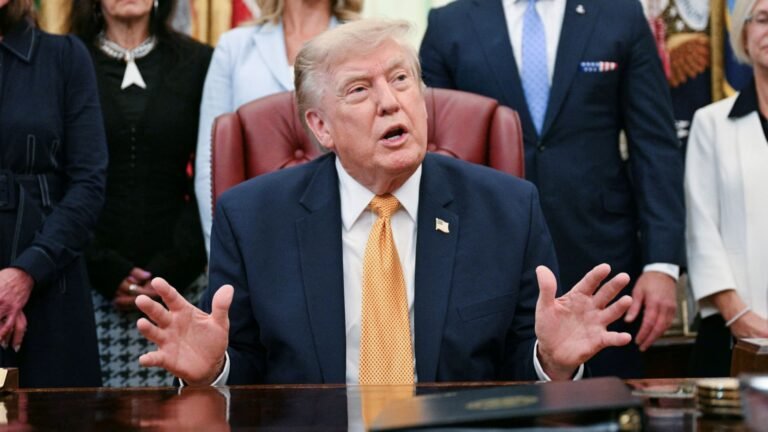
The rupee opened 21 paise weaker at 93.71 against the US dollar on Wednesday, April 22, pressured by a renewed uptick in oil prices despite U.S. President Donald Trump announcing an indefinite extension of the ceasefire with Iran.
A spot FX trader told Reuters that Tuesday’s move has reversed the rupee’s short-term upward bias, noting that oil prices edging back toward $100 could limit any meaningful recovery in the currency.
The trader as per the Reuters news report mentioned that the Reserve Bank of India is not expected to permit the rupee to reach the 94 level in the near future. Although the currency faced pressure on Tuesday, dollar sales from state-operated banks indicate active intervention.
Brent crude prices dipped slightly to $98.28 during Asian trading, yet still held onto most of its significant 8.5% gain from the prior sessions, as markets seemed to overlook Trump’s extension of the ceasefire.
The decision seemed to be made unilaterally, with no immediate confirmation regarding whether Iran or Israel, a US ally, would agree to extend the truce that started two weeks ago.
Trump also mentioned that the US Navy would maintain its blockade of Iranian ports and coastlines, despite the uncertain outlook for peace negotiations.
According to analysts, China is intensifying the pressure on the rupee’s forecast. The country is expected to experience consistent growth of approximately 5% in 2026, fueled by robust manufacturing, resilient exports, and significant advancements in high-tech fields such as semiconductors, robotics, and electronics. This places China as a relatively stable engine of growth amid global uncertainties.
Analysts indicate that this situation attracts international investors, resulting in an upsurge of capital into China and a strengthening of the Chinese yuan. Concurrently, part of this capital is diverted away from emerging markets like India, diminishing support for the rupee.
Moreover, rising demand from China is elevating global commodity prices, which consequently increases India’s import expenses and dollar demand.
Experts emphasize that ongoing foreign institutional investor (FII) outflows are amplifying the issue, as continuous selling diminishes liquidity support and places additional stress on the rupee.
Rupee Outlook
According to Amit Pabari, MD, Research Team, CR Forex Advisors, technically, USD/INR has made a strong base in the 92.50–92.80 range. However, as uncertainty lingers, the pair could gradually move higher towards 93.80–94.00 as markets rebuild directional bias.
Disclaimer: This story is for educational purposes only. The views and recommendations above are those of individual analysts or broking companies, not Mint. We advise investors to check with certified experts before making any investment decisions.
About The Author