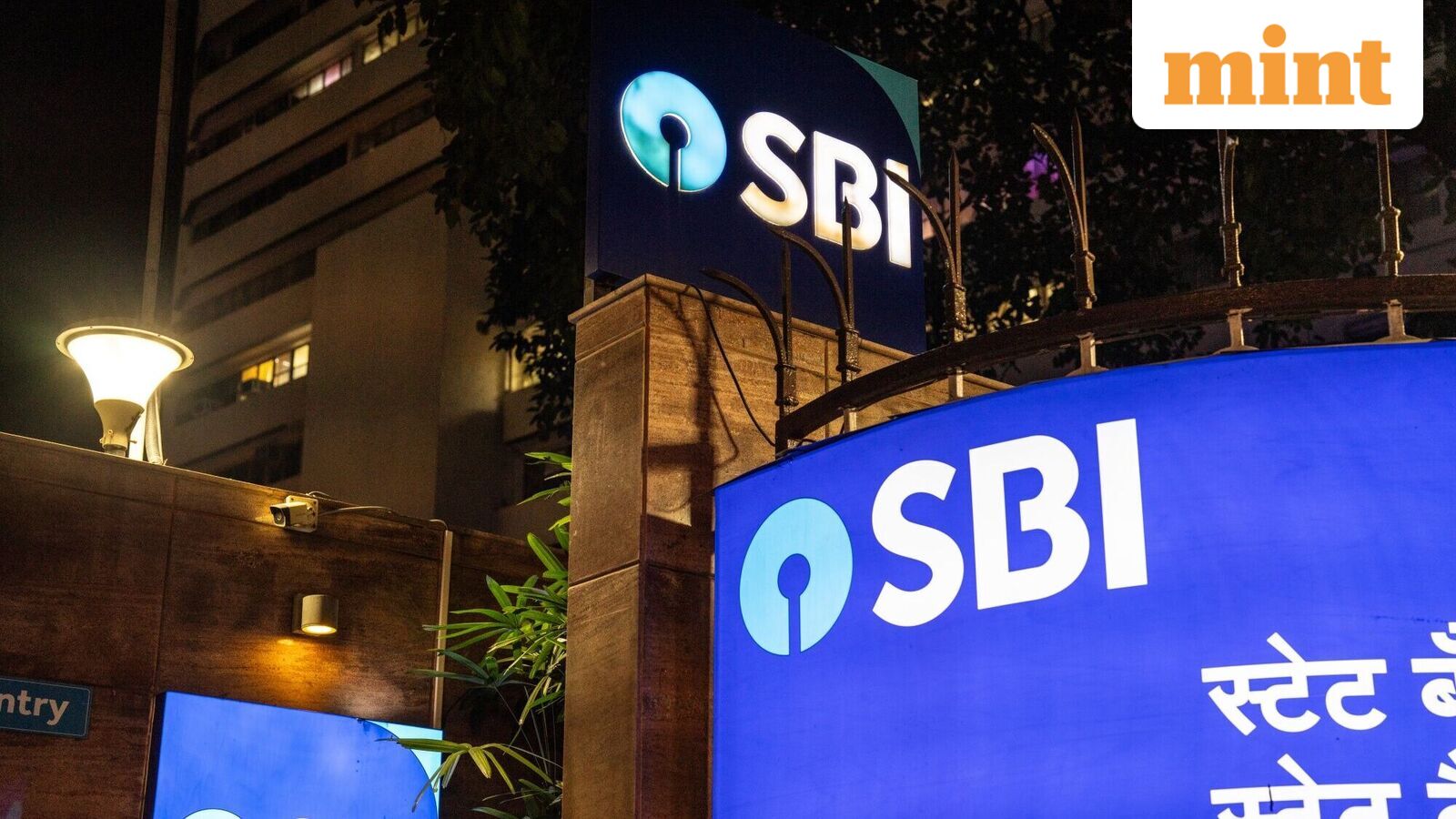
SBI Q4 Results: Shares of State Bank of India have witnessed intense selling pressure after the lender’s March quarter (Q4FY26) earnings, with investors turning cautious over margin compression and weaker-than-expected quarterly earnings despite record annual profitability. India’s largest lender by customer base lost nearly 10.8% over two trading sessions after the results announcement, erasing more than $11.3 billion in market value.
Analysts believe the correction reflects rising concerns that Indian banks could be entering a tougher profitability cycle as rising funding costs and softer interest rates begin weighing on lending margins across the sector.
SBI Q4 results
SBI , up 5.6% YoY, while annual profit crossed ₹80,032 crore for the first time. However, the Street remained disappointed after the bank’s whole-bank net interest margin (NIM) declined to 2.91% in FY26 from 3.08% last year. Quarterly NIM also narrowed to 2.8% from 2.98% in the previous quarter.
Despite the pressure on margins, SBI’s core operating performance remained strong during FY26. Total business crossed ₹109 lakh crore, while advances grew 16.9% and deposits rose above ₹59.7 lakh crore. Asset quality also improved further, with gross NPA declining to 1.49% and net NPA improving to 0.39%, both at multi-decade lows.
SBI Stock Performance
The stock has remained volatile in recent months. SBI shares have declined 8.5% over the last one month and nearly 18.5% over three months. However, the stock is still up 21% over the past year. SBI had touched a 52-week high of ₹1,234.80 in February 2026, while the 52-week low stood at ₹779.40 in May 2025.
Investors largely focused on the decline in margins and softer-than-expected earnings rather than the bank’s record annual profit. Analysts noted that rising funding costs, treasury-related pressures and some increase in agriculture-related slippages affected quarterly profitability.
Should you buy SBI shares after the sharp correction?
Analysts remain divided between near-term caution and long-term optimism after SBI’s sharp post-results correction. While margin pressure may continue affecting sentiment in the near term, several experts still believe SBI remains one of the strongest PSU banking franchises from a long-term perspective.
“SBI shares declined after Q4 results missed market expectations. NII moderated due to yield pressure from corporates shifting to T-bill-linked borrowings, while profitability was impacted by higher MTM losses and a slight uptick in agriculture-related slippages,” said Antu Eapen Thomas, Senior Research Analyst at Geojit Investments Limited.
Thomas added that, however, the bank maintained its guidance of 13–15% credit growth and NIMs above 3%. According to the expert, SBI remains well-positioned as a leading PSU bank, backed by improving asset quality, strong balance sheet strength, and long-term opportunities from India’s infrastructure and energy capex cycle. The recent correction could offer a gradual accumulation opportunity for long-term investors, subject to evolving global risks.
Technical Outlook
Technical analysts, however, believe the stock may continue witnessing near-term volatility until key support levels stabilise.
“Despite the recent decline, SBI continues to remain one of the strongest PSU banking franchises because of its scale, strong deposit base, improving asset quality, and expanding digital ecosystem through YONO,” said Mayank Jain, Market Analyst at Share.Market.
Jain stated that SBI has entered a short-term corrective phase and is currently trading below its 20-day and 50-day moving averages, indicating near-term weakness. According to him, the stock is approaching its 200-day moving average, which remains an important long-term support zone. He added that a sharp fall below this level could increase weakness further, while stronger momentum may return only after the stock reclaims its short-term moving averages.
Meanwhile, some market experts believe the sharp correction may create a buying opportunity for patient investors willing to tolerate short-term volatility.
“Yes, long-term investors can consider buying SBI on this dip. The ~10% fall in two sessions to around ₹975 is a sharp reaction to Q4 FY26 margin compression and a modest earnings miss, but core fundamentals like healthy loan growth, stable asset quality, and record annual profits remain intact. Though near-term volatility is possible,” suggested Santosh Meena, Head of Research at Swastika Investmart Ltd.
Disclaimer: The views and recommendations made above are those of individual analysts or broking companies, and not of Mint. We advise investors to check with certified experts before making any investment decisions.
About The Author