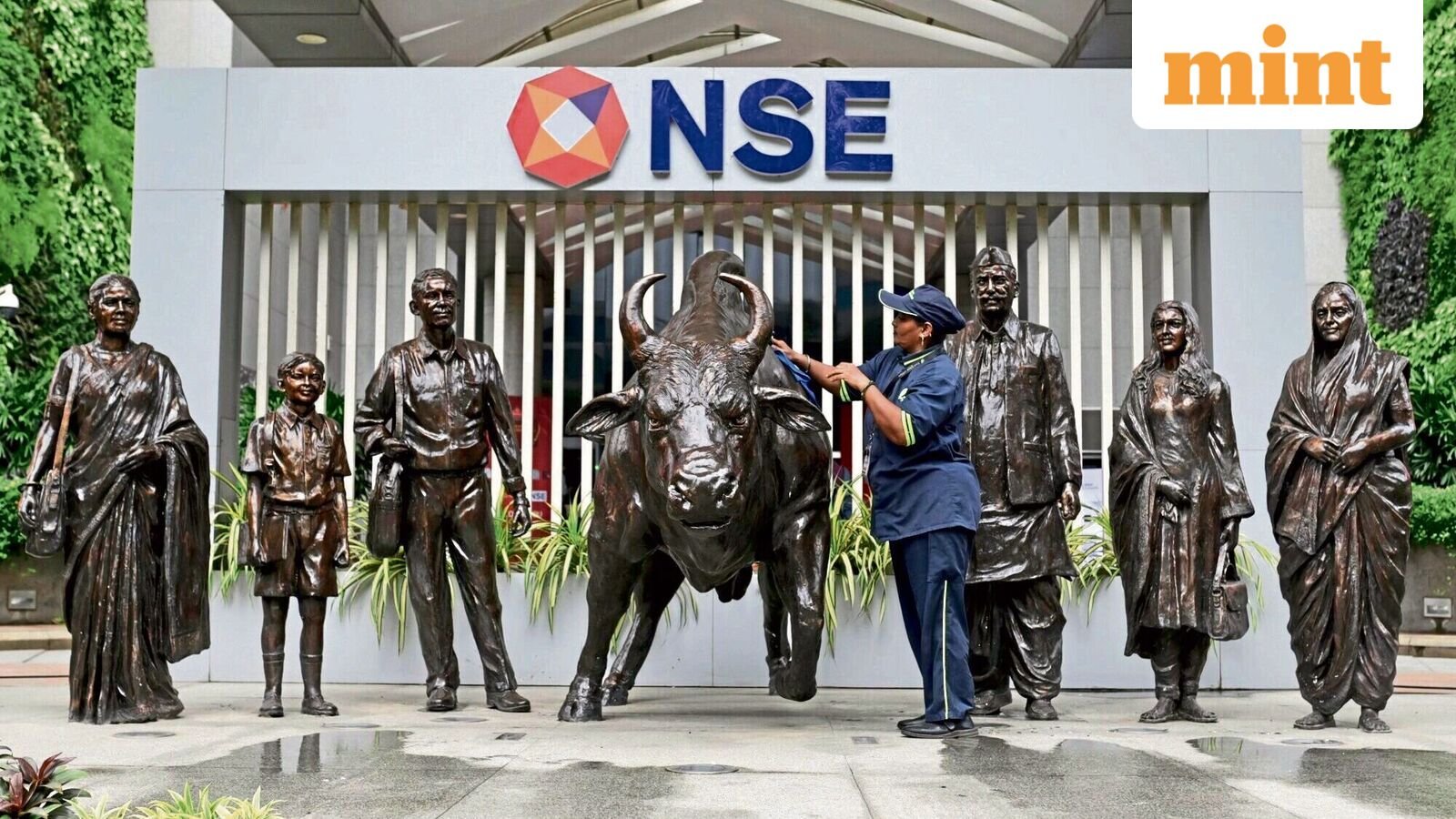
Mumbai: The Securities and Exchange Board of India (Sebi) is likely to approve the National Stock Exchange’s (NSE) initial public offering (IPO) soon, bringing India’s largest stock exchange closer to its debut in the capital markets after a decade-long wait.
“Yes, we are close (to giving approval to the NSE IPO),” said Sebi chairman Tuhin Kanta Pandey on the sidelines of an event on Thursday.
On whether NSE would be able to offer its shares on its own platform, the regulatory chief said the decision is yet to be thought about. “We have not thought about it yet (allowing NSE shares to trade under the permitted to trade category). We will have to think about it.”
NSE filed the draft red herring prospectus (DRHP) for its approximately ₹30,000 crore IPO with the market regulator in June, reviving a listing plan that was effectively frozen by a series of regulatory and legal disputes dating back to 2015.
In one of the largest secondary market transactions via an offer for sale (OFS), existing shareholders will offload 148.9 million shares, representing a 6% stake in NSE. An OFS involves existing shareholders getting a partial or complete exit from a company, with no funds flowing to the debuting company.
Mint reported on 14 August that the bourse aims to launch its IPO by mid-September and is eyeing a possible listing by 25 September.
Bloomberg reported on 20 August that NSE was planning to allow trading its shares on its own platform by bringing them under the permitted to trade (PTT) category. The PTT category in Indian stock exchanges allows the trading of securities of companies that are not formally listed on that specific exchange but are listed and actively traded on another primary recognized stock exchange in India.
On India’s closing auction session (CAS), the Sebi chief said the regulator is unlikely to make any immediate changes to the framework. The system has attracted criticism from brokers due to low liquidity and price uncertainty.
“We are not looking at any changes, and the system is running as it is. Participation will increase and brokers will enable it in their apps and people will learn and come to this market,” Pandey said.
CAS, introduced on 3 August, is designed to determine a single price at which the maximum number of pooled orders for a stock can be matched. Auction orders can be placed within a ±3% range around a volume-weighted reference price derived from trading between 3pm and 3.15pm. The framework has been marred with unpredictable price swings.
For instance, on Wednesday, the Nifty slumped 271.4 points within 30 seconds after the auction order session opened at 3.20pm. The index fell to 24,005.5 from its reference rate of 24,276.9 released at 3.15pm. It later recovered to close at 24,207.75, 0.28% below the reference rate by 3.30pm.
Mint reported that the sharp movement was due to a bid placed 3% below the reference rate for Bharti Airtel.
About The Author