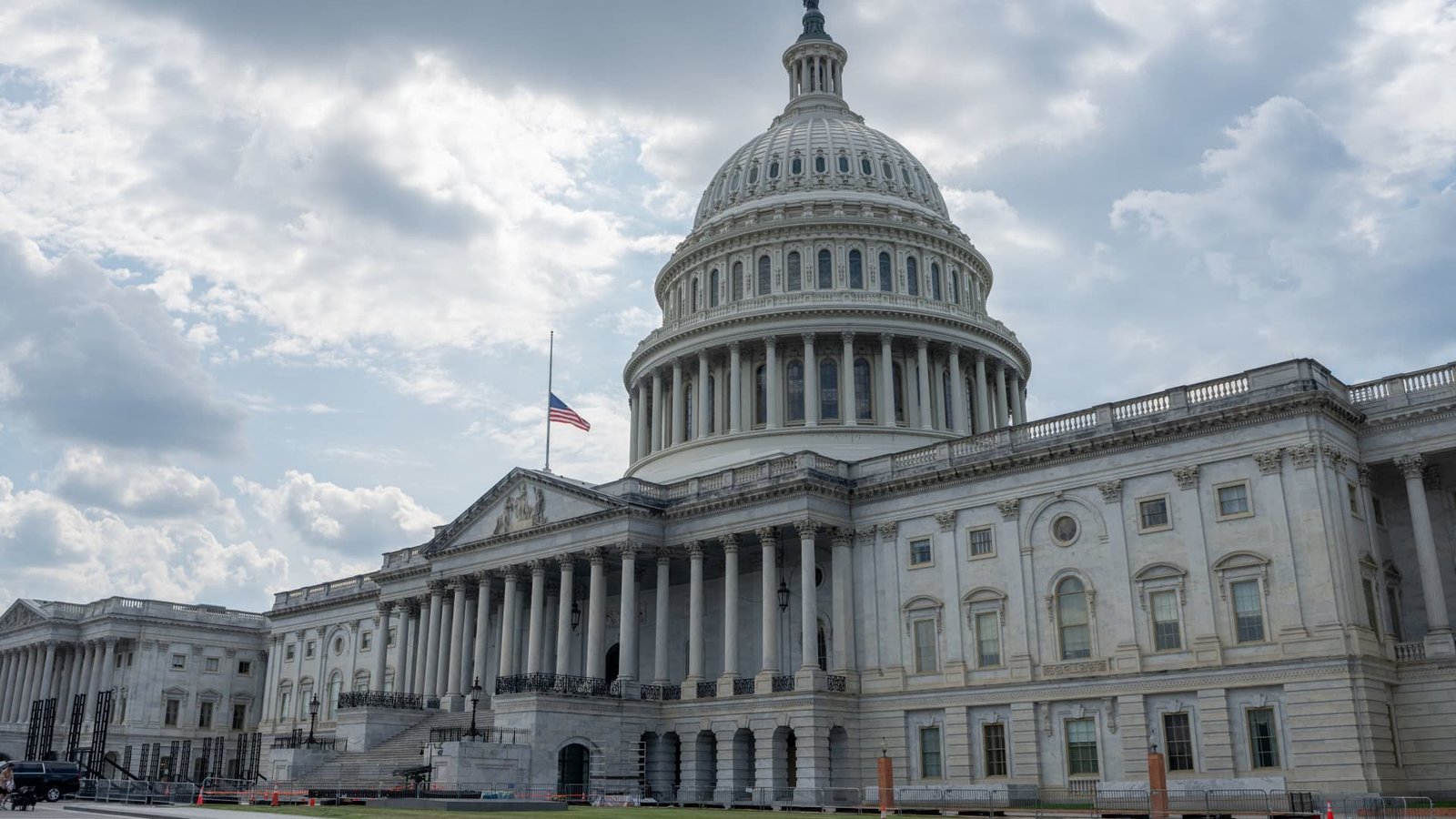
The U.S. Capitol exterior after U.S. House of Representatives approved legislation to avert a government shutdown before the midterm elections, in Washington, D.C., U.S., Sept. 1, 2026.
Aaron Schwartz | Reuters
The Senate is set to vote on Thursday on a measure demanding an end to the U.S. war with Iran as American consumers reel from sky-high fuel prices due to the conflict.
An affirmative vote on the measure, known as a War Powers Resolution, would direct President Donald Trump to remove U.S. troops from hostilities in Iran unless Congress explicitly approves the war.
The Senate has voted repeatedly on similar measures since the war began, passing one of them.
The measure being voted on Thursday — a “concurrent resolution” — does not carry the force of law and is never signed by the president, making the vote mostly symbolic.
The Democratic leaders of the legislative push, however, argue that the Constitution vests authority to declare war in Congress, not the executive branch, and that the president must abide by their disapproval whether or not he signs it.
“The president right now is in violation of the Constitution and the War Powers Act and the concurrent resolution that we’ve already passed,” said Sen. Tim Kaine, D-Va., who has led a number of the votes to end the war.
“We shouldn’t have to do a second one because the president should follow the law, but we are doing a second one on the theory that maybe after a number of months more people will join us, the American public is even more deeply opposed to this war.”
The measure passed the House in July and now faces just a 50-vote threshold to clear the Senate. Democrats have seen an uptick in Republican support in recent votes to end the war, as the administration has blown through timelines to seek congressional approval for the conflict.
The war has also created a challenging political environment for incumbent Republicans, who could lose control of the House and Senate in the midterm elections that loom less than six weeks away.
Gas prices, which have spiked throughout the conflict, currently average $4.48 per gallon nationwide, according to AAA. Recently, runaway diesel prices have begun stressing farmers and truckers and have alarmed Republicans in midwestern states, who have begun to distance themselves from the White House and call for an end to the war.
Lawmakers are set to hit the campaign trail for nearly all of October, and will need to explain to voters what they are doing to bring down prices. That could increase pressure on Republicans to vote for the measure to end the war, though most are still expected to vote against it.
“There are a lot of good things we can talk about; the problem is what you did for me recently doesn’t even hardly count,” said Sen. Kevin Cramer, R-N.D., when asked about how Republicans can message to economically anxious voters. “The other thing that we get to talk about … is that at least we’re not socialists.”
About The Author