Silver and gold prices in India climbed sharply on Wednesday, March 25, as investors responded to a softer US dollar, cooling crude oil prices, and rising optimism that the Middle East conflict may be nearing a negotiated end. The move marked a notable shift in market sentiment, with traders beginning to unwind some of the war-driven inflation fears that had weighed on precious metals in recent weeks.
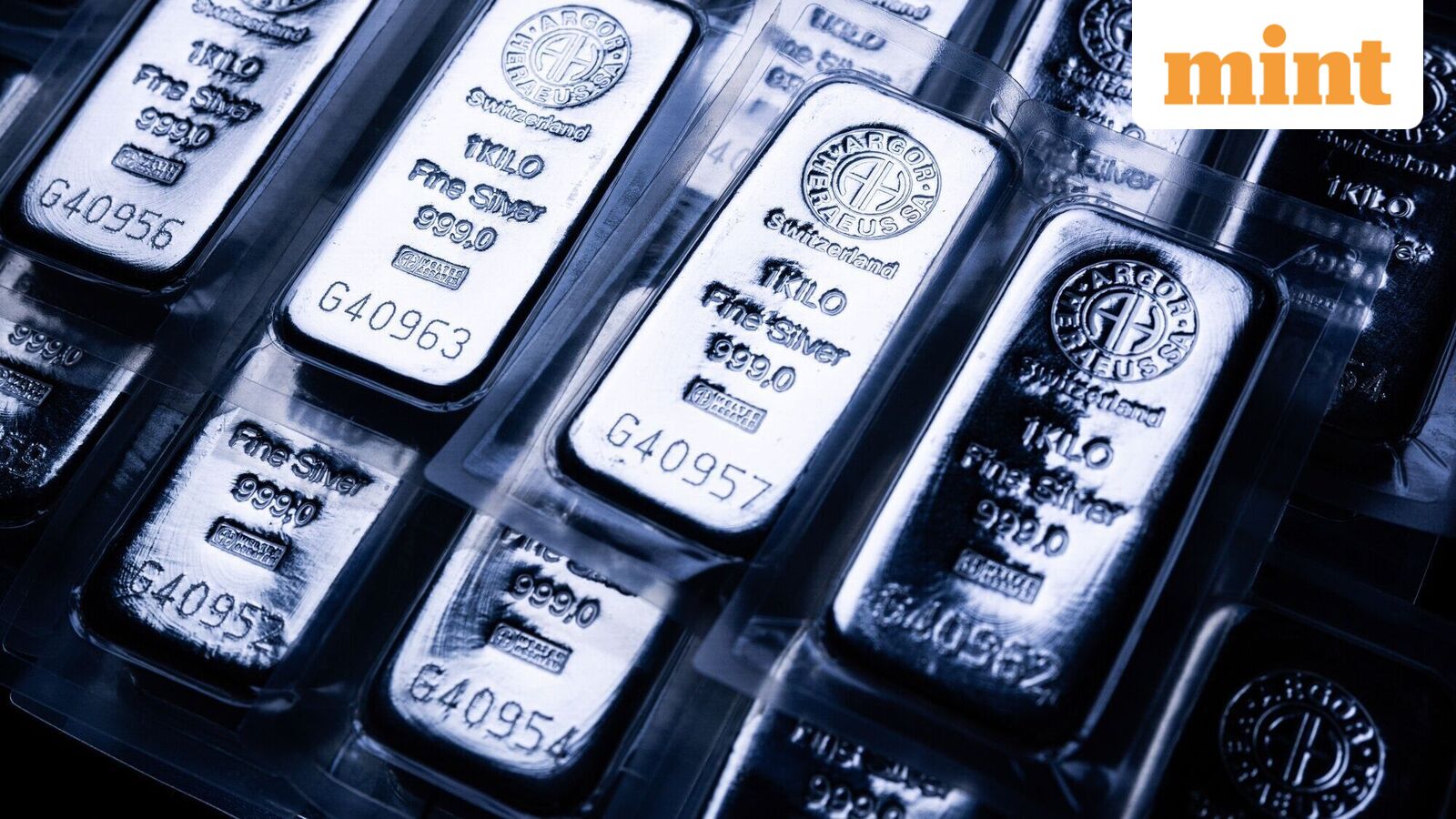
On MCX, silver price jumped around 5.5% or over ₹12,000 to the day’s high of ₹2,36,137 per 1 kg. Meanwhile, MCX gold price advanced 4% or over ₹5,500 to the day’s high of ₹1,44,434 per 10 grams.
Moreover, in international markets as well the precious metals soared. Spot Silver gained 3.6% to $73.78 after ending the previous session 3% higher, extending its rally as broader commodity and currency trends turned supportive. Other precious metals also advanced.
Spot gold rose 2.5% to $4,586.70 an ounce at 10:08 a.m. Singapore time, while US gold futures for April delivery gained 4.2% to $4,586.10. Spot platinum climbed 2.2% to $1,978.10, and palladium was up 1.5% at $1,461.56.
The sharp rise in silver came at a time when investors appeared to be reassessing the macroeconomic fallout of the war, especially after signs emerged that the United States was pushing hard for a settlement with Iran.
Silver, Gold prices: What driving the rally?
One of the biggest triggers for silver’s rise was the weakening of the US dollar. The dollar slipped as much as 0.3%, making dollar-priced bullion cheaper for buyers holding other currencies. That typically improves international demand for precious metals, especially silver and gold, which are highly sensitive to moves in the greenback.
At the same time, oil prices dropped below $100 a barrel, reducing fears that the conflict would continue to disrupt energy supplies from the Middle East and keep inflation elevated across major economies. That decline in crude prices appears to have been a major turning point for metals markets.
For weeks, elevated oil prices had been a problem for silver and gold despite their safe-haven status. Since the war began more than three weeks ago, both metals had largely moved in tandem with equities and in the opposite direction of crude oil. That unusual relationship reflected a broader macro concern: when oil surges, inflation risks rise, and central banks become less likely to cut rates.
That matters because silver, like gold, is a non-yielding asset. When interest rates are expected to stay high—or rise further—the opportunity cost of holding precious metals increases. In that environment, bullion often struggles to gain traction, even during geopolitical uncertainty.
But with oil prices cooling and diplomatic headlines improving, that pressure has started to ease.
US President Donald Trump said Iran had offered a “present” as a show of good faith in negotiations, noting that it was related to energy flows via the Strait of Hormuz. China also urged Iran to engage in talks with the US, adding to hopes that the conflict could de-escalate.
Trump further said on Tuesday that the US was making progress in its efforts to negotiate an end to the war with Iran, including securing an important concession from Tehran. Reports also suggested that Washington had sent Iran a 15-point settlement proposal, reinforcing expectations that a ceasefire or broader diplomatic framework could be within reach.
Renisha Chainani, Head – Research at Augmont noted that Gold and silver have rebounded from key psychological supports near ₹1,30,000 and ₹2,00,000, respectively, supported by oversold conditions and short-covering. However, prices remain under pressure as Middle East tensions persist, with uncertainty around negotiations and the reopening of the Strait of Hormuz keeping inflation risks elevated, she added.
Chainani further pointed out that while US President Donald Trump indicated a delay in potential strikes and mentioned ‘productive discussions,’ Iran has denied any ongoing talks, and Israel continues military actions. This divergence is sustaining geopolitical uncertainty and market volatility. She also highlighted that the recent sell-off reflects a classic liquidity-driven phase, where investors liquidate profitable assets like gold and silver to meet margin calls in other asset classes. This indicates positioning-driven moves rather than a change in long-term fundamentals.
Moreover, Silver, in particular, tends to benefit strongly from this kind of backdrop. Unlike gold, silver has a dual role in global markets. It is both a precious metal and an industrial commodity. So when fears of prolonged war begin to ease, silver can attract demand from two directions at once—first as a hedge against uncertainty, and second as a growth-linked metal tied to industrial and manufacturing activity.
If the war does move closer to a formal end and oil remains under control, silver could continue to stay supported in the near term. However, much will still depend on whether diplomatic momentum holds, how the Federal Reserve responds to incoming inflation data, and whether the dollar remains under pressure.
Disclaimer: The views and recommendations made above are those of individual analysts or broking companies, and not of Mint. We advise investors to check with certified experts before making any investment decisions.
About The Author