(WO) — The greenhouse gas (GHG) intensity of Canadian oil sands production declined for a 13th consecutive year in 2025, extending a long-term trend of improving emissions performance despite continued production growth, according to new analysis from S&P Global Energy.
The study found average oil sands emissions intensity fell 2% year-over-year to 59 kgCO2e/bbl in 2025. Since 2009, emissions intensity has declined by 31%, equivalent to a reduction of nearly 27 kgCO2e per barrel of marketable production.
“The downward trajectory of oil sands emissions intensity is now a well-established, multi-decade trend,” said Kevin Birn, vice president and head of carbon research at S&P Global Energy. “Ongoing optimization efforts to maximize output from existing facilities, which are much more capital efficient compared to new projects, has been a critical factor.”
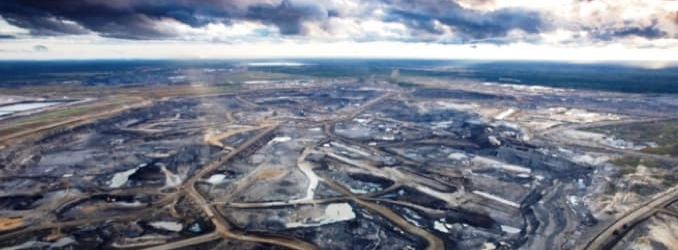
According to the report, mining operations delivered some of the largest improvements through fleet optimization, waste-heat integration, predictive maintenance and shorter maintenance turnaround periods.
The analysis also highlighted the role of technology investments, including carbon capture, utilization and storage (CCUS) projects and facility upgrades aimed at reducing emissions from existing operations. In addition, growing production from steam-assisted gravity drainage (SAGD) projects, which generally have lower emissions intensity than integrated mining operations, contributed to lower industry-wide averages.
While emissions intensity continued to decline, total emissions increased alongside higher production levels. S&P Global reported that absolute oil sands emissions rose 2% between 2024 and 2025 as production increased by approximately 150,000 bpd.
“As oil sands output has increased, emissions have been spread over more units, pushing intensity lower even as it also pushed absolute emissions higher, but at a slowing rate,” Birn said.
The report noted that future production growth could lead to additional increases in overall emissions unless accompanied by broader deployment of CCUS and other emissions-reduction technologies. However, continued operational improvements may allow new production volumes to be developed at lower carbon intensity than in previous decades.
Canada’s oil sands remain one of the world’s largest sources of crude oil supply growth, with operators continuing to focus on improving efficiency, reducing emissions intensity and maximizing output from existing assets.
About The Author