SpaceX has a 'cash cow' hiding in plain sight. Heres why Im buying the stock
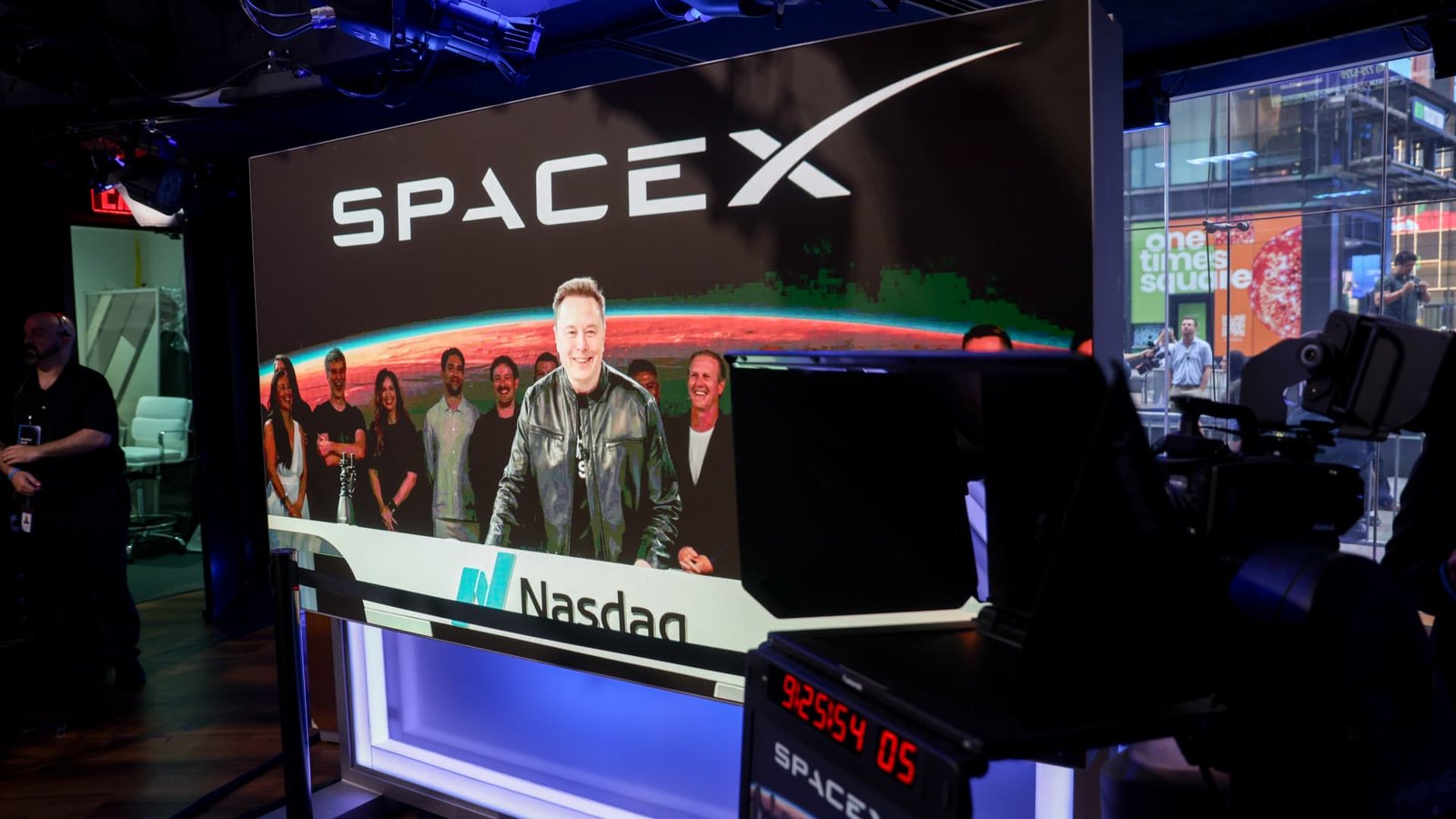
I’ve been watching SpaceX closely since it went public in June. The stock has already been on a wild ride, soaring from its $135 IPO price to more than $225 before falling as low as roughly $105. SpaceX had already popped up on our “quantamental” screen for companies with strong long-term growth potential. When shares broke below the IPO price and some of that initial enthusiasm washed out, we saw our opportunity and bought it for our Mango Growth ETF . The Texas-based company was founded by Elon Musk in 2002 with the goal of dramatically lowering the cost of getting into space. Decades later, its business spans reusable rockets, satellite internet, human spaceflight and national-security missions. Key points Starlink is a powerful recurring-revenue engine with 12 million customers and a massive satellite network. SpaceX’s reusable rockets and frequent launches give it a major advantage over competitors. Starship could widen that lead by carrying much more into space and opening new opportunities in communications and defense. On Monday, Sept. 28, SpaceX is targeting Starship’s first orbital flight , which is expected to carry 26 next-generation Starlink V3 satellites, a key step toward putting larger Starlink satellites with much more capacity into orbit. That launch gets right to the heart of my thesis. SpaceX is more than a rocket company. The bigger opportunity is what those rockets allow it to build in orbit, particularly Starlink, its high-speed internet network. Why I’m buying Starlink is becoming a cash cow Starlink had 12 million subscribers at the end of the second quarter, double the number it had a year earlier. That growth helped drive SpaceX’s Connectivity revenue up 66% to $4.3 billion. And Starlink has built a huge lead in space. It has roughly 11,000 active satellites in orbit, compared with about 650 for Eutelsat OneWeb. There’s still a lot of room to grow. Starlink is adding direct-to-cell service, working with mobile carriers to connect phones in areas without reliable cell service. Airlines are another area for growth, with Starlink already providing high-speed internet on commercial flights. SpaceX is way ahead of the competition in launch Through Falcon 9 and Falcon Heavy, SpaceX launches dozens of flights a quarter, a pace competitors including Blue Origin, United Launch Alliance and Arianespace have yet to match. A big reason is reusability: The company can land and reuse its rocket boosters, lowering the cost of each mission. Another major advantage is that SpaceX is its own customer. Unlike satellite operators that have to buy launches from outside providers, SpaceX can use its rockets to keep building out Starlink. Starship could unlock much larger missions If SpaceX can make Starship work reliably, its added capacity could expand the kinds of missions the company can take on. SPCX YTD mountain SpaceX, YTD The upcoming flight could be an important step toward that goal. Starship’s ability to carry much larger satellites could make it a key part of Starlink’s next phase of growth, while opening up new opportunities in communications and defense. Why now? The stock has rebounded about 41% from its August low, and I think the pullback from its post-IPO high helped establish a more durable base. The 50-day moving average is also around the $135 IPO price, which is the level I’m watching as near-term support. There could still be some volatility as the market absorbs shares newly eligible for trading following the latest post-IPO lockup expiration. But I view that as a near-term technical issue, not a change in the long-term story. Bottom line The rockets are what made SpaceX famous, but the bigger opportunity is using that launch advantage to build businesses of its own, from Starlink to national-security systems in space. It’s possible that computing in space may not become as practical or develop as quickly as expected. But that’s a risk I’m willing to take given the long-term opportunity I see. Jeff Kilburg is the founder and CEO of KKM Financial. Prior to starting his own firm, he spent more than two decades on the floors of the Chicago Board of Trade (CBOT) and Chicago Board Options Exchange (CBOE). Disclosures: Kilberg owns personally and in KKM Financial. All opinions expressed by the CNBC Pro contributors are solely their opinions and do not reflect the opinions of CNBC, or its parent company or affiliates, and may have been previously disseminated by them on television, radio, internet or another medium. This content is provided as part of our editorial output for informational purposes only and does not constitute financial, investment, tax or legal advice or a recommendation to buy any security or other financial asset. The content is general in nature and does not reflect any individual’s unique personal circumstances. The above content might not be suitable for your particular circumstances. Before making any financial decisions, you should strongly consider seeking advice from your own financial or investment advisor. THIS CONTENT IS PROVIDED FOR INFORMATIONAL PURPOSES ONLY AND DOES NOT CONSTITUTE FINANCIAL, INVESTMENT, TAX OR LEGAL ADVICE OR A RECOMMENDATION TO BUY ANY SECURITY OR OTHER FINANCIAL ASSET. THE CONTENT IS GENERAL IN NATURE AND DOES NOT REFLECT ANY INDIVIDUAL’S UNIQUE PERSONAL CIRCUMSTANCES. THE ABOVE CONTENT MIGHT NOT BE SUITABLE FOR YOUR PARTICULAR CIRCUMSTANCES. BEFORE MAKING ANY FINANCIAL DECISIONS, YOU SHOULD STRONGLY CONSIDER SEEKING ADVICE FROM YOUR OWN FINANCIAL OR INVESTMENT ADVISOR. Click here for the full disclaimer.