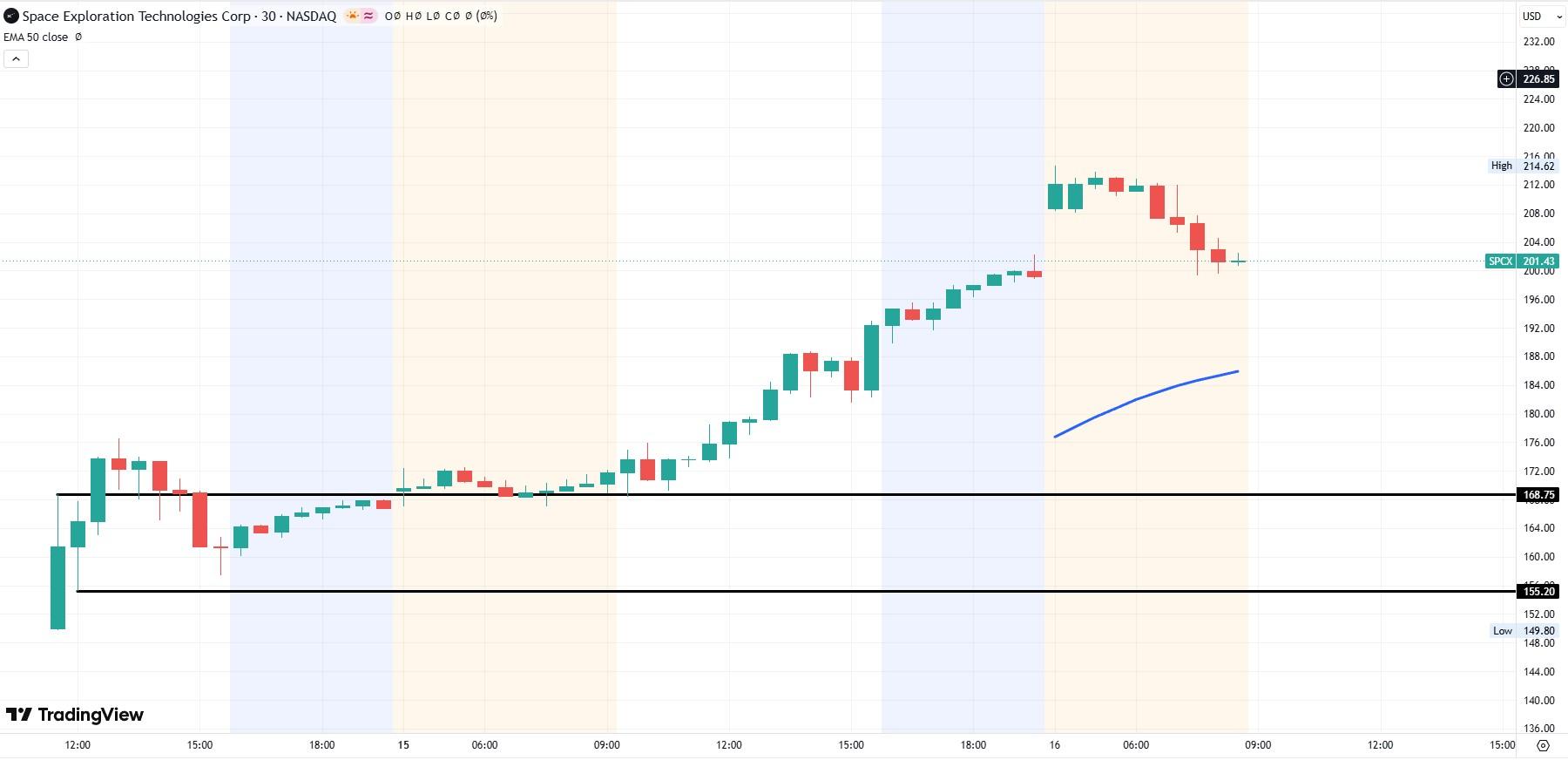
SpaceX (SPCX) stock added another 4% in Tuesday’s premarket to reach the $200 level on its third day of trading. Fervor for Elon Musk’s rocket-cum-AI company has been strong since SpaceX went public last Thursday and began trading on Friday.
After pricing at $135, SPCX stock has gained 19% for two days in a row. The share price ended Monday at $192.50. On Tuesday, the premarket trade saw SPCX rise to an all-time high of $214.62, but shares now exchange hands just before the open near $201.
The broader market is mixed with both S&P 500 and NASDAQ futures declining in the premarket, while Dow Jones futures add roughly a quarter percentage point. This is somewhat unsurprising after Monday’s regular session saw the NASDAQ add 3.1%, and the S&P 500 add 1.7%, on the back of the Trump administration saying it had completed a peace deal with Iran that would soon reopen the Strait of Hormuz. Oil (WTI) declined 4% on Monday, followed by a further 4% drop early on Tuesday.
SpaceX buys maker of Cursor AI coding platform
SpaceX announced on Tuesday that it would pay $60 billion for Anysphere, the company that owns and operates the Cursor AI coding assistant. The deal was previously announced tenuously in April, but Musk’s company now says the acquisition will go through in the third quarter.

SpaceX now trades with an extremely thin float, about 4% of the total share count, which makes it easy for the stock to appreciate. The total market capitalization is now above $2.5 trillion, which means it’s now on par with Amazon (AMZN).
Most of that value comes from SpaceX’s AI business and the supposed future prospects of launching data centers into space.
BNP Paribas released a client note on June 12 saying that SpaceX’s threat to existing wireless carriers might be less immediate than many think. Communications experts told BNP Paribas’ telecom analyst that direct satellite-to-cell technology has drawbacks compared with terrestrial wireless companies, particularly cell reception indoors. The thinking goes that SpaceX might need to build out terrestrial satellite towers in order to become a larger player, and that strategy could take many years.
About The Author