HOUSTON (WO) — Eight months after the Persian Gulf disruption began, oil and gas planners can no longer treat Middle East supply shocks as short-lived, panelists said Thursday at the 2026 SPE Annual Technical Conference and Exhibition (ATCE) in Houston, Texas. Instead, companies and governments must build resilience against decades of risk that historical models never anticipated.
Moderated by Skip York of Rice University’s Baker Institute for Public Policy, the session, titled “Energy Realism: Economics, Policy, and the Transition Ahead,” featured Michael Cohen of bp, Michelle Foss of L’Acadie Network, Robert McNally of Rapidan Energy Group and Robert Schwiers Jr. of Chevron.
“I don’t think many folks thought before February 28 that the United States would allow an adversary to disrupt the flow of hydrocarbons from the Persian Gulf for more than two or three days,” said McNally, founder and president of Rapidan. That, he noted, is roughly how long it took the U.S. military to restore flows in past Gulf conflicts.
Schwiers, Chevron’s chief economist, said the disruption is “clearly challenging the concept of reliability and energy security” and will shift how the industry allocates capital. Even so, he said, “demand’s really been resilient” outside the economies hit directly by shortages, and the global system has adapted.
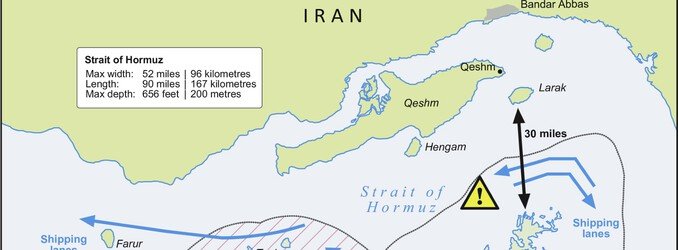
York then turned to an audience question on ‘black swans,’ the rare, hard-to-predict events with outsized consequences that he called “one of my favorite things to think about and argue.” “Nobody envisioned that the Strait of Hormuz would be closed for eight months,” York said, asking how consuming countries can build resilience against such events, which carry “extreme consequences when they do occur.”
“I’ve now got to put into my bingo card decades of potential risk from that region,” said McNally. He expects more storage, twinned pipelines, gas lines repurposed for oil, export routes from Kuwait and Iraq to the Mediterranean, and more investment in the Americas. But he warned that energy policy is usually made in crisis, and rigid government fixes lead to “longer and costlier adjustment periods.”
Cohen, bp’s U.S. economist and head of oil and refining, said the industry’s tools are part of the problem. “Many of our models and planning are based on history,” he said.
Resilience will come at a price, Cohen added. Moving from a just-in-time energy system to one that values redundancy means consumers or governments must pay, which is inflationary. He expects key Gulf producers to build storage further afield over the next two to three years. Cohen noted that the crisis also showed that China can flex its own demand or import level “to the tune of three-to-five million barrels a day.”
Foss, an advisor at L’Acadie Network, called long-tail events “insurance problems” and asked whether some black swans are self-inflicted. “If you pursue policies that discourage refining capacity in Europe, and that also discourage Europe from continuing to produce oil, and you have a major Middle East event and a diesel shortage, you’re going to have a problem,” she said. True resilience, she argued, means keeping refining and upstream capacity healthy enough to deliver in a crisis.
Schwiers pointed to Asia, where “an element of hoarding” has led several governments to ban petroleum product exports. Refiners there cut runs because they could no longer optimize their systems, leaving those countries shorter on product. The same thing would happen in the U.S., he said, if it banned diesel exports.
McNally remained hopeful that open markets will find their way through. “As long as we keep our systems dynamic and free, I’m cautiously optimistic that we will stumble and bumble our way through the noise,” he said.
About The Author