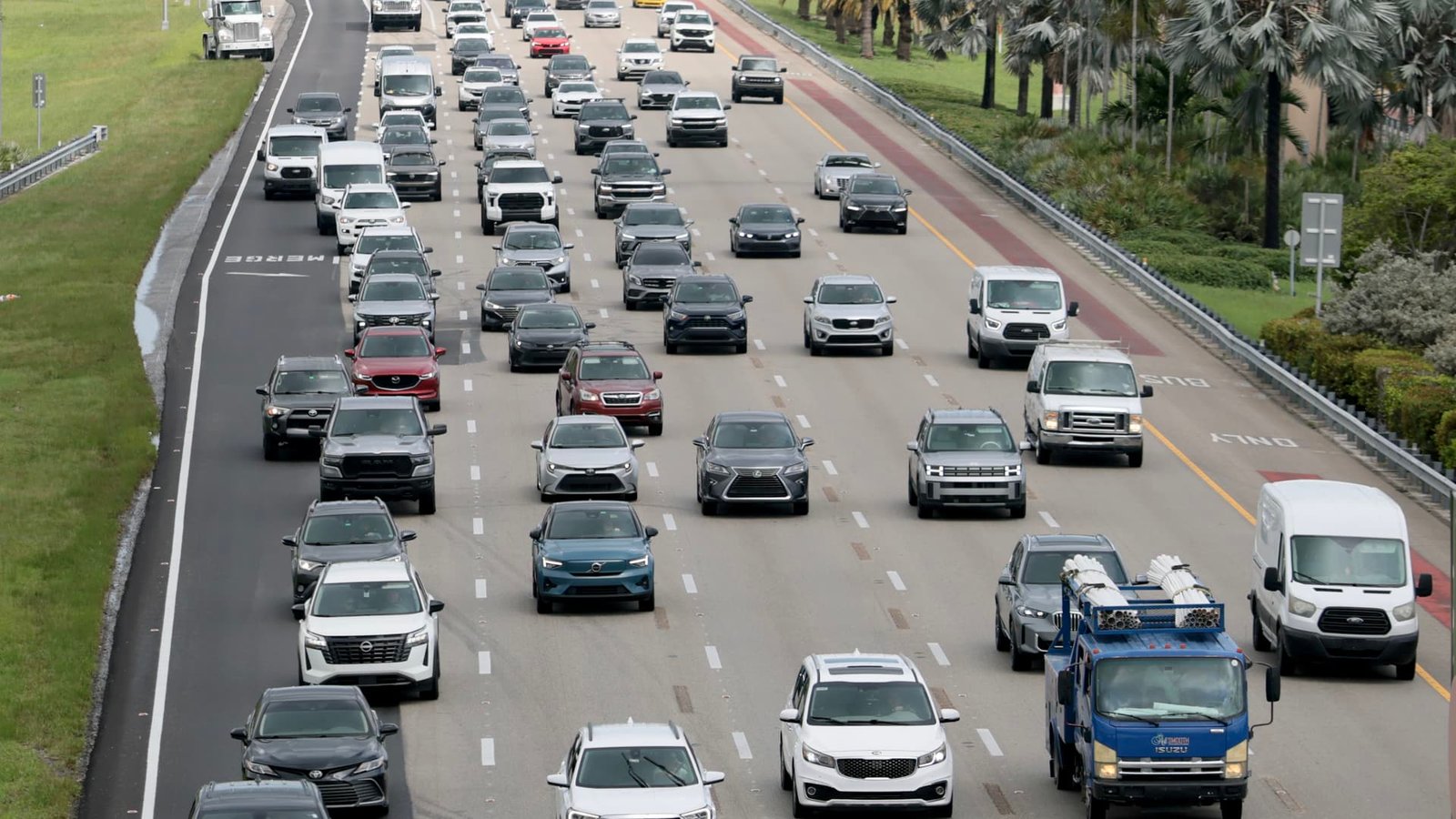
Vehicles make their way along State Road 836 as Labor Day weekend approaches on Sept. 3, 2026 in Miami, Florida.
Joe Raedle | Getty Images
California, New York and two dozen other states, cities and counties sued the U.S. Transportation Department on Friday over its decision this week to finalize sharply lower vehicle fuel economy standards in a win for gasoline-powered vehicles.
The revised standards seek to reverse former President Joe Biden’s push toward greater fuel efficiency and electric vehicles. California Attorney General Rob Bonta said the new rules violate requirements that the standards be set at the maximum feasible level. A coalition of environmental and consumer groups also filed a separate lawsuit challenging the new rules.
The new standards will cut the cost of new vehicles but increase fuel consumption and carbon dioxide emissions for decades, according to the department’s estimates.
The states — which also include Arizona, Colorado, Connecticut, Massachusetts, Michigan, New Jersey, and Washington — as well as the District of Columbia, New York City, Chicago and Denver and several environmental groups, filed suits in the US Court of Appeals for the First Circuit.
2031 vehicles less efficient: environmental groups
The Transportation Department finalized rules on Monday requiring a fleetwide average of 34.9 miles per gallon (14.7 km per liter) by 2031, down from 50.4 miles per gallon (21.4 km per liter) under Biden. Environmental groups said the 2031 vehicles would be less efficient than the current fleet.
The states said the Trump administration is ignoring the presence of millions of EVs, “leading to a flawed, dramatically distorted analysis of the ‘maximum feasible’ fuel economy level.”
U.S. drivers have paid sharply higher fuel prices since the start of the US-Israeli war with Iran at the end of February.
The states said the National Highway Traffic Safety Administration “tries to paper over nearly $220 billion in lost fuel savings — money that drivers would have saved at the pump under the previous fuel economy standards, which will instead benefit Big Oil.”
Transportation Secretary Sean Duffy defended the rule, saying the agency would let “auto manufacturers produce the cars that fit families’ needs at a lower price.”
The Transportation Department said the regulation reduces manufacturers’ average cost per vehicle to comply by $1,289 but increases fuel costs by more than $1,600 over the life of the vehicles. The department said the rule would increase U.S. gasoline consumption through 2050 by 4.6% — about 121 billion gallons — compared to the Biden rules but also boost new car sales.
In 2024, the Biden administration finalized rules to push automakers to build more EVs to meet rising fuel-efficiency standards.
The rules will also end credit trading among automakers in 2028, which previously was a significant source of income for EV manufacturers Tesla and Rivian.
President Donald Trump has mounted a multipronged effort to make it easier to sell gasoline-powered vehicles and last year scrapped a $7,500 new EV tax credit.
About The Author