The key metric investors are most focused on when Costco reports earnings
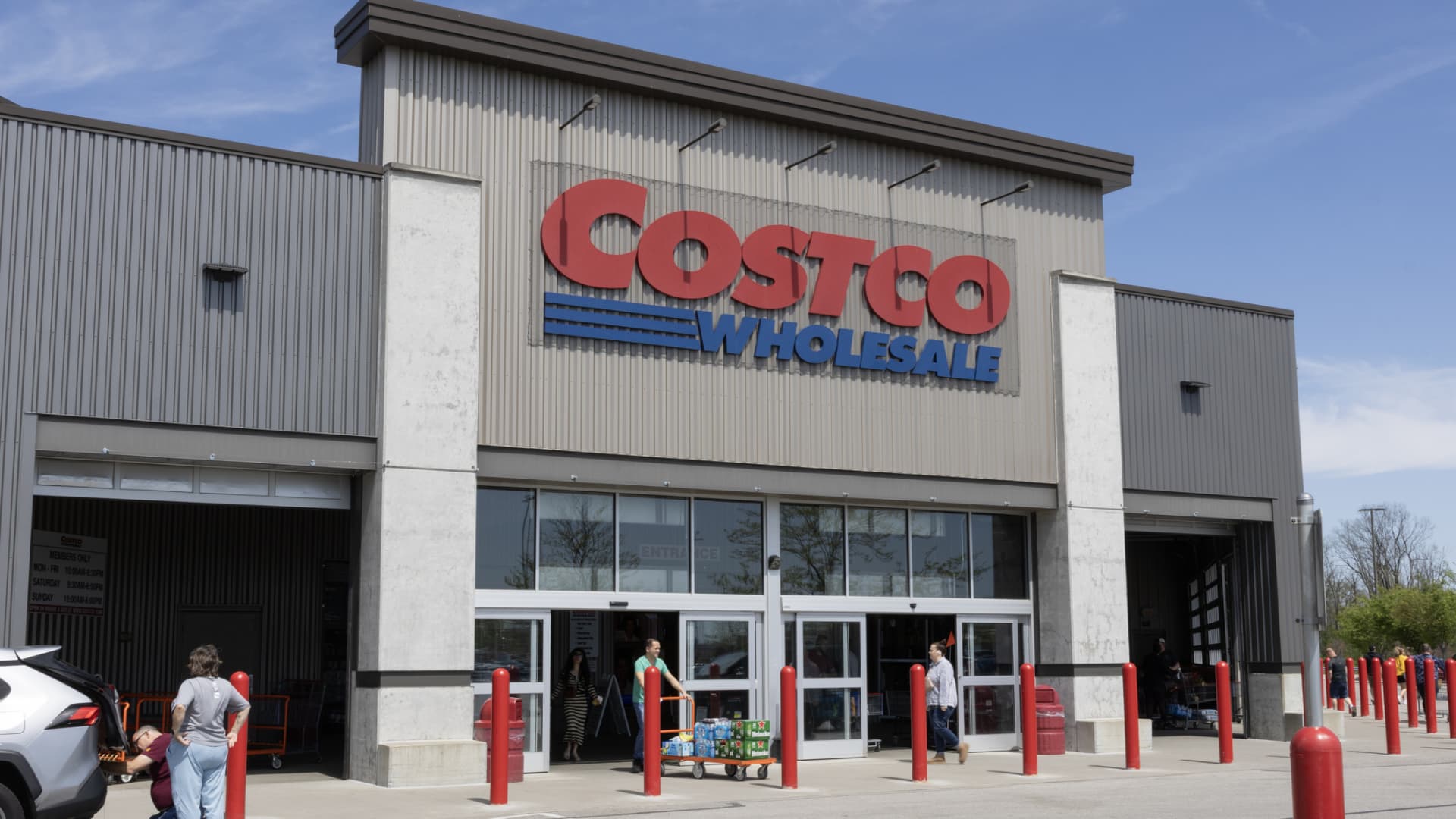
Costco continues to post strong sales gains, but one metric has been losing momentum and drawing closer scrutiny from investors. Heading into Thursday evening’s fiscal third-quarter results, shareholders, including the Club, hope to see signs of improvement in the pace of new member additions and renewals, following declines since late 2025. The big box retailer’s high-margin fees remain a cornerstone of its business. Total paid membership has historically grown in the mid- to high-single-digit range (6% to 7%), but fell below 5% over the past year. By the end of the second quarter of fiscal 2026, which ended in February, growth in overall paid members slowed to 4.8%. Part of that slowdown was the result of a 30-basis-point slide in renewal rates in the third quarter of its fiscal 2025, which ended in May of last year. They fell another 40 basis points in the following quarter. In each of the first two quarters of fiscal 2026, the declines moderated to 10 basis points apiece and appeared to stabilize. By the end of the latest second quarter, the core U.S. membership renewal rate was 92%, while the global renewal rate was just under 90%. While seemingly slight, these drop-offs matter. Same-store sales and store traffic are strong indicators, but it’s the recurring membership fee income that underpins our investment thesis in the company. It is also why Costco trades at a premium relative to its retail peers. Shares currently trade at 50 times projected 2026 earnings, roughly double the typical valuation for staples stocks, according to JPMorgan. Its closest competitor, Walmart , trades at 40 times. Dips in membership growth threaten that best-in-class valuation — something Jim Cramer alluded to on Thursday’s Morning Meeting when previewing the quarter. “I’m looking for a decent number,” Jim said, before cautioning against taking action on Thursday. “No need to buy it ahead [of the quarter]. That would be a mistake. It’s had a big move.” Management has partly attributed the membership slowdown to tougher comparisons from a year earlier, but there’s more to the story. The biggest factor is a shift toward digitally acquired members, particularly younger consumers, who behave differently than traditional in-warehouse Costco shoppers. Specifically, online members are “more fickle,” meaning they don’t renew at the same rate, according to Christopher Nardone, analyst at Bank of America, who qualified just how apparent that shift has been. “Back in 2019, about 5% of new members were under 40 [years old] and signed up digitally. Today, it’s almost half.” Nardone said in an interview with CNBC. While the additional online sign ups are helping increase the membership fee income and overall membership base, younger digital members, who are growing very quickly and may not be on top of renewing their membership, are becoming a larger part of the overall renewal calculation and “it does bring down the average,” Costco CFO Gary Millerchip said during Costco’s webcast last quarter, adding “we’re flowing through the impact of that.” That focus on digital started a few years ago. Costco’s club model is built on “hyper-efficiency of a limited assortment,” JPMorgan said in a deep-dive research report published in April. In a typical warehouse, analysts estimate that Costco holds about 3,700 stock-keeping units (SKUs) across different categories. That figure is much lower than Walmart’s 120,000 SKUs. E-commerce “unlocks the box,” the analysts noted, with an expanded online assortment that leans into big-ticket, discretionary items such as mattresses, electronics, home fitness equipment, and outdoor power equipment. That underdeveloped online channel is likely why the David Bellinger of Mizuho said many of these newer digital customers appear less engaged with Costco’s traditional warehouse experience. In some cases, Bellinger noted, they are joining for one-off purchases or delivery convenience rather than long-term loyalty. “You might join, buy one big item, and when it comes up a year later, they don’t renew it,” he said, which naturally leads to higher churn. The slower membership growth is also unfolding as consumers are under pressure. Bank of America’s Nardone said it is not surprising to see growth moderate as a mix of lower-income consumers become more cautious with spending. “(For) some of their lower-income exposed consumers, it’s a tough time out there,” Nardone said. He referenced Walmart’s recent post-earnings commentary about the tough economic environment. Walmart CFO John Rainey said, “the lower income consumer is more budget conscious and perhaps navigating financial distress,” especially as fuel prices have gone up over the quarter. That pressure drives shoppers to seek value when spending across categories. Still, Nardone contrasted the softer total Costco membership growth with accelerating executive membership growth, the company’s most valuable tier and a much stronger indicator of customer loyalty and spending engagement. While total membership is growing around 5%, executive membership has accelerated to 9% growth in the last two quarters, Nardone highlighted, noting that executive members account for nearly three-quarters of Costco’s membership fee revenue. “That’s the key stat that’s giving me comfort,” Nardone said. Mizuho’s Bellinger also pointed to elevated gas prices as a tailwind that’s strengthening Costco’s membership appeal in an inflationary environment as consumers look for ways to offset rising everyday costs. “When you get higher gas prices, I think people see more value in the membership, and they should renew,” Bellinger said. “You could basically save more money just getting the discounted gas [from Costco] than actually the membership cost,” he added. Bellinger explained Costco’s gas stations often act as a traffic driver for the broader business, with fuel shoppers frequently making purchases inside the warehouse as well. Beyond the shift in the digital mix, Costco management has pointed to fewer new warehouse openings in higher-growth international markets, which have historically been a major catalyst for membership growth. When Costco opens a warehouse in China or Japan, “you can get 5 to 10 times as many members out the gate,” Bellinger said, adding that locations in Asian countries can generate up to 100,000 to 200,000 signups on the opening days alone, significantly more additions than a normal U.S. warehouse opening. Mizuho has an outperform rating and a $1,100 price target on the stock. Encouragingly for investors, analysts broadly said management has been proactive, focusing on simple yet effective fixes to demonstrate the Costco value to all, especially digitally fickle members. A major push has been on auto-renewals and targeted engagement. Something as simple as email reminders saying that the membership is expiring “has helped stabilize the metric,” Nardone said. Other perks, including the $10 monthly Instacart credit for online shopping, extended shopping hours for executive members, and a free item for digital members who auto-renew their membership in warehouses, are examples of practical moves by management that have increased membership upgrade rates. Investors have thus far rewarded the efforts: Shares of Costco are up nearly 17% year-to-date, surpassing the S & P 500’s 9.8%. Another opportunity that could enhance Costco’s digital offering is the “speed to the consumer,” or how quickly products get to consumers, Nardone noted, a service that competitors Walmart and Amazon do very well. “The better that they can get on delivery speed, especially since the bulk of their business is grocery, that’s only going to enhance these membership metrics,” Nardone said. “When most people’s wallets are extremely squeezed, convenience is the other factor,” he added. The Bank of America analyst has a buy rating on Costco with a $1,185 price objective. Costco’s foray into building standalone gas stations , instead of locating them right next to warehouses, is the kind of initiative that could appeal to younger members and get them to renew, Jim added on Thursday’s Morning Meeting. For investors, Thursday’s earnings report may matter less for what Costco says about quarterly sales trends than for whether management can convince Wall Street that its membership engine remains intact despite signs of moderation. The stock’s run this year and premium valuation leave little wiggle room for error. We maintain a 2-rating and a $1,100 price target on the stock. (Jim Cramer’s Charitable Trust is long COST. See here for a full list of the stocks.) As a subscriber to the CNBC Investing Club with Jim Cramer, you will receive a trade alert before Jim makes a trade. Jim waits 45 minutes after sending a trade alert before buying or selling a stock in his charitable trust’s portfolio. If Jim has talked about a stock on CNBC TV, he waits 72 hours after issuing the trade alert before executing the trade. THE ABOVE INVESTING CLUB INFORMATION IS SUBJECT TO OUR TERMS AND CONDITIONS AND PRIVACY POLICY , TOGETHER WITH OUR DISCLAIMER . NO FIDUCIARY OBLIGATION OR DUTY EXISTS, OR IS CREATED, BY VIRTUE OF YOUR RECEIPT OF ANY INFORMATION PROVIDED IN CONNECTION WITH THE INVESTING CLUB. NO SPECIFIC OUTCOME OR PROFIT IS GUARANTEED.