(Bloomberg Opinion) — In a week of tributes to Warren Buffett, here’s one from me, in the form of stealing one of his best aphorisms: Only when the tide goes outdo you discover who’s been swimming naked.The currency market is getting a viewofthat just as traders question the dollar’s dominance and whetherthe greenback is in a structural decline.Taiwan is among the first left exposed. Its dollar rose as much as 5% against the US currency on Monday, the most since 1988, and has rallied about8%this year.
Fingers have pointed to idiosyncratic factors, such as thin market liquidity and speculation that Washington asked the island to lift the value of its currency as part of a trade deal, which authorities have denied. Traders may have been spooked by South Korea’s acknowledgement in late April that theexchange rate was one of the four major items to be discussed in future trade talks with the White House. And it’s no secret that President Donald Trump wants a weaker dollar.
As Asians liquidate their dollar assets and repatriate the proceeds, the unwind can be chaotic. However, that Taiwan’s currency extended its rally despite the central bank’s strenuous effort to calm markets points to something more structural.
Wealthy, export-oriented Taiwan, for one thing, is engaged in a massive carry trade. In recent years, thedomesticlife insurance industry, a big business that is estimated to hold assets equivalent to 140% of gross domestic product, found that itcould profitably borrow locally and shovel the proceeds into US dollars. At their peak, insurerswere buying more than $50 billion in US assets a year, according to the Financial Times.
Life insurance companies invest close to 70% of their money in foreign assets, but 83% of their funding is in the Taiwan dollar, according to Bank of America Merrill Lynch. Meanwhile, theirexchange rate risks aren’t fully hedged, averaging only 65% in the fourth quarter. As a result of this currency mismatch, when the greenback weakens —or the world believes that the White House means business — insurers have no choice but to raise their foreign-exchange hedge. In essence, they have to swap the dollar out, putting it underfurther downward pressure.
Taiwanese life insurers are by no means the only ones swimming naked. Foreign investors from G-10 countries alone have about $13.7 trillion inunhedged US assets, UBS Group AG estimates. Global asset managers are also exposedbecause of their long-held belief in US exceptionalism and a strong dollar, which Trump is inadvertently breaking along with the global trade order.
Asian nations, in particular, are offeringthe first look atan ugly carry-trade unwind. Just like Taiwan, they’re export oriented and have hoarded a lot of dollars. The Hong Kong Monetary Authority, for instance, is spending an unprecedented HK$60.5 billion ($7.8 billion) to purchase US currencyto defend its peg. Central banks with a big savings glut, such as South Korea, Singapore and Malaysia, may also need to scrambleto avoid the sudden andviolent appreciation of their currencies.
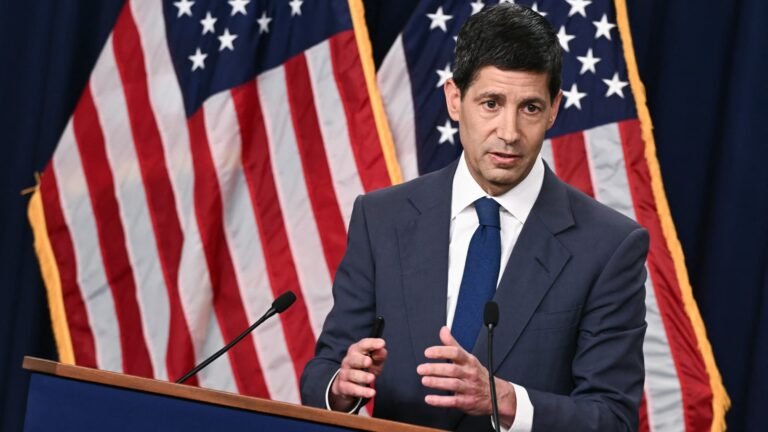
Indeed, there’s a lot of selling pressure in Asia. A recent Bloomberg survey of 18 Chinese exporters showed that they were worried about keeping the dollarand haveconverted their holdings into yuan. Gold’s improbable rally this year, especially during Asia’s trading hours, further showcases how nervous people are towardthe US currency. You can’t blame them. In a paper published last November, Stephen Miran, chair of Trump’sCouncil of Economic Advisers, mentioneddollar “overvaluation” 10times.
As the Taiwan currency’soutsized moves show, the global foreign-exchange market has become deeply unstable. Trump changeshis tariff stance on a daily basis, but the damage is done. The great dollar unwind has arrived. It’s no longer precious, but pressured.
More From Bloomberg Opinion:
This column reflects the personal views of the author and does not necessarily reflect the opinion of the editorial board or Bloomberg LP and its owners.
Shuli Ren is a Bloomberg Opinion columnist covering Asian markets. A former investment banker, she was a markets reporter for Barron’s. She is a CFA charterholder.
More stories like this are available on bloomberg.com/opinion
About The Author