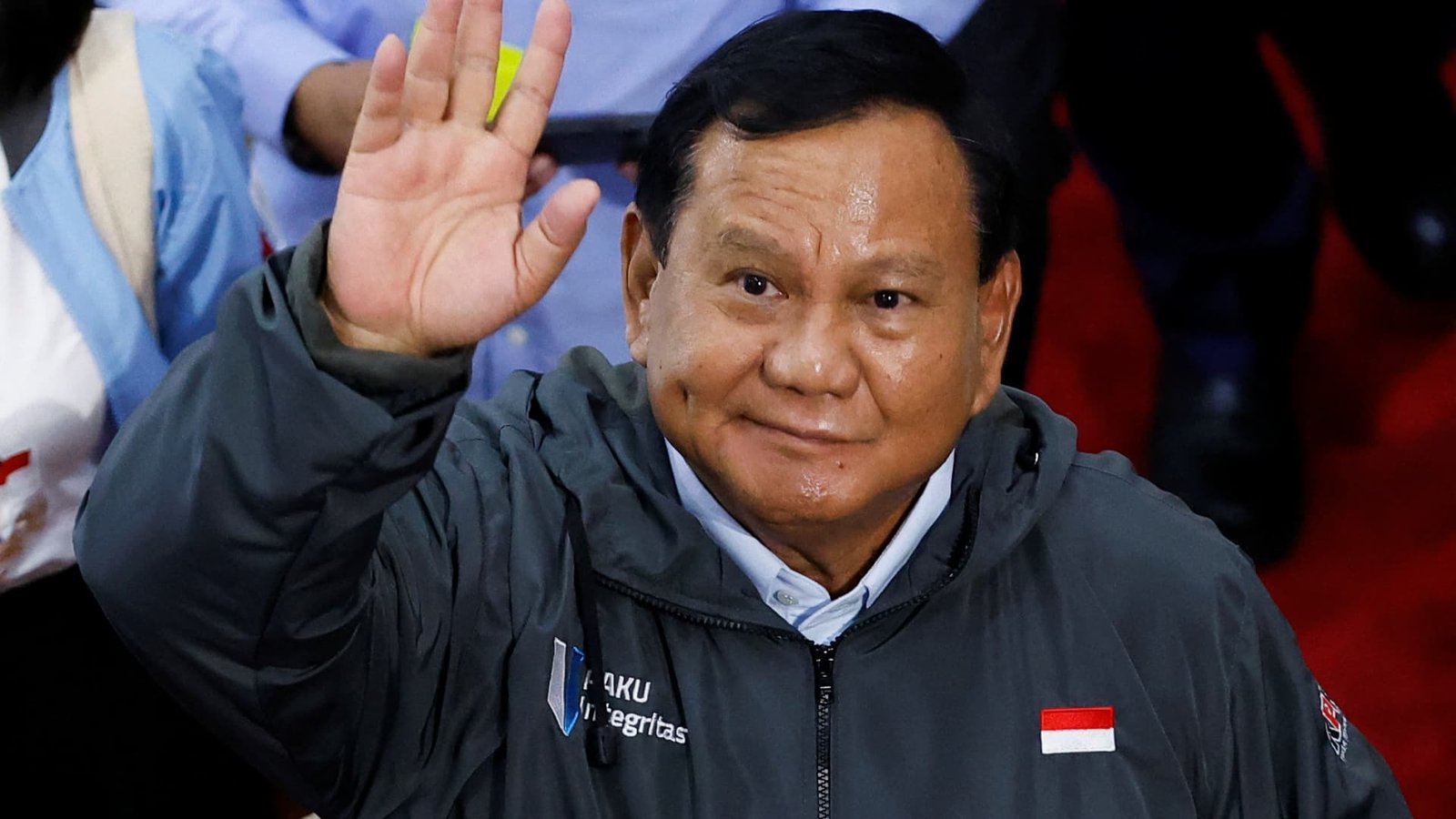
Presidential candidate Prabowo Subianto, waves to photographers as he leaves after attending a dialog held by country’s anti-graft agency Corruption Eradication Commission (KPK) at its headquarters in Jakarta, Indonesia, January 17, 2024.
Willy Kurniawan | Reuters
Indonesia may have trouble meeting its economic-growth goals for the coming year, after spending 2026 on the defensive amid questions about fiscal outlays and the prospects of a downgrade from MSCI.
President Prabowo Subianto wants to lift economic growth to 6% in 2027 while keeping the fiscal deficit at 2.4% of GDP. That would mean accelerating from Indonesia’s roughly 5% decade-long growth average while keeping the deficit below its 3% statutory ceiling. The draft budget sets eight priorities, including food and energy self-sufficiency.
“They’re trying to achieve too much too quickly,” Ashok Bhundia, deputy chief economist at the Institute of International Finance, said, adding that “some of these targets are a little bit overly ambitious on timelines.” Reaching 6% next year would likely require “an unanticipated commodity boom” that lifts exports, revenues and investment, he said.
The plan comes as MSCI, the index provider, extended until November its review of whether Indonesia should be downgraded to a frontier market. The country has been subject to concerns about fiscal spending like Prabowo’s signature free-meal program, particularly after the departure of respected Finance Minister Sri Mulyani, and concerns about central-bank independence after Prabowo’s nephew Thomas Djiwandono became deputy governor. The rupiah hit a record low versus the dollar in June.
Growth at 6% would be a “huge kind of leap,” according to Gareth Leather, senior Asia economist at Capital Economics. Fiscal stimulus could lift growth, but the proposed budget points to little appetite for loosening. Monetary easing could offer a “short term boost,” Leather said, but Bank Indonesia operates independently of the government. Any erosion of that independence could come at the “cost of the country’s credibility,” he added.
The budget’s assumptions are “completely unrealistic,” said Yanuar Rizky, senior economist at the think tank Bright Institute, citing the “fragile state” of purchasing power and a “sharp spike in online lending (pinjol).” Outstanding financing in the sector grew 25.88% year on year in June, according to Indonesia’s Financial services Authority.
He said relying on tax revenues would be difficult when purchasing power was supported by “depleted savings and high-interest debt,” noting that China’s slowdown would be a drag on exports.
There are ways to achieve faster growth, including investment-led reforms.
Bhundia pointed to “encouraging” solar investment and its “multiplier effect” on longer-term growth while Leather called for a “focus on the supply side” through infrastructure spending and measures to attract foreign investment.
Investment-led reforms offer a route to faster growth. Bhudia said a “slowing China is not inconsistent with additional investment in Indonesia” if the regulatory framework is right. He also cited “encouraging” solar investment and its longer-term “multiplier effect.”
However, the projections face multiple challenges, including the Iran conflict. Indonesia has pledged to keep subsidized fuel prices unchanged through 2026, which may strain the budget if oil prices rise again due to supply disruptions or a worsening of military confrontations.
Overall, meeting the dual growth and deficit projections may require Indonesia to put a heightened focus on discipline more generally — and it remains to be seen whether policy makers can straddle that line.
The “scale of planned fiscal consolidation will require a sharp focus on revenue generation and debt management efforts,” said Radhika Rao, senior economist at DBS Bank.
About The Author