Unlock the White House Watch newsletter for free
Your guide to what Trump’s second term means for Washington, business and the world
The writer is an FT contributing editor and director of economic policy studies at the American Enterprise Institute
“We should have never been in Iraq. We have destabilised the Middle East.” So thundered Donald Trump in a 2016 debate during the Republican Party’s presidential nominating contest. His aggressive attack on neoconservative foreign policy sent shockwaves through the GOP establishment, fuelling worries that he would take a sharp turn towards isolationism if elected.
Trump has not governed as an isolationist. But his assassination of Iranian commander Qassem Soleimani in 2020 and his decision to bomb Iran’s nuclear sites in 2025 were smart, limited, strategic strikes that carried little risk of embroiling the US in a quagmire. His daring military operation to capture Venezuelan President Nicolás Maduro and decapitate his regime also had little chance of spiralling out of control, lasting many years or requiring American boots on the ground.
Not so with the Iran war. Trump’s high-risk decision to attempt an overthrow of the Iranian regime — and the reaction to it — demonstrates that the centre of gravity on the political right remains much closer to its George W Bush-era positions than is widely thought. Moreover, across the board, the most durable successes of the Trump era are likely to be the ones most in line with traditional conservatism. What distinguishes Trumpism is largely personal to Trump: his impulsiveness, celebrity and style. These lessons won’t be lost as the race to succeed him begins in earnest next year.
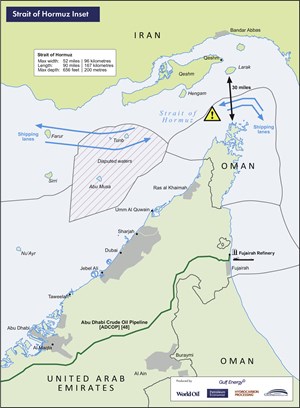
Despite the widespread view that the GOP has moved towards isolationism, Republican politicians largely support regime change in Iran — even if there is serious concern about the lack of planning for the Strait of Hormuz and Trump’s willingness to finish the job. Perhaps more surprisingly, a whopping 92 per cent of Maga Republicans support the war, according to a recent CBS News poll. It seems that isolationist Maga influencers like Tucker Carlson may have less sway than many thought — another important lesson for those who aspire to succeed Trump.
Of course, public opinion may shift if the fragile ceasefire breaks or economic pain mounts. But clearly the GOP under Trump is much closer to interventionist than isolationist.
The Republican centre of gravity on economic issues has moved less than is commonly understood, as well. Trump’s lasting policy accomplishment will be tax cuts for businesses and households. His two tax laws — particularly his 2017 reform — advanced goals that had been at the very centre of the pro-business and pro-markets agenda on the political right for decades.
Similarly, his success in deregulation, expanding domestic energy production and his approach to AI all would have been comfortably at home in a Mitt Romney administration. Beyond economics, Trump, like George W Bush before him, heavily relied on the conservative movement’s legal network for his judicial nominations.
Of course, Trump’s trade policies have been a sharp departure from the norm. But he has not shifted the political right’s centre of gravity on trade — he has merely silenced his critics. Most Republican senators are still quiet free traders. Some, like Ted Cruz, are increasingly vocal in highlighting tariffs’ adverse effects. The powerful US Chamber of Commerce has also publicly rejected broad-based tariffs, stressing the harm they are doing to manufacturing, small businesses and consumers.
Over the long term, political success must rest on a foundation of policy success. Agree or disagree with increasing manufacturing employment, making inputs to domestic manufacturing more expensive by tariffing them simply will not advance that goal.
That Trump lacks even a rhetorical commitment to fiscal responsibility has been another sharp departure from tradition. But presidents of both parties are responsible for the fact that the national debt is on a dangerous trajectory. What could change this? To borrow from Harold Macmillan, former UK prime minister: “Events, dear boy, events.” In the future, rising interest rates — or another event, like the expiration of the Social Security or Medicare trust funds — will create political pressure for deficit reduction.
Trump does seem to have succeeded in moving the GOP’s centre of gravity in one area, however: immigration. But as the economic need for more immigrants grows, the right will become at least marginally more open to it. Moreover, it is notable that public pushback this winter led Trump to pull immigration-enforcement agents out of Minneapolis.
Ultimately, most things that make Trumpism distinct from traditional conservatism won’t last because they are not a coherent whole that another politician could easily inherit. Instead, Trumpism is defined by often shortlived impulses — for example, the desire to conquer Greenland. It is a tangle of loose, disconnected ideas, including that mercantilism is the right framework for understanding global commerce (incorrect) and that European nations should take greater responsibility for their security (correct).
Trumpism is characterised more by the desire for “great deals” than by a broad policy vision. It is cultural — an angry populist scream. It is a style of politics in which truth and accuracy matter much less, corruption and self-dealing are normalised, honest and open debate is undervalued, and rhetoric is coarse.
Trumpism barely works for Trump — most Americans disapprove of his job performance, including on inflation and immigration, the issues crucial to his re-election. Republican leaders hoping to succeed him should take from him what works and leave what doesn’t — while remembering that, to a large extent, only Trump can be authentically Trumpian.
About The Author