Unlock the White House Watch newsletter for free
Your guide to what Trump’s second term means for Washington, business and the world
The writer is an FT contributing editor, chair of the Centre for Liberal Strategies, Sofia, and fellow at IWM Vienna
In hisrecentbook, The Tragic Mind, American strategistRobert Kaplanobservesthat “while an understanding of world events begins with maps, it ends with Shakespeare”. It is not immediately clear, however, how either reading maps or reading Shakespeare helps to explain the striking fact that when it comes to Russia, America and Germanyseem tohave swapped roles.
US President Donald Trump’s readiness to recognise the annexation of Crimea, stop Ukraine from joining Nato and lift sanctions imposed on Moscow looks like Washington’s own version of Ostpolitik, West Germany’s policy of détente with their eastern counterpart. All of this is taking place at a moment when Berlin is rearming throughprodigiousinvestment in its defence sector and Europefantasises about becoming a serious military power.
Is the American-German “swap” real or just akind of Shakespeareancross-dressing that will vanish by the play’s end? It’s worth keeping in mind that the majority of Americans disapprove of Trump’s handling of the war in Ukraine and only a minority of Germans are actually ready to fight for their country. CanTrump’s back-of the-envelopepeace proposal be more than just a“Minsk-3” — that is,ambiguity wrapped in mistrustanddoomed to collapse?
We havelittlereason to doubt that Trump is sincere in his determination to put an end to the war. He grosslyunderestimates Ukraine’scapacityto defenditself, but it is a fact that a protractedwarwill be a demographic disaster forthe country.He is perhapseven correcttosuggestthat those advocating for more sanctions on Russia and sending more weapons to Kyiv underestimate the risk of sleepwalking intonuclear war.
Where Trump is wrong is to see the war in Ukraine primarily as a land dispute of little significance beyond Europe. Downgrading the geostrategic importance of the conflict is his major break with the policy of the previous administration.
It is not unimaginable that Biden too would have been ready to press Ukraine for territorial concessions if this mighthavebrought peace or even a long-term freezing of the conflict. Biden would also probably agree with Trump that the return of Crimea in the foreseeable future is, well, unforeseeable. And, let us not forget,Biden nevertruly planned to invite Ukraine into Nato.
But there isacritical difference: Biden would not have accepted recognitionofthe Crimean annexationas the price ofaceasefire. Other leaders realise that Ukraine’s national pride iscritically important and that saving its sense of moral victory is vital for both the country’s survival and for any future European security architecture. If he had read more Shakespeare (I’d suggest starting with the history plays), Trump might have understood that while Ukraine’s humiliation could be the fastest (and cheapest) way to stop the fighting, it still might not achieve peace. Pride and sacrifice are the bricks that make nations.
By brandishing praise on Putin, adopting his narrative on the war and selling the peace deal as a gift for possible presentation on Moscow’s May 9 Victory Day celebration, Trump hopes to bring Russia to compromise.
But the latest signals coming from Moscow indicate that Putin is not looking for compromise — he is looking for victory. And even if Trump succeeds in stopping the fighting, a temporary ceasefire in the absence of security guarantees risks triggering domestic conflict in Ukraine that would be suicidal for Kyiv and its European allies.This could inspire anew wave ofmigration, which could in turn threatenthepolitical stability of European societies and fuel tensions between member states. It would further break Europeans’ already shaken trust in America’s security guarantees.
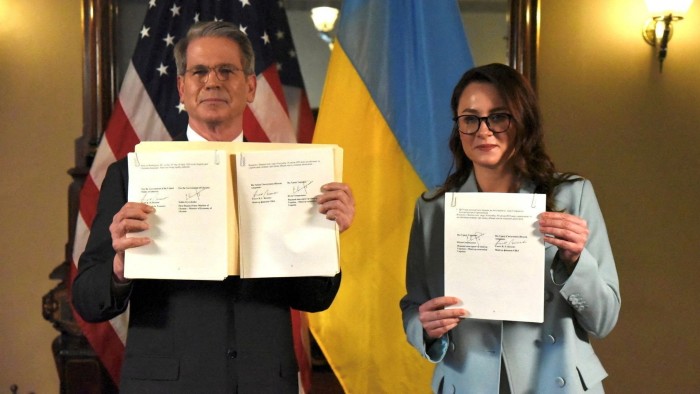
The US-Ukraine deal on mineral resources signed on Wednesday may help Trump get out of the trap he has driven himself into. The US president can now increase the pressure on Moscow, arguing that any further land grab is a direct attack on America. And while Washington may have lost its enthusiasm to defend its democratic allies, it is determined to defend its assets. But how likely is such a scenario?
It is plausible to argue that America’s Ostpolitik isas much theresult of Washington’s changing geopolitical priorities as it is one of Trump’s wild improvisations. It certainly has far more to do with China than with Europe. The newpartnershipof Moscow and Washington, birthed over Ukraine, is meant to weaken Russia’s dependence on Beijing and enlist Russian support for America’s strategy in the Middle East and the Arctic, rather than to secureastable future for Kyiv.
But, regardless of whether your understanding is born out of reading maps and formulating a grand strategy or reading Shakespeare and contemplating human weaknesses and miscalculation, the current state of affairs signals one thing for Europe. The historical period that started with the reunification of Germany ends with the partition of Ukraine.
About The Author