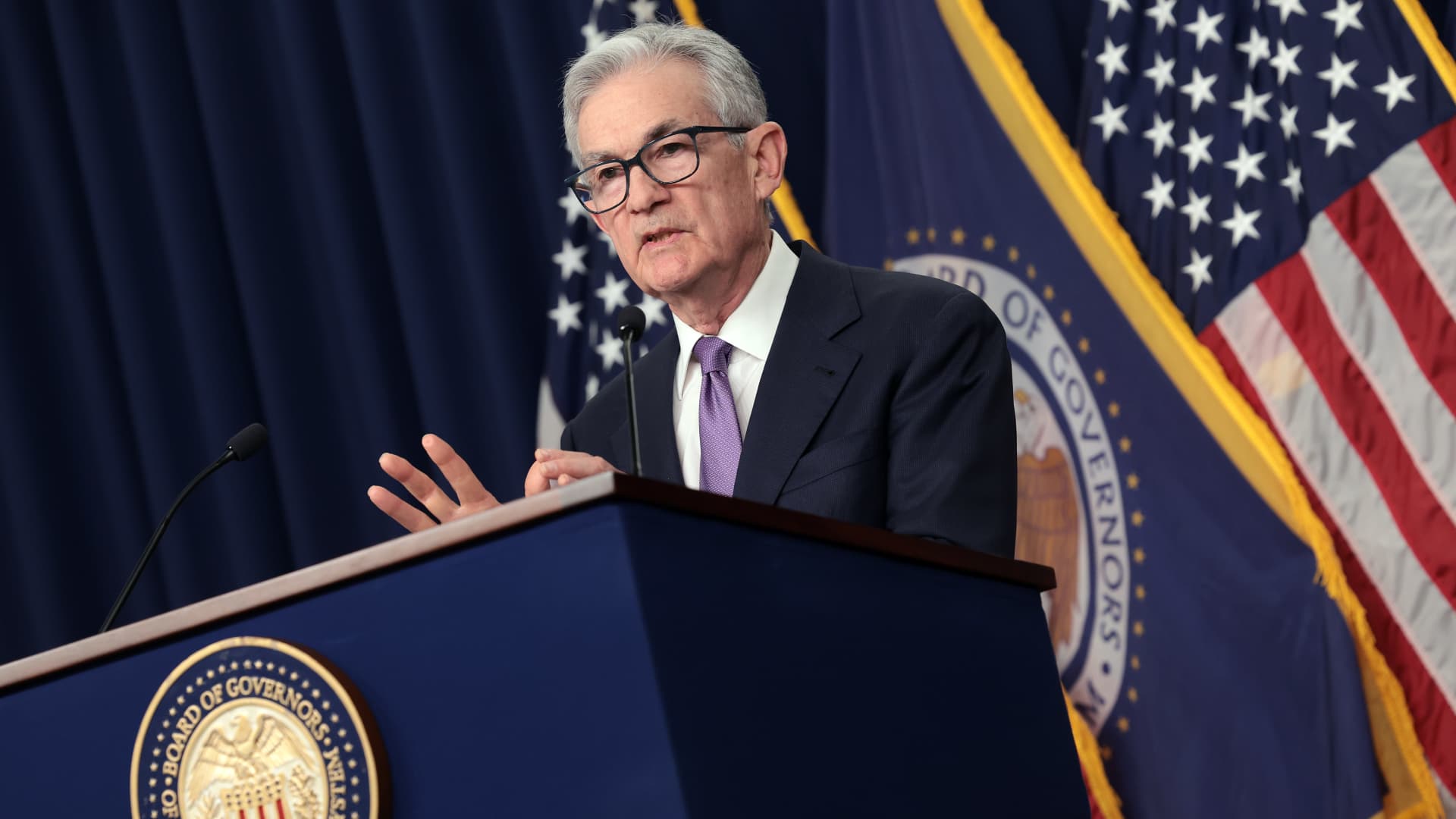
U.S. Federal Reserve Board Chairman Jerome Powell speaks during a news conference at the headquarters of the Federal Reserve on December 13, 2023 in Washington, DC.
Win Mcnamee | Getty Images
U.S. economic activity and employment were mostly little changed or unchanged in recent weeks, while pricesrose moderately or modestly, the Federal Reserve said on Wednesday, a mixed report that on the margin appeared tounderscorewhy an increasing number of central bank policymakers have signaled their openness to resuminginterest rate cutsthis month.
“Contacts frequently cited economic uncertainty and tariffs as negative factors,” according to the Fed’s “BeigeBook” report, a snapshot of the nation’s economic health published two weeks ahead ofeach central bankpolicy meeting.”Overall, sentiment was mixed among the (Fed) districts. Most firms either reported little to no change in optimism or expressed differing expectations about the direction of change from their contacts.”
After holding the policy rate steady in the 4.25%-4.50% range this year, Fed policymakers are now widely expected to lower short-term borrowing costs by a quarter of a percentage point at their September 16-17 meeting. Financial markets and analysts grew more confident in that view after Fed ChairJerome Powellsaid last month that rising downside risks to the labor market may mean a rate adjustment is warranted, joining several other U.S. central bankers who have made a similar argument.
Powell cited recent signs of weakness in the labor market data, including a government reportin early Augustthat showed job growth had fallen to a paltry monthly average of 35,000 since May, and a baseline outlook that President Donald Trump’stariffswill only boost inflation temporarily.
Powell also said he feels that labor market stability means the Fed can “proceed carefully,” a phrase understood to suggest gradual rate cuts.
White House Pressure
Trump hasdemanded the Fedcut rates immediately and deeply, and has moved aggressivelyto try to reshape the makeup of the central bank’s Board of Governors so that it is more likely to do so.
White House economic advisor Stephen Miran, Trump’s nominee to fill a vacancy on the Fed board that unexpectedly opened last month, will have a hearing before the U.S. Senate Banking Committee on Thursday as Republican lawmakers rush to get him confirmed in time to vote at the Fed’s meeting this month. Miran has said he backs Trump’s view on rates, and has argued for stronger presidential control over the central bank.
Trump is also attempting to fire FedGovernorLisa Cook, whohas voted with the majority of central bank policymakers to keep rates steady this year. Cook is challenging her removal in court and remains in her job while that case is pending.
Analysts and other global central bankerswarnthat Trump’s pressure on the Fed including his unprecedented effort to fire a Fed governor threaten the central bank’slonger-termpolitical independence, widely seen as critical to itsability to fight inflation effectively.
It’s not clear, however, that Trump’s efforts will help him in the short term to achieve the sharply easier monetary policy that he wants right now.
Two of Trump’s appointees already on the Fed’s board dissented in July in favor of a rate cut, but neither has said they feel a bigger-than-usual reduction is needed.
The latestBeigeBooksummarizes surveys, interviews and observations collected from the commercial and community contacts of each of the U.S. central bank’s 12 regional banks through August 25.
About The Author