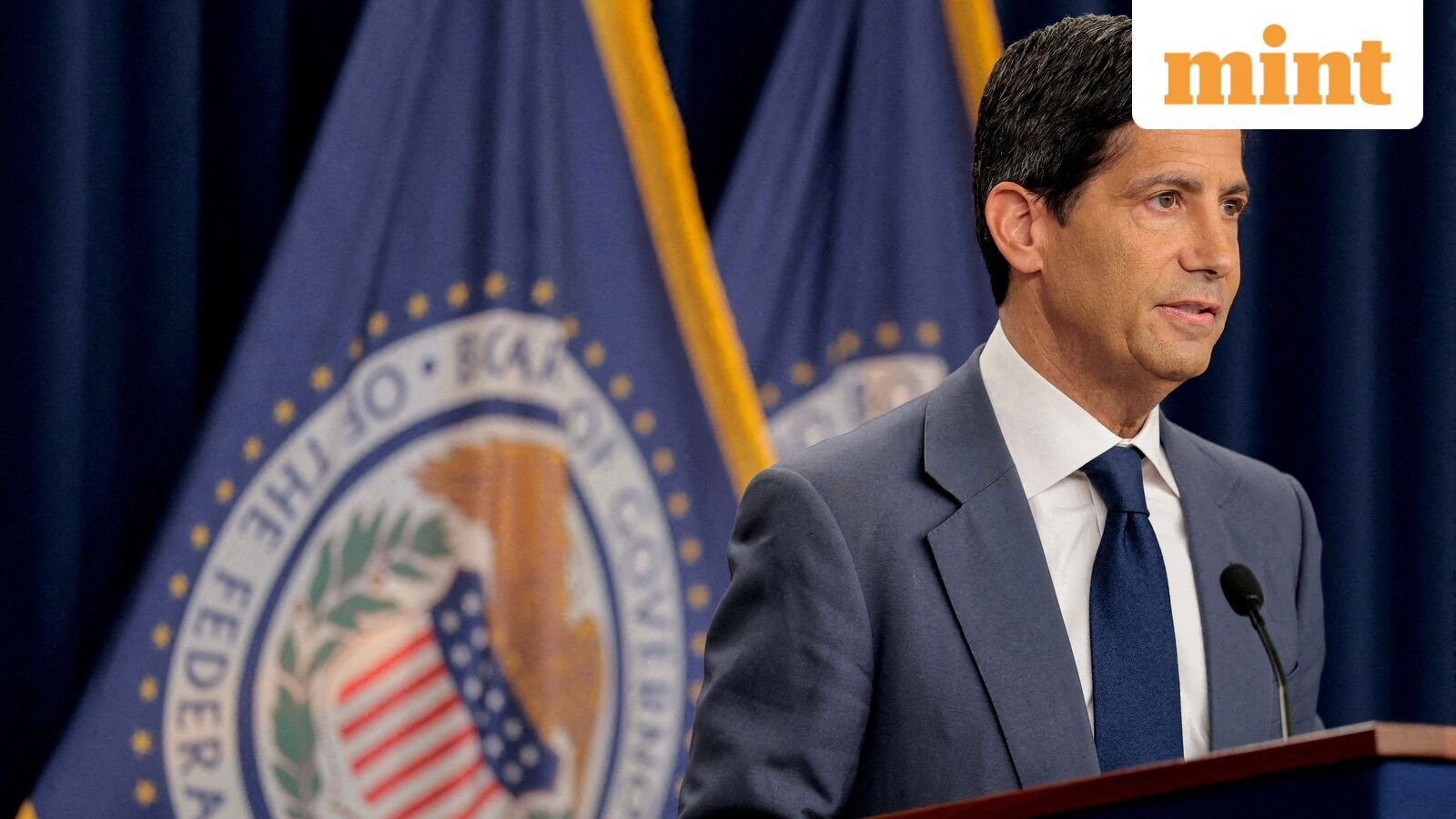
Federal Reserve Chair Kevin Warsh has announced a change to the US central bank’s meeting schedule, with the Federal Open Market Committee (FOMC) planning to dedicate one of its eight meetings in 2027 exclusively to discussions on monetary policy strategy, without a vote on interest rates or an accompanying policy statement.
Warsh said the revised schedule would take effect next autumn, with the Fed maintaining eight meetings annually but placing greater emphasis on longer-term strategic discussions alongside its regular interest-rate decisions.
The change is expected to evolve further in 2028, when Warsh expects two meetings to be dedicated to strategy discussions and the remaining six to monetary policy decisions.
“We believe eight meetings per year is the right number for the FOMC,” Warsh said, explaining that the revised schedule would allow policymakers to balance their assessment of near-term economic developments with broader discussions on the direction of monetary policy.
He said that while regular meetings are necessary to assess incoming economic data, the central bank also needs time to examine major policy questions over longer horizons.
“I believe the setting of the meeting schedule and agenda is more than some administrative detail. It’s an institutional choice affecting the nature and the quality of our deliberations and ultimately the wisdom of our decisions,” Warsh said.
Warsh defends Fed’s approach to inflation and interest rates
The announcement comes as the Fed continues to work towards its 2% inflation target, with questions remaining over whether monetary policy should be tightened further.
Asked why the Fed had not raised interest rates despite limited progress towards its inflation target and a relatively stable labour market, Warsh said price stability could not be judged by a single date on the calendar or an isolated economic data point.
“Ensuring price stability, quashing inflation, is not about some fixed individual date on a calendar. Same way, it’s not about some isolated data point,” he said.
Warsh added that the Fed had reinforced its commitment to the 2% inflation target, taken responsibility for delivering price stability, and outlined its monetary policy framework.
He also pointed to the Fed’s September decision to remove some monetary policy accommodation as part of its efforts to bring inflation under control.
Warsh said measures of inflation compensation and inflation expectations were moving in the right direction, although he acknowledged that the global environment remained unsettled.
“I’m encouraged by the progress we’ve made in a short period of time,” he said, while acknowledging that the Fed had not yet achieved price stability.
He added that policymakers would use the coming period to assess incoming information and determine the appropriate course of action to deliver on the central bank’s inflation objective.
About The Author