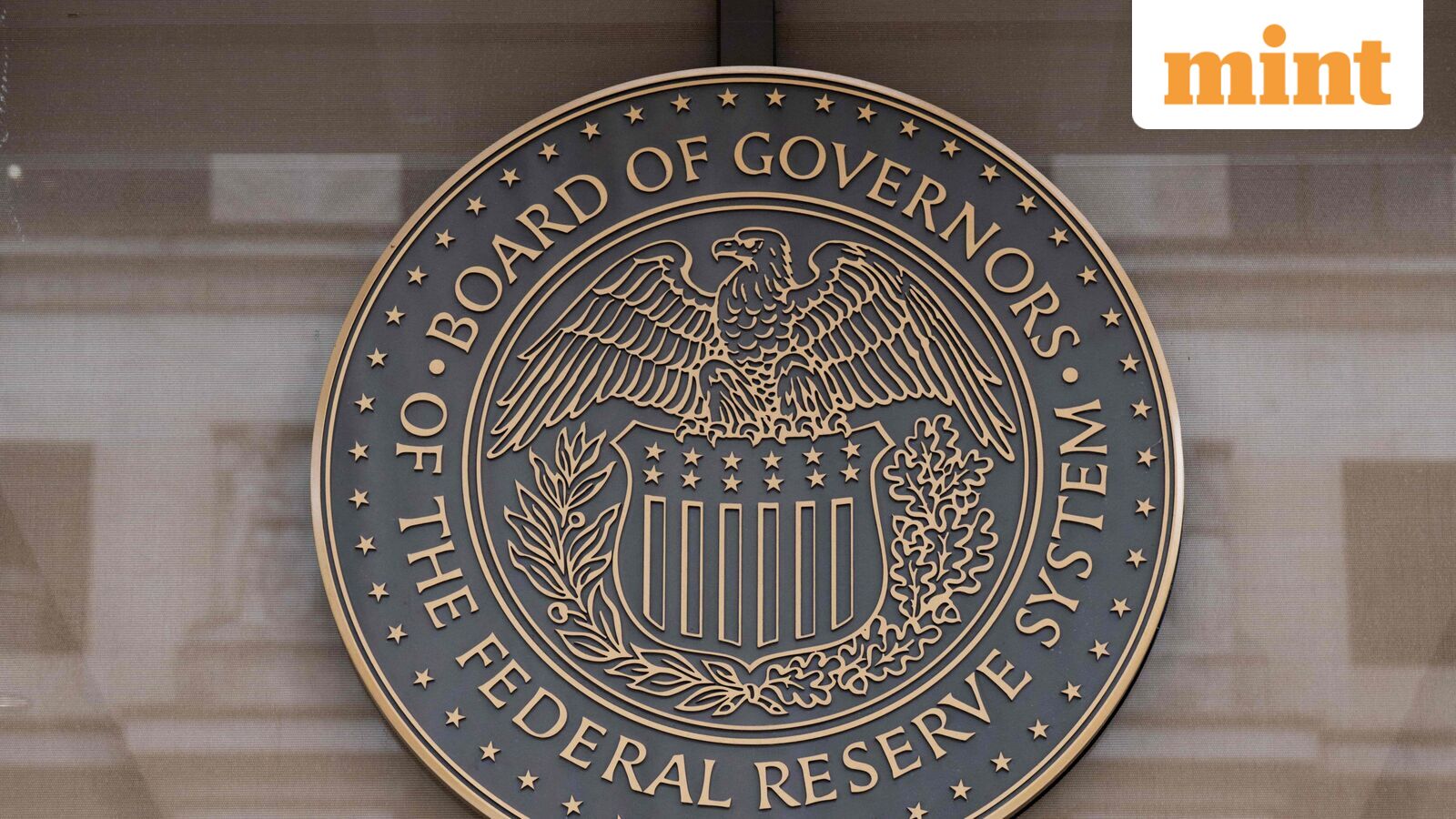
Even though the majority of experts believe the US Federal Reserve may hold rates steady on 29 July, the US Federal Open Market Committee (FOMC) may surprise investors as inflation, despite easing in June, remains well-above the Fed’s 2% target and oil prices have resumed their upward movement amid revival of tensions in West Asia.
US consumer prices rose by 3.5% year-on-year in June, below expectations, after rising by 4.2% in May.
However, it may be premature to assume that the Fed will be comfortable with the current level of inflation. A hawkish faction has been pushing for higher interest rates, while the new Fed Chair, Kevin Warsh, has repeatedly said that restoring price stability and bringing inflation back to the Fed’s 2% target are his top priorities.
US inflation has remained above the Fed’s 2% target for the past five years, and it may remain above this level for longer as the Middle East conflict, which has driven up energy prices, has yet to be resolved. There is a more likely persistent inflationary pressure.
Can the Fed delay rate hikes?
Most experts see the possibility of rate hikes in September and December this year, depending on how long energy prices remain elevated. If the Middle East conflict ends and oil prices return to the levels seen earlier this year, US inflation could ease, giving the Fed room to keep interest rates unchanged. But that would raise another question: How long can the Fed delay rate cuts?
“The majority of the market participants believe that in the 28-29 July meeting, the Fed may leave the rates unchanged, and the rate hike possibility may be open for the ensuing meetings of the FOMC, most likely in the September or December 2026 meeting,” said Dr Joseph Thomas, the head of research at Emkay Wealth.
VK Vijayakumar, Chief Investment Strategist at Geojit Investments, pointed out that even though inflation is a concern in the US, the Fed is likely to hold rates now and move to a rate hike in the next meeting. Even when it holds rates, the Fed is likely to sound hawkish to send a clear message to markets.
“Expectations are for the Fed to hold rates steady at 3.50% – 3.75%, which would mark the fifth consecutive meeting with no change. Market pricing broadly agrees, implied odds from futures markets favour no change, but that still leaves a meaningful probability of a surprise on the table,” said Tanvi Kanchan, Associate Director at Anand Rathi Share and Stock Brokers.
Kanchan underscored that the June inflation print gave the Fed breathing room. However, the May CPI had hit 4.2%, its highest level since April 2023, driven by a 23.5% surge in energy costs. With US-Iran hostilities reigniting in late July, energy-driven inflation risks are very much back on the table.
“Inflation at 3.5% is still 75% above its 2% target. Energy costs, even after June’s relief, are up 15.7% year-on-year. And the new US tariffs announced yesterday on 60 trading partners, including a 10% levy on Indian goods, add another layer of imported inflation risk. But if crude spikes again on Middle East escalation, that September hike calculus hardens quickly,” said Kanchan.
How can a US Fed rate hike impact the Indian stock market?
As per Thomas, if the Fed hikes rates, it will have two main consequences.
“The first is that the domestic yields will edge higher, tracking the US rates. Second, this may also result in the RBI going in for a hike in the repo rate, as inflation is quite high in the domestic economy too. It is, in fact, more important for the rupee, as the rupee could be weaker without a repo rate hike,” said Thomas.
Vijayakumar said the Fed’s expected policy of holding rates is unlikely to impact the Indian market since it is already discounted by the market. However, if the Fed goes for a surprise early hike, that will have slightly negative implications for Indian markets.
“Rising yields in the US will drive the FIIs to the US bonds, away from emerging market equities,” said Vijayakumar.
According to Kanchan, for Indian markets, the risk isn’t just a July hike, it’s the cumulative pressure of a hawkish Fed, persistent FPI selling, a weak rupee, and now new US tariffs landing simultaneously.
“The stress test is how India’s markets absorb all of them together over the next two quarters. The domestic demand story and DII flows remain India’s strongest buffer, but they are not unlimited shock absorbers,” said Kanchan.
Read all market-related news here
Read more stories by Nishant Kumar
Disclaimer: This article is for educational purposes only and does not constitute investment advice. The views and recommendations expressed are those of individual analysts or broking firms, not Mint. We advise investors to consult with certified experts before making any investment decisions, as market conditions can change rapidly and circumstances may vary.
About The Author