
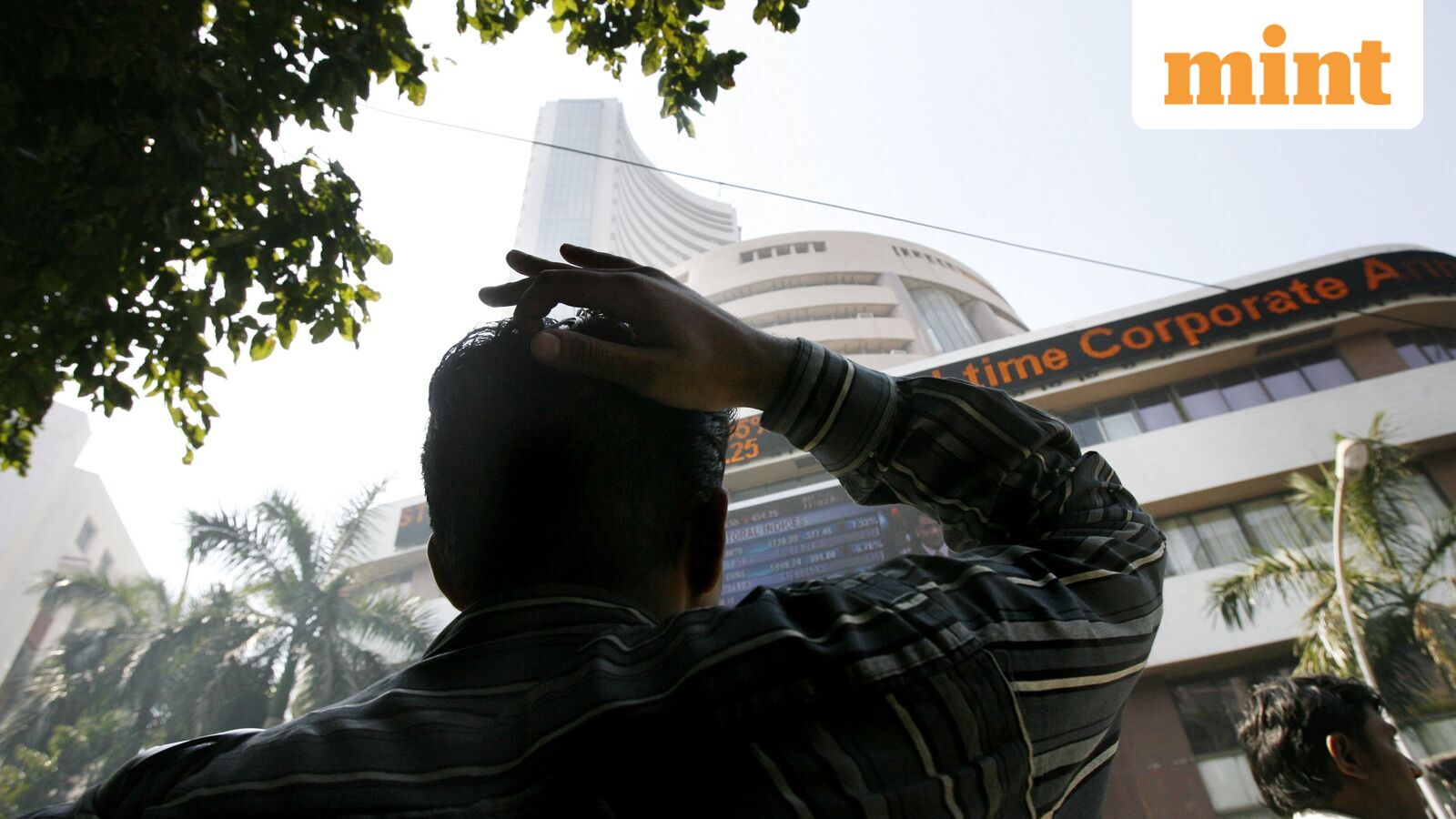
The Indian stock market extended its rally for the third consecutive session on Tuesday after the US-Iran peace deal improved global risk sentiment and pushed crude oil prices lower. The benchmark Nifty 50 index has surged over 3.5% in the last three sessions and is trading near the 24,000 mark.
The US and Iran have reached an agreement to end months of conflict in the Middle East and reopen the Strait of Hormuz — a crucial global crude oil transit route. The move has eased concerns over energy supplies, triggering a rally in global equities.
Crude oil prices fell sharply on Tuesday as markets assessed the resumption of supplies through the Strait of Hormuz. Brent crude declined 2.2% to $81.33 per barrel — its lowest level since 10 March — while US West Texas Intermediate (WTI) crude dropped 2.4% to $78.81 per barrel.
The earlier conflict had disrupted movement through the Strait, which carries nearly one-fifth of global oil supplies, pushing crude oil prices to nearly $120 a barrel. For India, a major crude importer, the reopening of this route carries significant economic and market implications.
Why is the reopening of the Strait of Hormuz important for India?
According to Ajay Garg, CEO & Director at SMC Global Securities, the reopening of the Strait of Hormuz is a positive development for India, given the country’s heavy reliance on imported crude oil.
Earlier disruptions had raised concerns over higher import costs, a widening current account deficit (CAD), rupee depreciation, and rising inflationary pressures. Although full normalisation of tanker movement and supply chains may take time due to vessel repositioning, safety checks, and logistical bottlenecks, easing supply concerns should stabilise oil availability
“Lower crude and commodity prices are also expected to support margin expansion in oil-sensitive sectors such as consumption, transportation, and manufacturing, thereby improving the overall earnings outlook,” said Garg.
Sachin Gupta, VP – Technical Research at Choice Equity Broking, noted that softer crude prices translate into a lower import bill, reduced inflationary pressures, and greater currency stability — all of which support economic growth and market sentiment.
Sectors and stocks likely to benefit
Companies that benefit directly from lower energy costs are expected to remain in focus.
Oil marketing companies (OMCs) such as Indian Oil Corporation (IOC), Bharat Petroleum Corporation (BPCL), and Hindustan Petroleum Corporation (HPCL) could see an improvement in marketing margins as crude prices ease.
The aviation sector is also likely to benefit significantly, as lower aviation turbine fuel (ATF) prices can reduce operating costs and improve profitability.
“In sectors such as paints, chemicals, automobiles, infrastructure, and logistics, lower raw material and transportation costs could support earnings growth and demand recovery,” Gupta said.
However, upstream oil producers such as ONGC and Oil India may face pressure, as their earnings are closely linked to crude price realisations. A sustained decline in oil prices could weigh on revenue growth and profitability.
Gupta believes investors are likely to favour sectors benefiting from lower input costs and improved economic conditions. Stocks such as BPCL, InterGlobe Aviation (IndiGo), Larsen & Toubro (L&T), Asian Paints, Rallis India, FACT, and National Fertilizers Ltd (NFL) could remain in focus due to favourable business conditions and attractive technical setups.
Airline industry may emerge as a key beneficiary
Sunny Agrawal, Head of Fundamental Research at SBI Securities, believes the airline sector could be among the biggest beneficiaries of lower crude oil prices over the next 9–10 months.
Fuel accounts for nearly 40% of airline operating costs, meaning lower crude prices could lead to a corresponding decline in ATF prices, improving profitability for carriers such as InterGlobe Aviation, which operates IndiGo.
Additionally, the government’s recent announcement of an ATF stabilisation mechanism could provide airlines with greater visibility on fuel costs over the next three years.
Agrawal also expects airport-linked businesses such as GMR Airports and airport food service operators like Travel Food Services to benefit as travel activity normalises.
Commercial vehicles, financiers, and FMCG may gain
Lower crude oil prices are also expected to benefit the commercial vehicle segment, particularly companies such as Tata Motors and Ashok Leyland, which have witnessed corrections in their stock prices.
As economic confidence improves and operating costs decline, demand for medium and light commercial vehicles could rise, potentially driving earnings upgrades for manufacturers.
Vehicle financing firms such as Shriram Finance and Cholamandalam Investment and Finance Company may also gain from improved sentiment in the auto sector.
Among consumer-facing businesses, FMCG companies such as Bajaj Consumer Care, Hindustan Unilever, and Godrej Consumer Products could benefit from lower input and transportation costs, according to Agrawal.
Tyre manufacturers and lubricant companies are also expected to gain from softer crude prices, he added.
Meanwhile, if crude prices remain subdued over the next several months and fuel retail prices stay elevated, oil marketing companies and gas transmission firms such as Petronet LNG could emerge as key beneficiaries in the short to medium term.
Overall, the reopening of the Strait of Hormuz and easing crude oil prices are likely to be viewed positively by Indian markets, with investors favouring sectors that benefit from lower energy and input costs.
Disclaimer: The views and recommendations made above are those of individual analysts or broking companies, and not of Mint. We advise investors to check with certified experts before making any investment decisions.
About The Author
