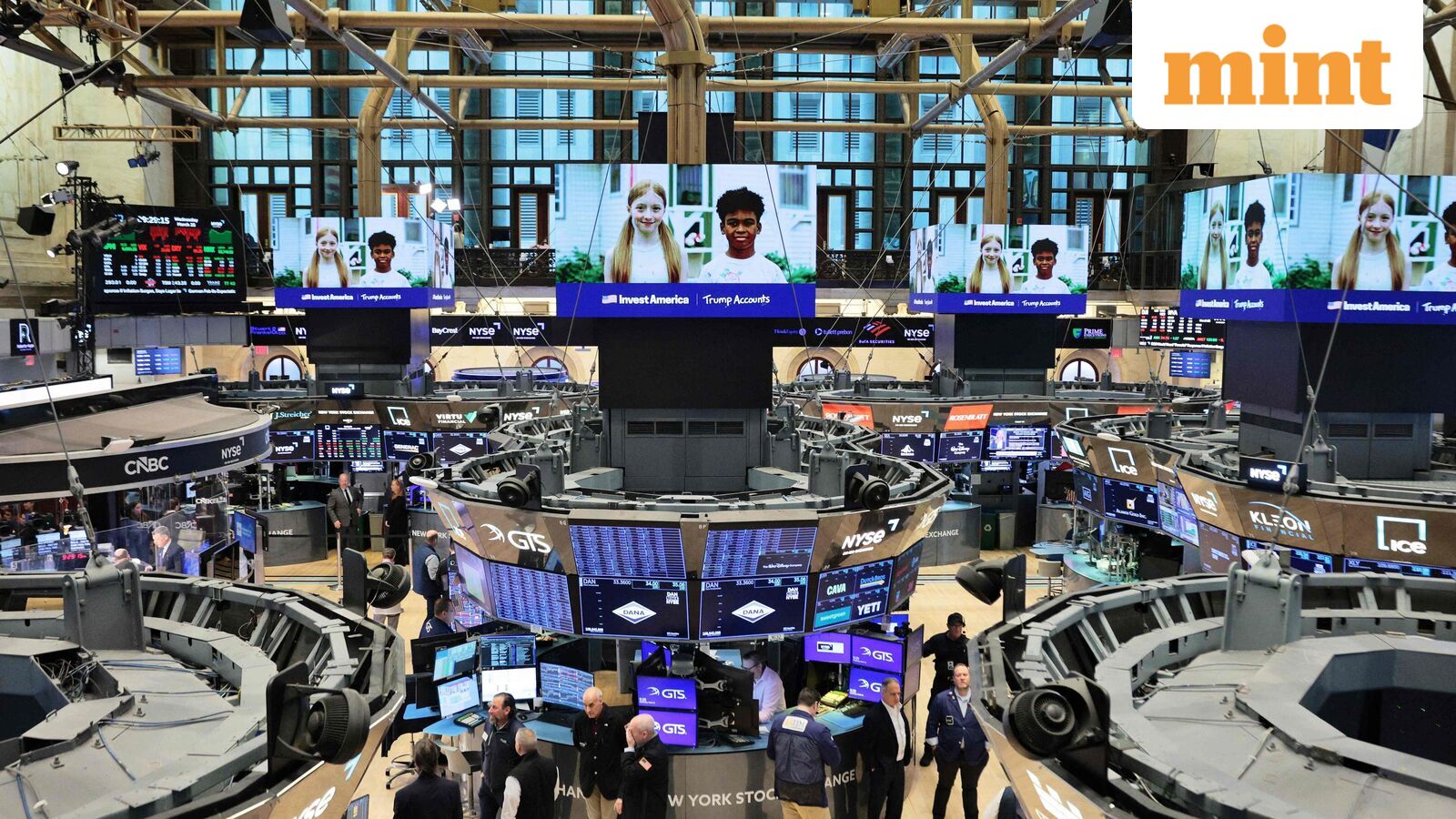
US stock futures traded modestly higher on Wednesday, 24 June, following a two-day sell-off in technology stocks, particularly semiconductor shares, which wiped out billions of dollars in market value amid mounting valuation concerns.
Futures linked to the S&P 500 rose 0.2%, attempting to recover from the recent sell-off. Nasdaq 100 futures climbed 0.5%, while Dow Jones Industrial Average futures were largely flat.
The billions of dollars in capital expenditure announced by hyperscalers have raised concerns over whether these investments will generate sufficient returns. This has triggered a sell-off in stocks that had previously benefited from the artificial intelligence (AI) trade.
Over the past two sessions, the Nasdaq 100 has fallen 3.3%, while the S&P 500 has declined 1.4%. A closely watched semiconductor index, which had more than doubled from its war-driven lows, has lost around 8%.
Elevated valuations and crowded positioning have also led to periodic sharp pullbacks in AI-linked stocks. Despite the recent correction, the benchmark indices remain on track to close the first half of 2026 with strong gains.
While demand for select ‘Magnificent Seven’ stocks remains firm, the continued sell-off in chip stocks has kept Wall Street under pressure.
“The AI spending story remains front and centre. South Korean chipmaker SK Hynix announced plans for a massive US listing to raise $29 billion, highlighting the continued flow of capital into AI infrastructure. The move follows a wave of AI-related fundraising, including SpaceX’s blockbuster IPO and Alphabet’s recently announced capital raise,” domestic brokerage firm Vested Finance said.
Investor focus has now shifted to Micron Technology Inc.’s results for the next indication of whether AI spending is meeting expectations. Chipmakers, among the biggest beneficiaries of the AI boom, have delivered triple-digit gains this year, with Micron standing out even among the sector’s top performers.
Micron’s share price has surged 850% over the past year, lifting its market capitalisation above the $1 trillion mark.
In the currency market, the dollar index hovered around 101.4 on Wednesday, trading at its highest level in more than a year. Expectations of Federal Reserve rate hikes this year remained strong, while the technology-led sell-off on Wall Street boosted demand for the safe-haven currency.
Crude oil prices remain under pressure for a third straight day
Brent crude futures declined for a third consecutive session, falling 3.11% to $74.63 a barrel, their lowest level since late February, when the conflict in the Middle East began. So far this month, Brent crude has plunged 18% and is on track to record a second straight monthly decline after falling 17.5% in May.
US West Texas Intermediate (WTI) crude futures were down 3% at around $71 a barrel, extending their losing streak to three consecutive sessions. The contract was last seen at these levels in early March.
Traders drew comfort from signs that negotiations between the US and Iran are progressing. Washington has reportedly issued a 60-day licence allowing Tehran to sell oil in international markets, easing concerns over potential supply disruptions.
(With inputs from Bloomberg)
Disclaimer: We advise investors to check with certified experts before making any investment decisions.
About The Author