Federal Reserve Holds Rates Steady, Hints at 2026 Rate Hike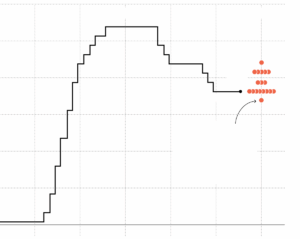
There’s a new sheriff in town at the nation’s central bank. Under the leadership of new Federal Reserve Chairman Kevin Warsh, the central bank voted today 12-0 to hold interest rates steady at 3.5-3.75%. There were some surprises.
The big news that caught investors off guard today?
Through the closely watched “dot plot” grid, Fed officials removed their previous forecast for an interest rate cut this year and indicated that a rate hike was possible. Investors were surprised at how sharply the new forecasts tilted toward interest rate hikes this year.
However, one Fed committee member failed to submit a forecast.
The missing dot
At first, there was a mystery around a missing dot on the projections chart. Usually, there are 19 projections or “dots” on the Fed’s interest rate chart, versus today’s 18.
The new Fed Chair Warsh opened his press conference, confirming that he declined to submit a “dot,” indicating his future rate hike expectations. That explained why there were only 18 projections instead of the usual 19.
Nine out of the 19 committee members (not all of whom are allowed to vote) said they expected an interest rate hike this year. That’s a big shift from March, when no Fed official called for an interest rate hike.
Markets react
The news took the financial markets by surprise as the rate projections were tilted more strongly toward hikes than investors expected. Gold slid modestly, as the precious metal benefits from lower interest rates, as a non-interest-bearing asset. Stocks and bonds took a hit, and Treasury yields and the U.S. dollar rose after the decision.
A new approach to Fed communication
Today’s meeting revealed how the new Fed Chair Warsh is putting his stamp on central bank forward guidance. The new approach comes down to “less talking.” Warsh has said he would like to see fewer Fed press conferences and fewer Fed officials’ public speeches.
Today’s first Fed policy statement under Chairman Warsh was notable for its brevity. Today’s statement was slimmed down to a mere four paragraphs with a brief review of economic conditions.
“Job gains have kept pace with the workforce, and the unemployment rate has changed little,” the Fed committee said.
Meanwhile, “inflation remains elevated relative to the Committee’s 2 percent goal, in part reflecting supply shocks that have driven price increases in certain sectors, including energy. The Committee will deliver price stability,” the committee added.
What does this new approach mean for markets?
In the past, Fed officials aimed to be transparent as possible, providing financial markets guidance on what could lie ahead for interest rate policy. Now under the new Fed Chair it could become more of guessing game. This could open up the financial markets to more volatility as investors attempt to read between the lines.
What this means for gold investors
Inflation remains high. The consumer price index jumped to 4.2% in May, well above the Fed’s 2% target. If the U.S.-Iran war winds down this week as expected, could that allow energy prices to come down quickly? Only time will tell. The new Fed Chair is trying to buy some time to see if inflation will fall on its own without a rate hike.
As is typical in the summer months, gold is consolidating below its record-high hit earlier this year. These quiet summer months are an excellent time to review your portfolio and add to your investments. Buying gold and silver now in this quiet period allows you to increase your allocation to precious metals in a stable environment, instead of chasing prices higher along with the crowd later this year.
As the brilliant American financier Bernard Baruch once said: “Buy straw hats in the wintertime. Summer will surely come.” This long revered investing principle advocates for contrarian thinking—buying assets when they are out of season and inexpensive in anticipation of future demand.
Gold has slipped off its high in recent weeks, but Wall Street has not changed its 2026 year-end targets for gold. JP Morgan still sees gold at $6,000 to $6,300 by year-end, Deutsche Bank forecasts gold at $6,000 and UBS pegs gold at $5,900—which would be double-digit gains from current levels. Straw hats are on sale today.
About The Author