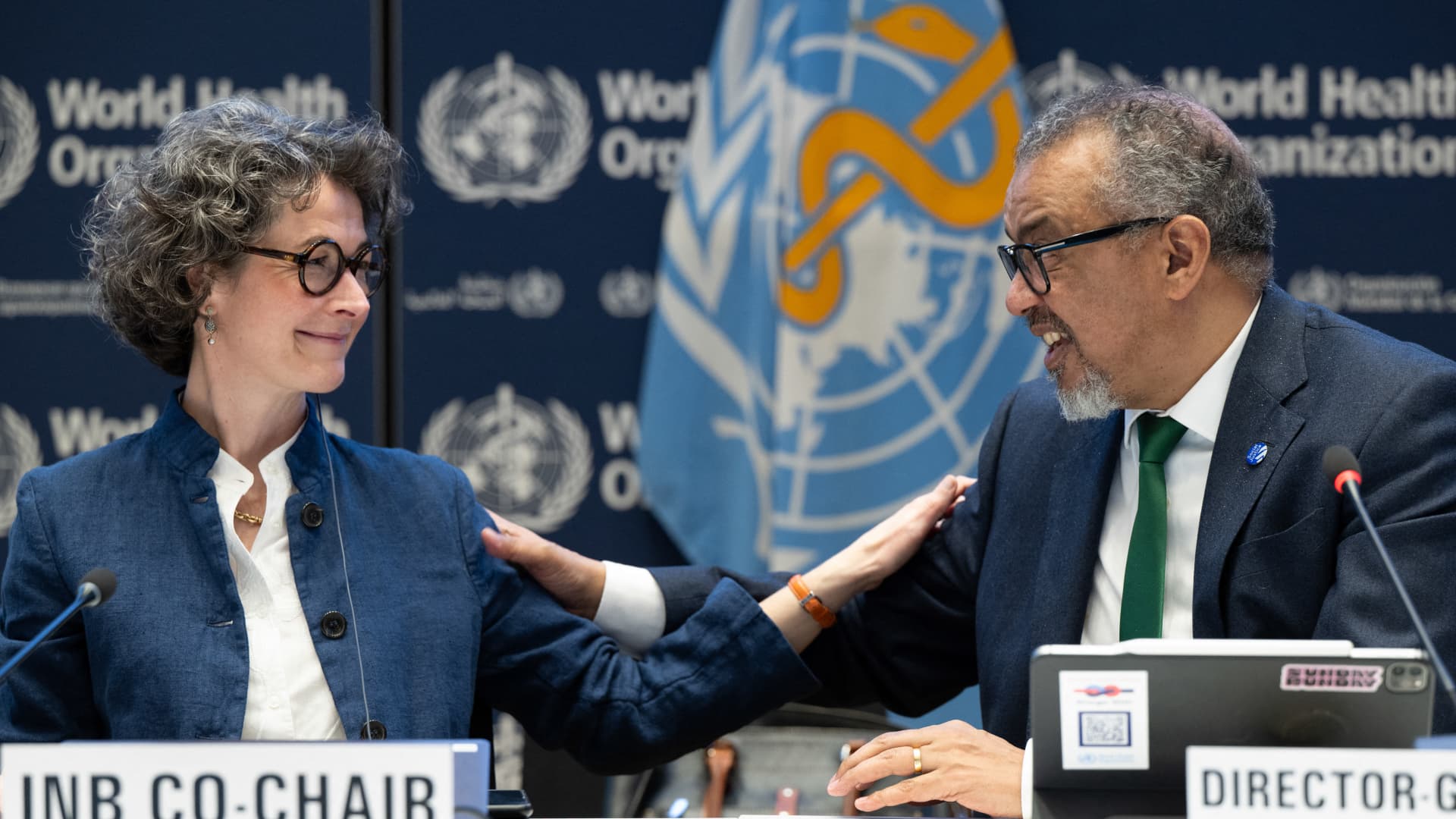
A handout photograph taken and released by the World Health Organization (WHO) on April 16, 2025 shows WHO Director-General Tedros Adhanom Ghebreyesus smiling after a consensus on the Pandemic Agreement at the WHO headquarters.
Christopher Black | World Health Organization | Afp | Getty Images
Members of the World Health Organizationreached anagreementto prepare the world forfuturepandemicsaftermore than three years of negotiations, the organization said early Wednesday.
The legally binding pact is intended to shore up the world’s defenses against new pathogens after the COVID-19 pandemic killed millions of people in 2020-22.
The proposaloutlines measures to preventfuturepandemicsand strengthen global collaboration. This includes establishing a pathogen access and benefit sharing system and building geographically diverse research capacities among others.
Theagreementalso proposes a global supply chain and logistics network while emphasizing stronger health system resilience and preparedness.
A handout photograph taken and released by the World Health Organisation (WHO) on April 16, 2025 shows Co-chair of the negotiations and French ambassador for Global Health Anne-Claire Amprou (L) and WHO Director-General Tedros Adhanom Ghebreyesus after a consensus on the Pandemic Agreement at the WHO headquarters. Y(Photo by Christopher BLACK / World Health Organization / AFP) (Photo by CHRISTOPHER BLACK/World Health Organization/AFP via Getty Images)
Christopher Black | World Health Organization | Afp | Getty Images
“After more than three years of intensive negotiations,WHOmemberstatestook a major step forward in efforts to make the world safer frompandemics,” the health body said in a statement.
Theagreementis widely seen as a victory for the global health agency, at a time when multilateral organizations like theWHOhave been battered by sharpcuts in U.S. foreign funding.
The UnitedStates, which was slow to join the early talks, left the discussions this year after new President Donald Trump issued an executive order in Februarywithdrawing the U.S. from theWHOand the talks.
The proposal will be considered at the World Health Assembly policy meeting in May, theWHOsaid.
“This is a historic moment and a show, that with or without the U.S., countries are committed to working together and to the power of multilateralism,” Nina Schwalbe the founder of global health think tank Spark Street Advisors, told Reuters.
About The Author