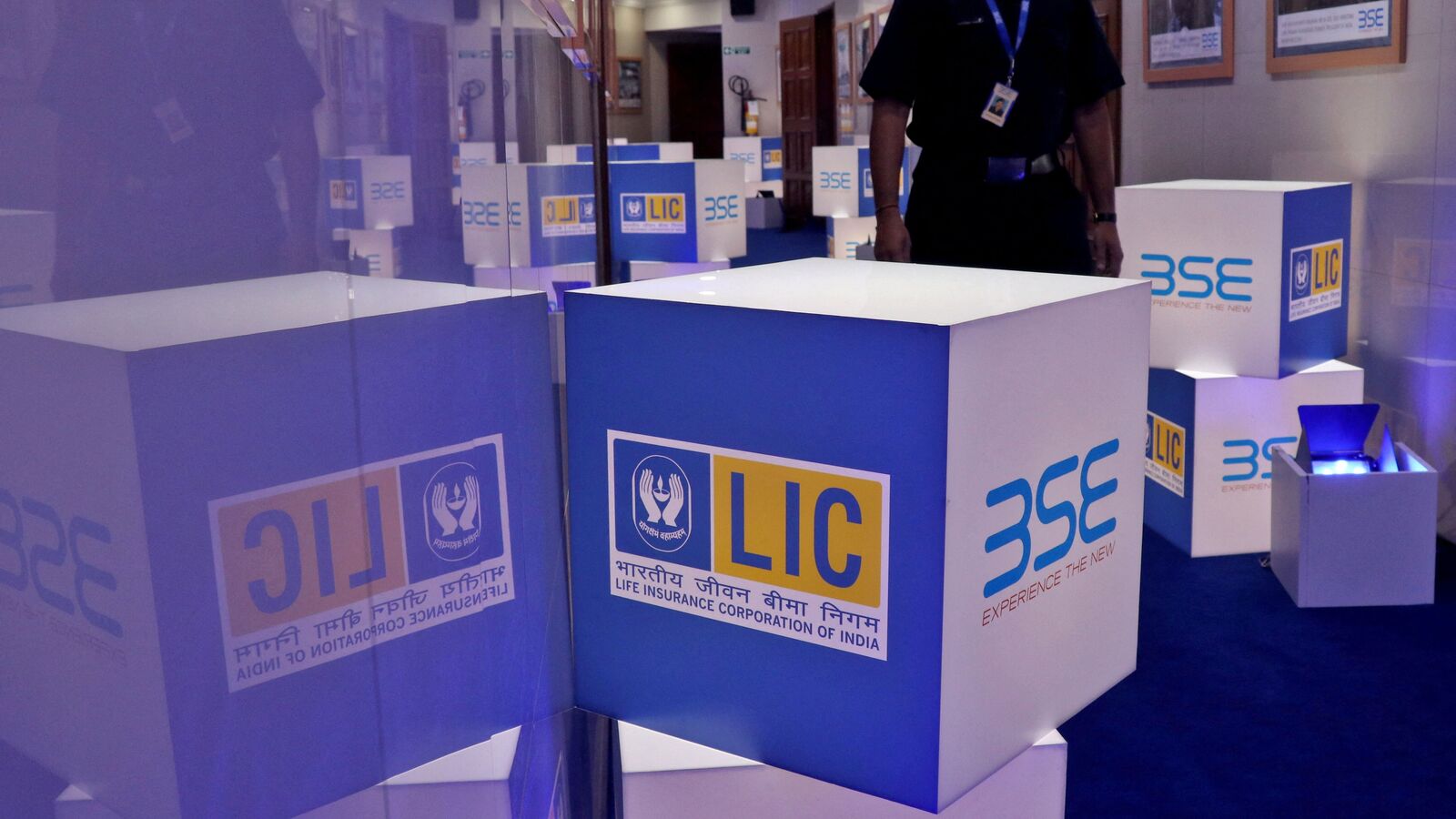
Shares of insurance behemoth Life Insurance Corporation of India (LIC) flashed a 50% downside from the last closing price on the National Stock Exchange (NSE) on Friday, 29 May.
LIC share price touched an intraday low of ₹413, as against the last close of ₹830, signalling a massive 50.2% downside.
Is LIC share price really down 50%?
Today, the PSU stock has turned ex-record for its 1:1 bonus issue. Investors must understand that this decline is due to an adjustment in LIC’s stock price in line with the bonus issue and not an actual loss.
A 1:1 bonus issue means that for every share you own, you receive an additional share for free. This essentially doubles the number of shares. Since the number of shares rises, the price of the stock is adjusted downward proportionately on the ex-bonus date.
Investors are not losing money due to the “fall”. It is simply a price adjustment due to the bonus shares. The bonus shares are usually credited to eligible shareholders a few days after the record date.
On the NSE, the LIC stock is actually down just 0.36% from the new adjusted price of ₹415.
Investors looking to buy the stock for the bonus benefit needed to purchase the stock a day before the record date since the Indian stock market follows a T+1 settlement cycle.
LIC OFS in focus
With Thursday being a stock market holiday, the last day to purchase LIC stock to be eligible for the bonus issue was Wednesday, 27 May. Anyone who buys the PSU stock today will not receive the bonus shares.
LIC bonus issue will likely pave the way for the planned government stake sale in India’s biggest insurer. “Doubling the share count makes it materially easier for the government to execute a future offer-for-sale (OFS) without overwhelming the market with large-ticket trades,” said Prathamesh Kadival, Research Analyst at Bonanza.
A Bloomberg report, earlier this week, said that the government would begin formal marketing next month for a planned share sale in LIC for as much as ₹10,000 crore.
The government plans to sell a stake of about 2% in the state-run insurer in late June or early July to institutional investors, the report added, citing unnamed sources. Mint could not independently verify this.
About The Author