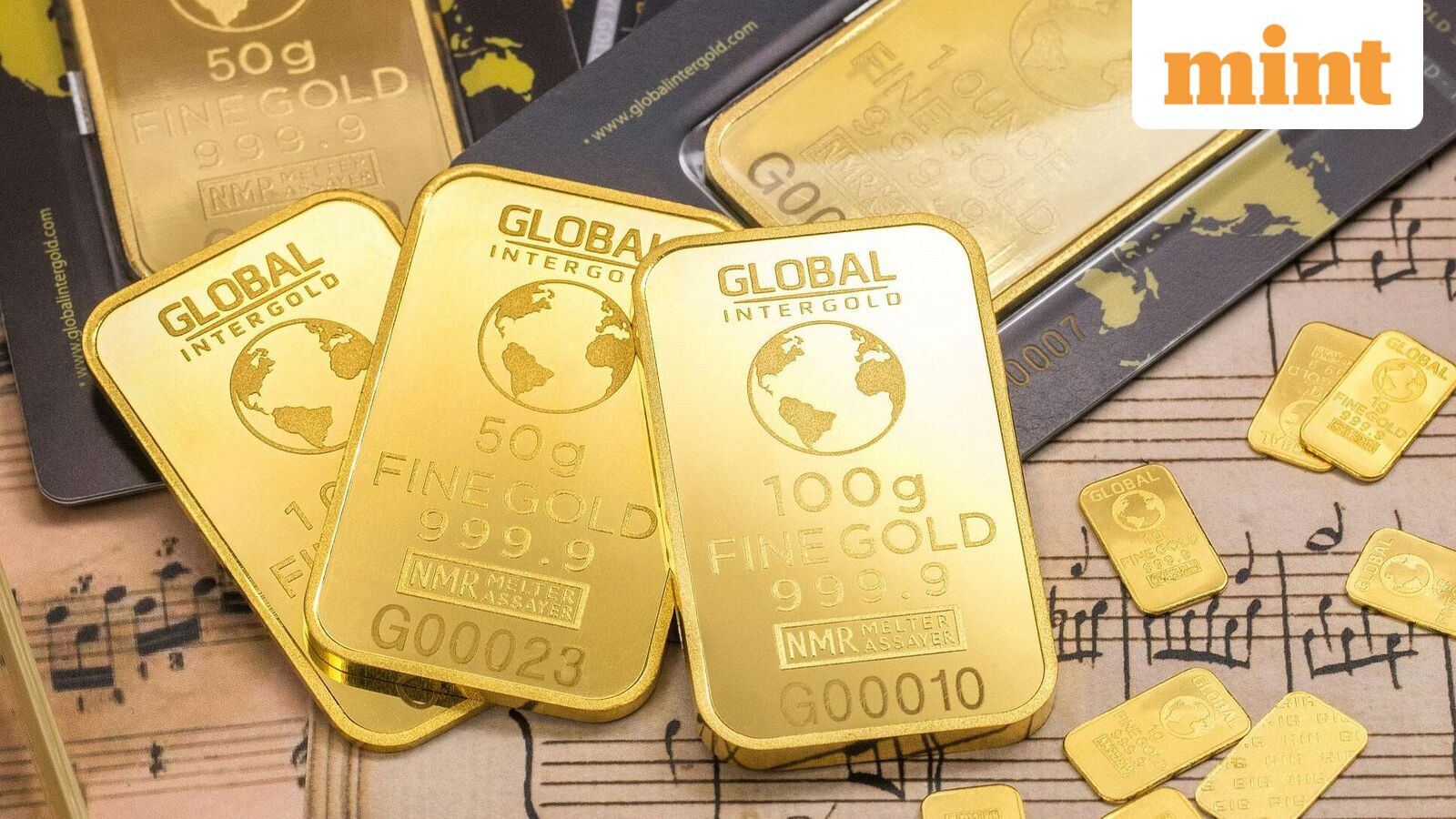
Gold exchange-traded funds (ETFs) emerged among the top gainers in the Indian stock market today, closing up to 6.5% higher after the government announced a hike in the import duty on gold and silver effective 13 May.
The government sharply raised import tariffs on gold and silver to 15% from 6% on Wednesday, as it looked to curb non-essential imports and conserve foreign exchange reserves strained by higher oil and fertiliser purchases amid the conflict in West Asia.
The hike follows an appeal by Prime Minister Narendra Modi to defer gold purchases alongside unnecessary foreign travel for a year and conserve fuel in order to help the Indian rupee, which remains in a freefall amid weakening macros and relentless foreign investor selling.
People also ask
AI powered insights from this story
•5 QUESTIONS
The government sharply raised import tariffs on gold and silver to 15% from 6% to curb non-essential imports and conserve foreign exchange reserves, which have been strained by higher oil and fertiliser purchases.
Gold ETFs emerged among the top gainers, closing up to 6.5% higher after the government announced the import duty hike. Experts expect a measurable acceleration in ETF flows over the next two to three quarters.
Jewellery stocks took a hit, with some dropping significantly, due to fears of weakening demand. While incremental physical demand may soften, consumers might downtrade to lower purity jewellery or reduce ticket sizes for unavoidable purchases like weddings.
The government is aware that a 15% spread could create an arbitrage opportunity for smuggling. However, these measures are considered temporary, similar to COVID-era policies, and are expected to be removed once the geopolitical situation, like the West Asia crisis, subsides.
The import duty hike is expected to encourage investment demand as people tend to buy assets that are rising in price. Conversely, consumption demand, particularly for jewellery, is likely to be impacted negatively due to the increased cost.
India’s gold import bill has surged to ~$72 billion in FY26 from $58 billion last year, accounting for over 9% of total imports and significantly contributing to the trade deficit. While past duty hikes in 2022 from 10.75% to 15% have led to a 15–20% moderation in official imports, the current impact is likely to be more nuanced, according to experts.
Impact of gold duty hike on MCX prices, ETFs and jewellery stocks
Following the import duty hike, gold prices on the MCX rallied, and gold ETFs also surged. In the domestic futures market, gold traded at ₹162491, up over ₹9,000 or almost 6%.
“What we are seeing in domestic prices today is a mechanical re-pricing to a new import parity, not a fundamental rally. The duty is now a fixed cost embedded in the price. From here, gold and silver in India will continue to be driven by what they have always been driven by — the international LBMA spot price, the USD/INR exchange rate, and the domestic premium or discount over import parity. The duty has done its job and become a sunk cost,” Anindya Banerjee, Head of Commodity and Currency Research, Kotak Securities, said.
On the flip side, jewellery stocks took a hit, with Sky Gold dropping over 7% as customs duty increases raise fears of weakening demand. Kalyan Jewellers dipped 1.85%, and Tribhovandas Bhimji Zaveri ended flat with a negative bias. However, some stocks like Senco Gold and Titan Company bounced back and closed up to 3.7% in the green.
Sachin Jasuja, Head of Equities and Founding Partner, Centricity WealthTech, said that incremental physical demand may soften, particularly in price-sensitive segments, and imports could see marginal compression. “However, for unavoidable purchases such as weddings, consumers are likely to downtrade to lower purity jewellery (22K to 18K) or reduce ticket sizes rather than defer buying altogether,” he added.
Will gold ETFs gain from duty hike?
As visible from the latest price action, gold ETFs remain one of the top beneficiaries of the duty increase.
Anoop Vijaykumar, Head of Equities & Fund Manager, Capitalmind AMC, shared past data signalling that gold ETFs generally take up to three days to reflect the duty change. This means that action in gold ETFs is likely this week, as well.
Moreover, gold and silver in India may temporarily outperform international prices due to the additional duty premium. But the demand for jewellery may slow as higher prices may negatively impact wedding demand, retail jewellery purchases, and small-ticket buyers, said Ruchit Thakur, Market Analyst, VT Markets.
He rather expects inflows may occur, especially in price-sensitive markets like ETFs and digital gold. “Some investors may switch from physical jewellery to gold ETFs, silver ETFs, and digital bullion due to higher manufacturing fees and taxes.”
While the hike is good for gold ETFs, they may not be the ultimate beneficiaries.
“ETFs carry structural advantages that the duty hike now sharpens — no making charges, no purity concerns, no storage cost, and clean tax treatment under the current rules. For the urban, investment-led buyer — the SIP-and-allocation cohort — the cost differential against physical gold becomes even more compelling,” said Harshal Dasani, Business Head at INVasset PMS.
He expects a measurable acceleration in ETF flows over the next two to three quarters, alongside renewed interest in any future Sovereign Gold Bond tranches the government chooses to issue. That said, he added that physical gold’s role in Indian households is primarily cultural and savings-led, not investment-led. “The two markets are coexisting, not competing.”
The duty hike has resulted in an immediate price re-adjustment, effectively delivering a one-time ~7–8% mark-to-market gain for existing investors.
According to Jasuja, ETFs remain a prudent route for investors seeking diversification, participation in the gold rally, and a hedge against macro and currency risks.
Disclaimer: This story is for educational purposes only. The views and recommendations made above are those of individual analysts or broking companies, and not of Mint. We advise investors to check with certified experts before making any investment decisions.
About The Author