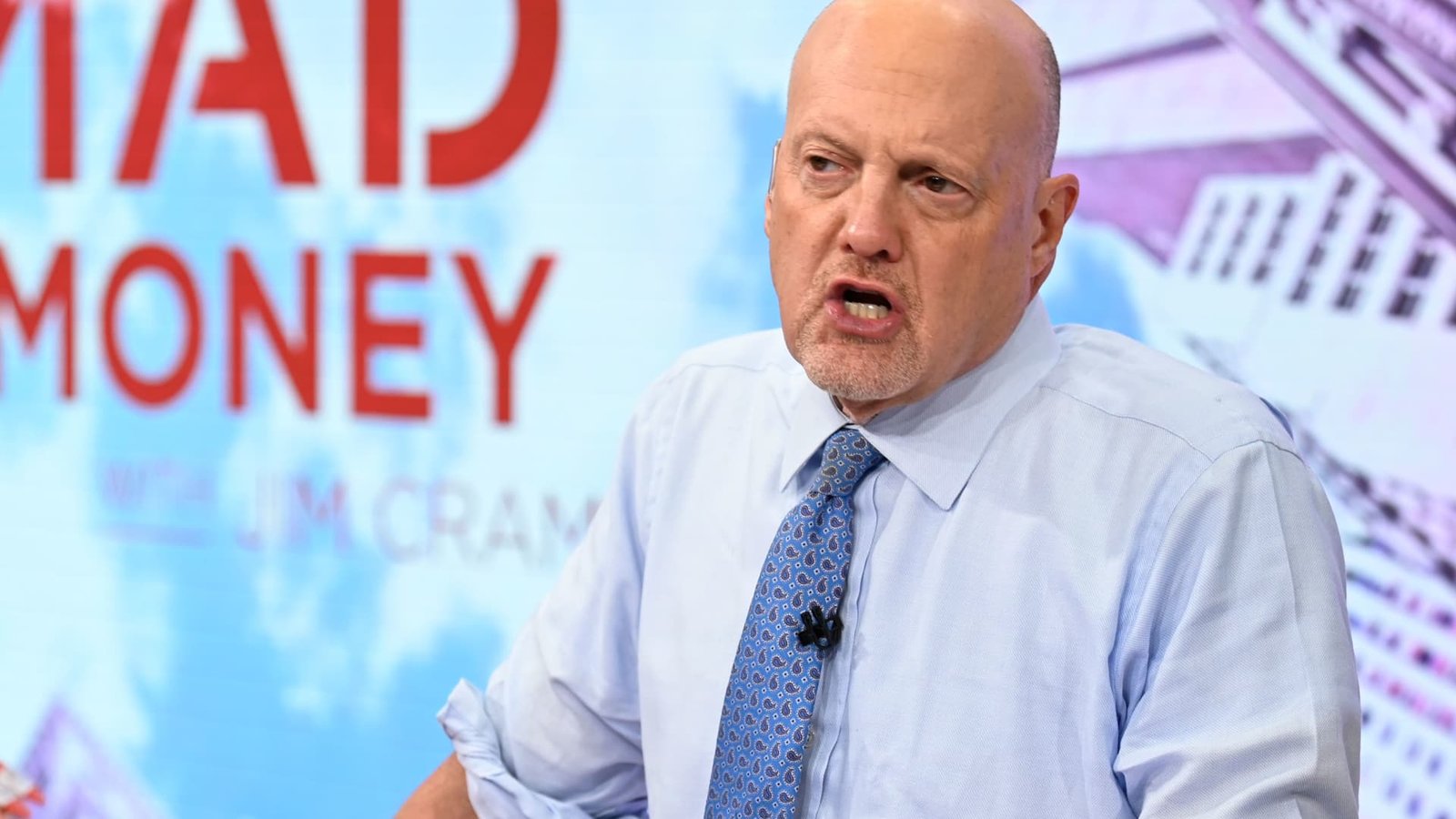
CNBC’s Jim Cramer said Wednesday that the Federal Reserve’s first interest rate hike in three years has made it harder to invest in stocks.
“If you buy stocks here, you’re now officially fighting the Federal Reserve,” Cramer said on “Mad Money” — hours after the Fed raised its benchmark overnight funds rate by a quarter percentage point to a range of 3.75% to 4%. “Don’t fight the Fed” is an old Wall Street adage for how to increase your chances of making money in the market.
During his post-meeting news conference, Fed Chairman Kevin Warsh said that “inflation is too high and has been for too long,” and that Wednesday’s rate increase would support a return to the central bank’s 2% inflation target. Warsh’s repeated references to worrisome price pressures, which erode stock returns, sent the market lower.
The Dow Jones Industrial Average, whose 30 stocks are more sensitive to the economy, led the way lower, losing 631 points, or 1.2%, on the day. The broader S&P 500 and tech-heavy Nasdaq fared better, dipping just 0.5% and 0.01, respectively. All three benchmarks were higher at one point during the session before the Fed took action and before Warsh started speaking.
The problem for stocks, according to Cramer, is that Wednesday’s rate hike appears to be the beginning of a series of Fed increases until oil prices and inflation ease. “Every hike from here on will be something that will knock down stocks.”
Higher rates tend to slow economic activity by making borrowing more expensive and bonds more competitive with stocks for investment dollars. The 10-year Treasury yield at nearly two-decade highs above 5% starts to look like a pretty attractive risk-free return.
While saying investors shouldn’t abandon the market altogether, Cramer stressed the universe of stocks that can work in a tightening cycle is shrinking. “There are other managers who stay the course, picking the stocks of companies that can do well regardless of what happens with interest rates.” He counts the CNBC Investing Club among them, pointing to pharmaceutical stocks as an example of a defensive group he likes.
“The bottom line? I think the buyers will come back … but a lot of groups simply don’t work as long as Kevin Warsh is on the warpath,” Cramer said. In the meantime, he concluded, “There are fewer stocks to buy. Fewer to hold. More to sell.”
About The Author