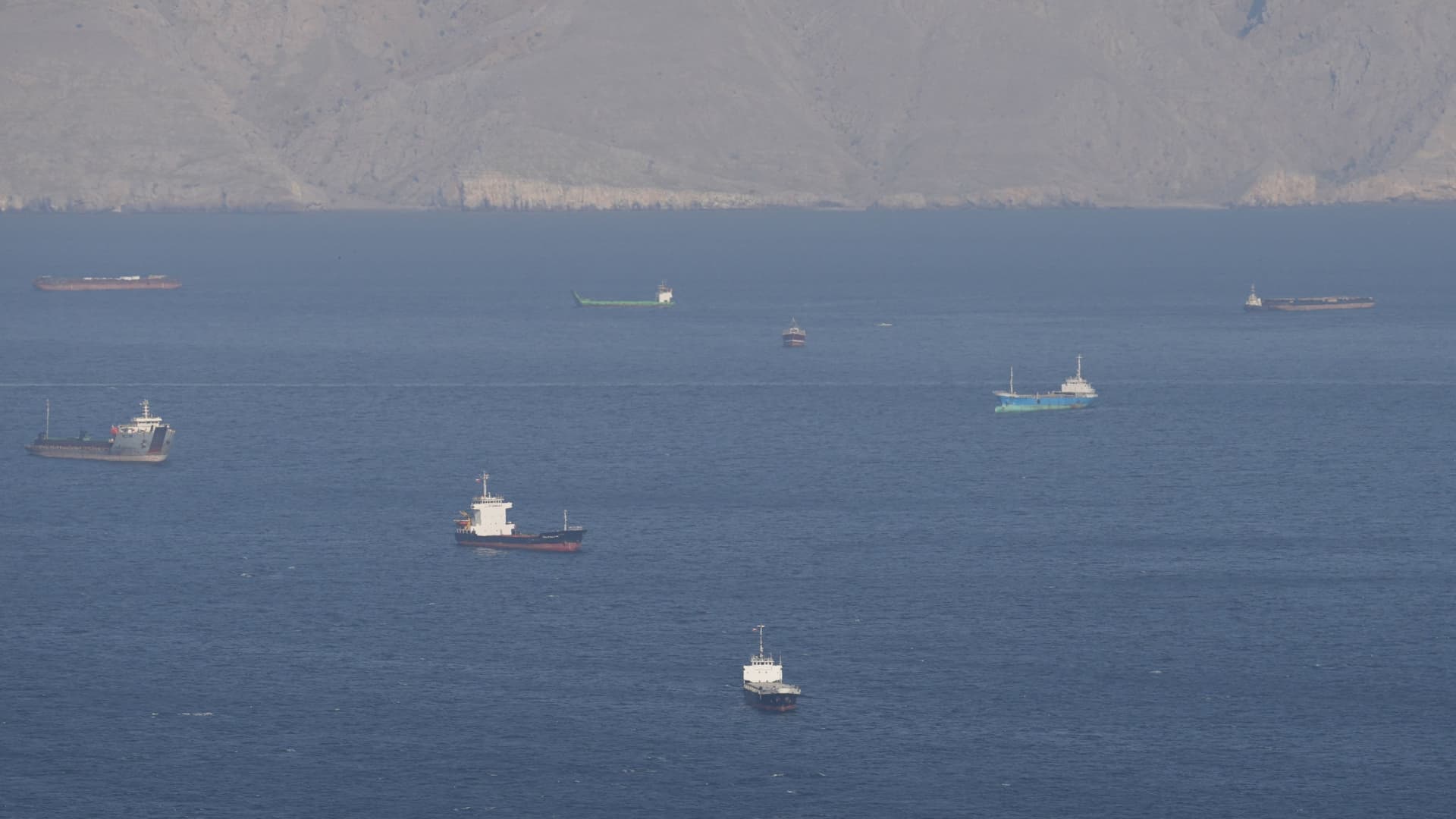
Ships and tankers in the Strait of Hormuz off the coast of Musandam, Oman, April 18, 2026.
Stringer | Reuters
Ship traffic through the Strait of Hormuz remained very light on Wednesday, the first day since President Donald Trump extended the ceasefire with Iran.
Trump’s decision to unilaterally extend the truce has not opened the strait. Iran is still trying to control ship traffic in the sea lane, while the U.S. maintains its blockade of Tehran’s ports and vessels.
At least six ships transited the strait Wednesday including three oil tankers, according to tracking data from LSEG. The Iranian tanker Atlantis II appears to have crossed the strait into the Gulf of Oman despite the U.S. blockade.
Traffic was little changed compared with Tuesday when at least six ships made the trip, according to LSEG. About a dozen commercial vessels of various types transited on Monday, the data showed.
Traffic is way below normal levels before the war when more than 100 ships crossed the strait daily.
The security situation in the strait remains dangerous. Iran’s Revolutionary Guard said Wednesday that it seized two container ships as they tried to cross the strait “without authorization,” according to the state news agency Tasnim.
The United Kingdom Maritime Trade Operations Centre (UKMTO) has warned ships that there are “high levels of activity” in the strait and they should report suspicious activity.
A cargo ship was fired upon on Wednesday and is now stopped in the water, according to an incident report from UKMTO. A gunboat with Iran’s Revolutionary Guard fired on a container ship Tuesday causing heavy damage to the bridge, the UKMTO said.
The attacks on ships this week come after a weekend of confusion and confrontation in and around the strait. Iranian forces on Saturday fired on a tanker and cargo ship in the sea lane, a day after declaring the sea lane open to commercial traffic. Those vessels were apparently Indian, with New Delhi lodging a complaint with Tehran.
The U.S. Navy on Sunday fired on an Iranian cargo ship in the Gulf of Oman. The Marines boarded and took custody of the vessel. Trump said the ship was trying to evade the U.S. blockade of Iran.
Iran’s attacks on oil tankers before the ceasefire led to a plunge in traffic through the strait, triggering what’s been described as the largest oil supply disruption in history.
About 20% of the world’s crude supplies passed through the strait before the war. It will take until July for oil flows to reach up to 90% of pre-war levels and up to another two months for barrels to arrive at refineries around the world for processing into products, according to Rystad Energy.
About The Author