The one big takeaway from a huge earnings season
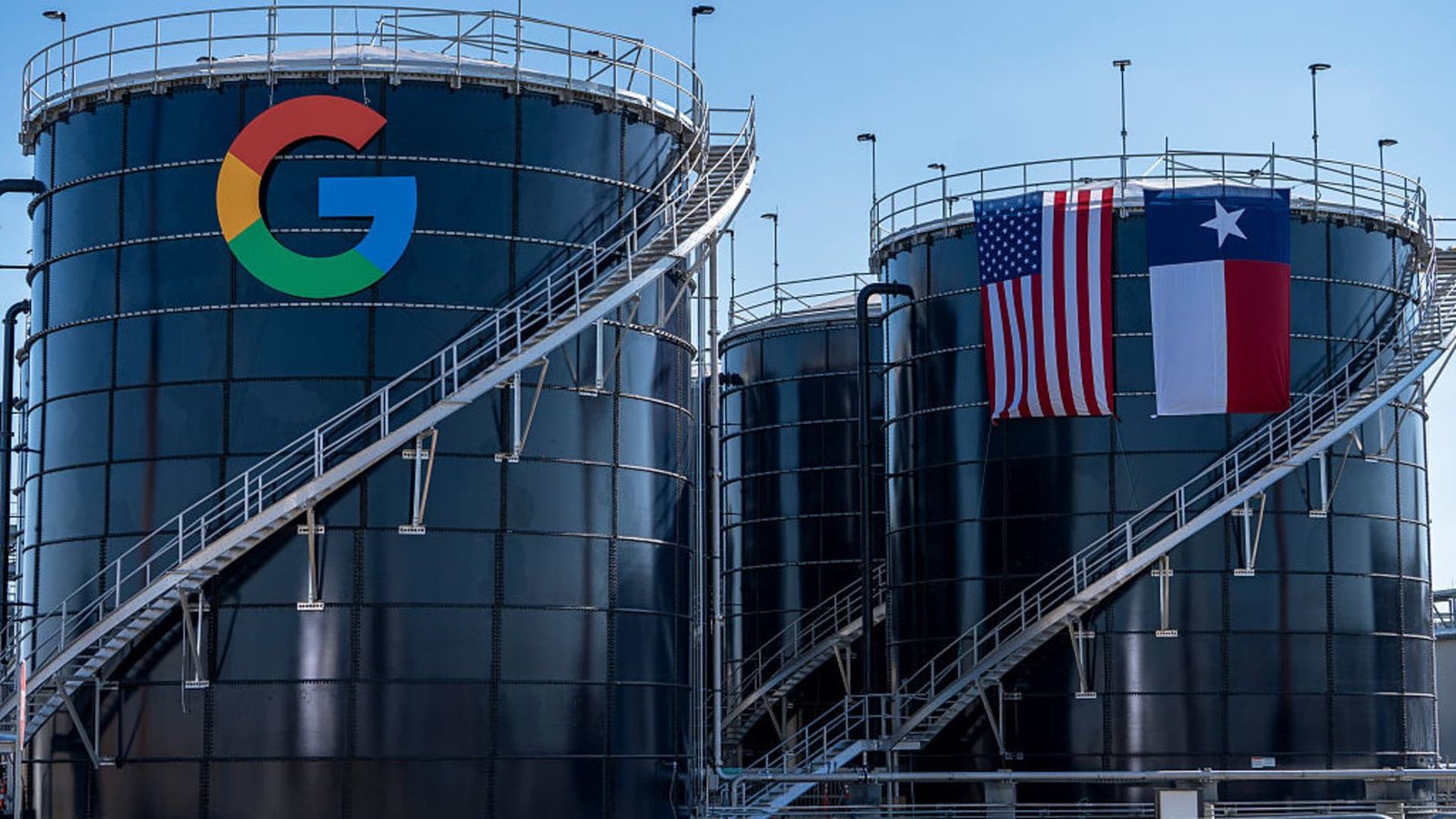
The market is winding down an exceptionally strong reporting season , and there’s an underlying trend that remains front and center. “Big Tech intentions to spend on capex building new data centers remains as intense as ever,” said Jed Ellerbroek, portfolio manager at Argent Capital Management. But even for a multiyear bull market that has been bolstered by the artificial intelligence boom, that won’t automatically be taken as a positive. Nervousness from investors about return on investment from AI spending impacted the broader market after Alphabet last month hiked its 2026 capex outlook to as high as $205 billion . That came after the company said it was planning to ” significantly increase ” its capex yet again in 2027. The stock sank more than 7% immediately after last month’s update. It’s still up roughly 10% this year, however. GOOGL YTD mountain Alphabet shares, year-to-date But worries about returns on investment seemed to settle down after Microsoft and Amazon reported their quarterly results. Microsoft held its 2026 capex steady but called for growth in fiscal 2027 due to demand. Amazon, meanwhile, said its capex for the year could hit $220 billion as a result of increasing memory costs. Those two stocks each jumped more than 15% on the back of their respective results. “Investors are just kind of like cycling through emotions about it on a seemingly continual basis,” Ellerbroek said. “It feels like we just go in a circle.” So, just how much is too much for the market? According to D.A. Davidson’s Gil Luria, it all comes down to tone. “I’d say it’s somewhere between ‘significantly’ and just up next year,” the firm’s head of technology research said, referring to the difference in forecasts between Alphabet and Microsoft. MSFT AMZN 1M mountain Microsoft vs. Amazon shares, 1-month While Alphabet’s numbers were “very, very good,” Luria said they didn’t successfully justify the spending. He added: “They went cash flow negative, said we increase capex significantly, and thought that just because they had good results, that would be good enough, and clearly it wasn’t.” “When Microsoft and Amazon spoke, it was, ‘Oh wait a second, these guys actually are being responsible. This is actually generating a positive return for them, which makes this sustainable. So, we can keep the party going,'” Luria continued. Luria believes that the market will give companies license to spend so long as their revenues are growing at a faster pace than capex while still increasing margins. Microsoft, for example, reported that Azure and other cloud services revenue increased 43% in the fourth quarter , and the company guided 45% revenue growth in Azure for the fiscal first quarter. “As long as capex grows less than that, this is responsible investment,” Luria noted. What else to watch As the capex boom evolves, investors should pay close attention to the financing behind it, especially given that Amazon and Alphabet reported negative cash flow in the recent quarter. “The hazard is leverage,” Luria said. “As long as the spend is almost entirely based on cash flow and cash on hand, that’s okay. If it starts being more and more debt financed, that’s where we’re looking at more of a hazard.” Others such as JPMorgan strategist Dubravko Lakos-Bujas aren’t as concerned about that. “Although [free cash flow] is expected to remain negative in FY27 for most hyperscalers, demand and order coverage are improving relative to capex, as evidenced by rising backlog-to-capex and book-to-bill ratios,” he wrote this week. To him, that could mean monetization might escalate more quickly than spending. If that turns out to be the case, that “should support stronger future revenue growth and further alleviate concerns about” return on invested capital, he said. However, the investment cycle needs to evolve beyond just that relationship between hyperscaler capex and the monetization of compute, Ron Albahary, Laird Norton Wetherby’s chief investment officer, told CNBC in an interview. “We still need to see a handoff” from those spenders to those companies that are going to incorporate AI into their business models, he said, citing the pharmaceutical industry as an example. “Let’s start seeing a direct benefit of their AI investments in their profit margins, in their growth due to faster cycles of new drug discovery,” Albahary said. “If we’re seeing broadening to the traditional economy, and you can very clearly and convincingly say that growth is not AI dependent, [that] it’s not dependent on the capex dollars being spent, that’s a huge positive.” At present, the cycle is moving into the realm of enterprises in the AI ecosystem, said Freedom Capital Markets’ Paul Meeks, who mentioned cloud provider CoreWeave’s 19% jump in shares and rival Nebius’ 34% gain on Wednesday following their earnings results . Nebius, in particular, saw its total contract value virtually quadruple in its latest quarter. “Now, it looks like these incremental contracts, they could make some serious dough, and that’s important because you need the supply chain to be healthy for this whole AI infrastructure investment theme to continue,” Meeks said. CRWV NBIS 5D mountain CoreWeave vs. Nebius shares, 5-day The next big test for the AI trade will be Nvidia’s earnings results after the bell on Aug. 26. Other checkpoints include the potential IPOs of Anthropic and OpenAI — both of which have not disclosed an official timeline for such.