The SpaceX threat to telecom is real. How it could play out
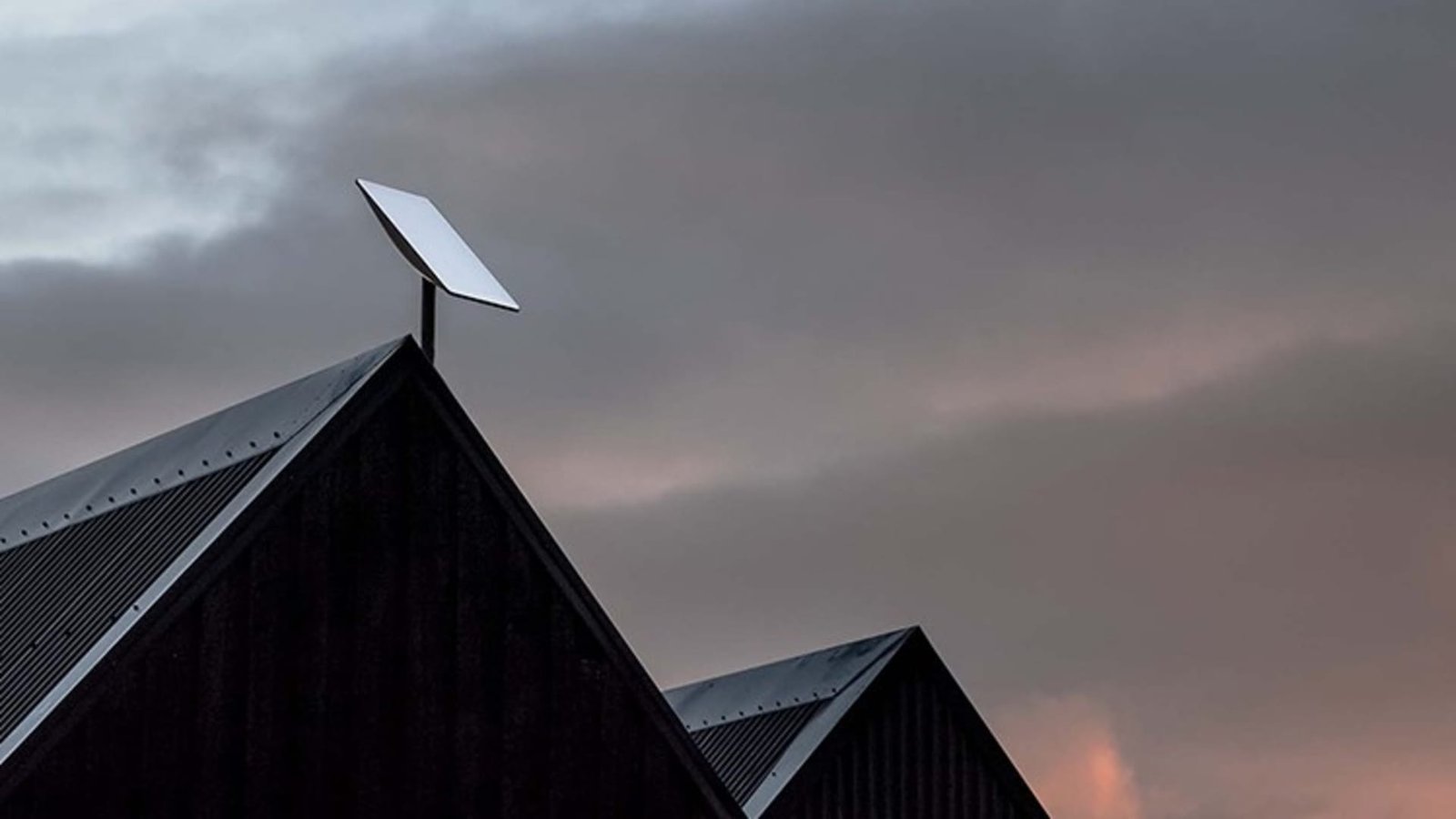
SpaceX’s push into wireless has Wall Street analysts and investors scrambling to get inside Elon Musk’s head — trying to figure out whether he’s planning to cobble together his own terrestrial network, buy a wireless carrier, or pressure them into making deals with SpaceX. However it shakes out, Wall Street sees cracks forming in the U.S. telecom oligopoly. The Big 3 — Verizon , AT & T and T-Mobile — have lost billions in market value since SpaceX announced an acquisition of low-band spectrum last week. The stocks have recovered a bit since then and were trading up on Tuesday. AT & T also shook off a Bernstein downgrade, gaining 1.6% in mid-morning trading. T VZ,TMUS,CMCSA 1M mountain Major telecom players, 1 month Undoubtedly, SpaceX’s ambitions to be a “major mobile carrier” threaten the Big 3. SpaceX’s Starlink could get as much as 13% of the U.S. wireless market share over the next ten years, estimates analyst Jeffrey Wlodarczak at Pivotal Research. “Elon is building a legitimate fourth US wireless player that we expect will go global,” he said in a note Monday. Cell-tower stocks have rallied on prospects of SpaceX hooking up with them for wireless coverage. But it will be a long and grinding path to dislodge the Big 3, given the amount of physical infrastructure needed to build out a reliable, nationwide network including in dense urban and suburban areas. More imminently, analysts say, SpaceX is likely to take a page from the cable playbook — offering internet and wireless access through satellite hookups and WiFi first, then expanding from that beachhead. “Rural and suburban first,” Wlodarczak wrote, referring to households that already have Starlink home internet and can run a phone off WiFi. “Urban only as the dishes get dense enough to boost the outdoor signal, likely enhanced through terrestrial WiFi spectrum. Cable has been doing the WiFi-offload version of this for years.” SpaceX may also snap up more terrestrial spectrum, purchasing it from owners or through a government auction , pending a vote by the Federal Communications Commission on October 29. SpaceX also won authorization from the FCC last week to deploy 15,000 satellites for “direct to device” connectivity, including a regulatory waiver to bypass terrestrial cellular networks. Once the full satellite network is up and running, it will allow for the creation of a “4th US phone network,” Wlodarczak notes. SpaceX did not immediately respond to a request for comment. The cable wildcard Near-term, wireless carriers aren’t likely to see much competition from SpaceX. Cable companies are more of a wild card as SpaceX adopts their WiFi-based services, though they could also benefit if they partner with SpaceX. “Cable is both competitor and the most natural capacity partner,” Kutgun Maral at Evercore ISI wrote in a note, referring to Charter Communications and Comcast . Charter declined to comment in September on reports of a potential relationship, Maral added, but the company “said satellite ‘could be complementary to us.'” Comcast, he noted, “said there is ‘no complacency’ on satellite competition. A tie-up would be a meaningful strategic shift for either operator, and we see cable as the wildcard that could end up on either side of this.” Wireless carriers, meanwhile, are likely to make defensive moves, notably more bundling, according to Bank of America analyst Michael Funk. “Wireless carriers are unlikely to stand still,” he said in a note. “AT & T and Verizon are aggressively bundling wireless and broadband subscribers, which reduces churn by up to 50%, improving wireless network quality and have established distribution networks.” SpaceX’s entry into telecom could also pose problems for Apple , challenging the model whereby carriers subsidize iPhones and consumers pay indirectly through long-term wireless contracts. A SpaceX cell phone could also pose threats, analysts say. “The ecosystem creates the potential for an end-to-end competitor,” Wamsi Mohan at Bank of America wrote on Monday. “The key implications for Apple are (1) risk to carrier subsidy model [and] (2) potential for a competitive device that takes share.” Some analysts are sticking with the telecoms, arguing the sell-off created buying opportunities. Frank Louthan at Raymond James upgraded T-Mobile to outperform from market perform on Monday and set a price target of $170 on the stock — well above recent prices around $153. “The incumbents (which now include TMUS, in our view) have significant advantages in terms of spectrum and terrestrial network capabilities,” he wrote in a note, adding that “the recent pullback on competitive fears has created a buying opportunity.” A Musk bluff? Multiple analysts question whether Musk’s spectrum push is more bluff than a siege. Musk may be trying to secure a favorable deal with a carrier for a “mobile virtual network,” for instance, snapping up spectrum partly for leverage in negotiations. “We still believe SPCX wants a [mobile virtual network operator agreement] first,” Gregory Williams at TD Cowen said in a note. “This could be a tactic, but taking SPCX on its word, this puts the carriers on notice.” Another angle worth considering is that Starlink is proving itself globally as “plug-and-play” technology — able to circumvent terrestrial networks. Starlink has long been used to provide wireless access in areas without traditional service. It’s been critical for Ukraine in its battle with Russia, and the Trump administration smuggled thousands of Starlink kits into Iran in the wake of anti-government protests earlier this year, according to the Wall Street Journal . Iranian intelligence “discovered and confiscated a considerable number of Starlink satellite systems sent by the United States and Israel,” Iranian media outlet PressTV reported in March. Whether Musk plans to build (or buy) another wireless network or pressure the incumbents to strike deals with SpaceX, the telecoms’ oligopoly is looking shakier. “Ironically enough, [SpaceX] is buying the spectrum from Grain Management, which bought it from T-Mobile this summer,” Don Bilson at Gordon Haskett pointed out in a note. “By letting go of this spectrum … T-Mobile has invited a fox into this oligopoly’s cozy hen-house.”